
Articles
Best Restaurant POS System in Doha: What to Look For, What to Avoid, and Which Systems Actually Work
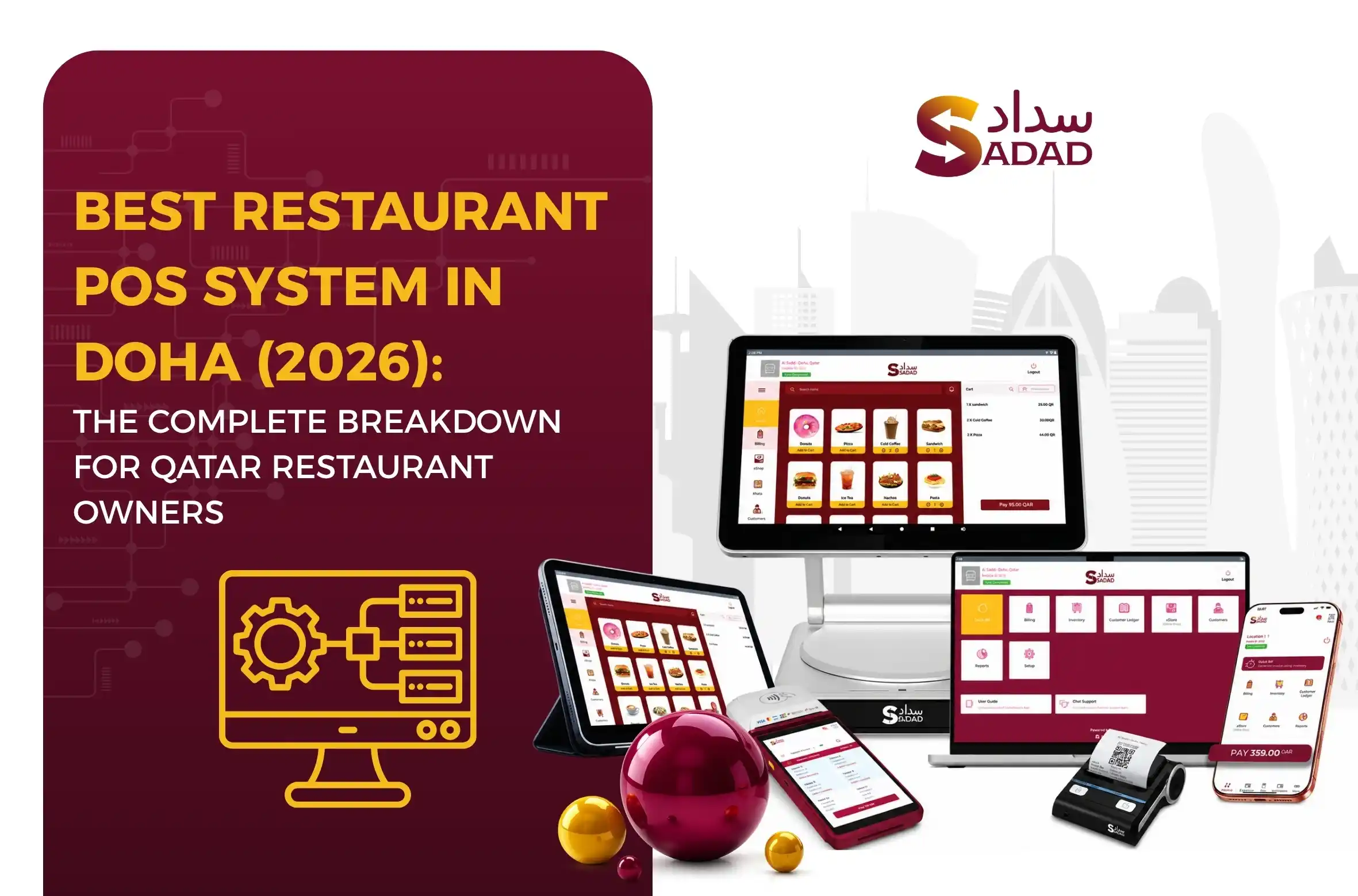
Best Restaurant POS System in Doha: The Honest Guide for 2026
Key Takeaways
If you only remember one thing from this guide, remember this: choosing the best restaurant POS system in Doha is not just a software decision. It is a payments decision.
- Your POS handles the restaurant operation: orders, tables, kitchen tickets, inventory, reports, staff permissions, delivery orders, and multi-outlet control.
- Your payment gateway handles the money: NAPS debit cards, Visa, Mastercard, Apple Pay, Google Pay, contactless payments, settlements, refunds, and reconciliation.
- For restaurants in Qatar, that second layer is where most of the hidden damage happens. A POS can look perfect in a demo and still fail at the counter if the gateway underneath it does not support NAPS directly.
Here is the practical version:
| What to check | Why it matters in Doha |
| Direct NAPS support | Qatari debit cards must work without workarounds |
| Talabat and Snoonu integration | Delivery orders should flow into the POS, not sit on separate tablets |
| VAT-ready billing | Receipts and reports need to work for Qatar compliance |
| Arabic and English interface | Staff training is easier and operations run smoother |
| Offline mode | Service should not stop when the internet drops |
| Local support | A Friday night POS issue cannot wait for a Monday ticket |
| Clean payment reconciliation | POS sales and bank settlements should match without daily detective work |
The strongest setup is usually not “one system that claims to do everything.” It is the right POS software for your restaurant type, connected to a QCB-licensed payment gateway that actually fits Qatar’s card infrastructure. In this guide, we break down both layers so you can choose a system that works in the real world, not just in a vendor demo.
Every restaurant owner in Doha has had this moment.
The queue at the counter is three deep. A customer taps their card. The terminal pauses. Then: “Sorry, this card isn’t working.” The customer puts their phone away and walks out. You never know if it was a NAPS debit issue, a gateway timeout, or something your bank still hasn’t fixed from last month’s setup call.
That single moment costs more than one sale. It costs the next visit too.
Qatar’s foodservice market is valued at USD 2 billion in 2025 and growing toward USD 3.09 billion by 2030. Doha is adding restaurants, cafes, and cloud kitchens faster than almost any city in the region. The competition is real, the margins are tight, and the customer’s patience for a slow or broken checkout is close to zero.
Most restaurant owners shopping for a POS system in Doha think they are solving one problem: how to manage orders, tables, and the kitchen more efficiently. That is half the picture. The other half is whether your payment setup can actually say yes when a Qatari customer pays with their NAPS debit card, when a tourist taps Apple Pay, or when a delivery order from Talabat lands at the same moment as a full dine-in rush.
Those are two separate problems, and they need two separate answers.
This guide covers both. You will find what to look for in a restaurant POS for Doha specifically, not a generic global checklist, but the requirements that actually matter in Qatar’s market.
You will get a clear comparison of the main options available today. And you will understand how the payment layer inside your POS either makes your checkout work smoothly or quietly costs you transactions you never see on any report.
Why Choosing a Restaurant POS in Doha Is Not the Same as Anywhere Else
The intro covered the two-layer problem. Before going into what to look for, it is worth spending a moment on why Doha specifically creates buying requirements that no generic POS guide will tell you about.
Search for “best restaurant POS” online and you will find hundreds of articles written for a North American or European market: Toast, Square, Lightspeed, Clover. Some of them are good systems. Most of them were not built with Qatar in mind, and that gap shows up in ways that hurt your business on a daily basis.
Here is what is different about running a restaurant in Doha.
NAPS: The Payment Requirement Most Restaurants Learn About Too Late
NAPS is Qatar’s national debit card network. It is the payment infrastructure that sits behind most Qatari bank-issued debit cards, including cards from QNB, Commercial Bank, Doha Bank, and the rest of the major local banks. When a Qatari resident pays at a restaurant counter with their debit card, there is a strong chance that card runs on NAPS.
The problem is that most international payment gateways bundled into global POS systems do not have a direct NAPS connection. They handle Visa and Mastercard. They may even handle Apple Pay. But NAPS-branded debit cards either fail outright or route through a workaround that adds friction to the transaction.
For a restaurant in Doha, this is not a niche edge case. It is a daily reality. And because the terminal usually just shows a generic decline rather than a NAPS-specific error, most restaurant owners never connect the failed transactions to the gateway gap. They assume the customer’s card had an issue. The customer assumes the restaurant’s machine has an issue. Both leave frustrated.
Any POS system in Qatar worth using needs to connect to a payment gateway with direct NAPS access, not a workaround, not a routing patch, but a proper live integration. This is the first question to ask any POS vendor before signing anything.
Talabat and Snoonu: The Aggregator Tablet Problem
Talabat and Carriage together hold around 75% of Qatar’s food delivery market. If your restaurant does any delivery volume, those two platforms are likely a meaningful share of your daily orders.
Here is how most restaurants in Doha currently handle them: one tablet for Talabat, another for Snoonu, sometimes a third for Carriage. A staff member monitors each screen, manually calls orders to the kitchen, and re-enters them into the main POS for inventory and billing. During peak hours, this system fails. Orders get missed. Tickets go to the wrong station. A customer calls to ask where their food is and no one can find the order quickly because it is sitting on a tablet no one checked.
A POS system that integrates directly with these delivery platforms pulls all orders into one screen, fires them automatically to the kitchen display, and logs them in your sales data without any manual re-entry. That is not a nice-to-have feature for a restaurant in Doha. It is the difference between a kitchen that runs and one that scrambles.
Not every POS system in the Qatar market has built these integrations. Some advertise delivery integration but rely on third-party middleware that adds a lag or breaks when the aggregator updates its API. Before buying, ask which specific delivery platforms are natively integrated and whether the integration is maintained locally.
VAT Compliance That Actually Works
Qatar introduced VAT as part of its alignment with the GCC Unified VAT framework. For restaurants, this means every receipt must display tax correctly, your billing software needs to calculate it accurately, and your reporting needs to produce VAT-ready summaries for filing purposes.
Most international POS systems handle VAT in theory but require manual configuration that often gets set up incorrectly during installation. Local systems built for the Qatar market handle this as a default. It is a small distinction until tax season, when it becomes a significant one.
Arabic Interface and Bilingual Operations
Qatar’s restaurant workforce is predominantly non-English speaking. Kitchens and counters run on a mix of Arabic, Urdu, Tagalog, and Hindi, depending on the outlet and ownership. A POS system with an English-only interface creates a training problem that compounds every time you hire a new staff member.
The better systems in the Doha market offer full Arabic and English interfaces with the ability to switch between them by role. Front-of-house staff can work in Arabic while management dashboards display in English. Order tickets can print in the kitchen language of choice. This is not a translation feature. It is an operational necessity for most restaurants in Doha.
Local Support in the Same Timezone
This is the requirement that restaurant owners consistently underestimate before buying and rank as the most important thing after six months of using a system.
A POS problem at 8pm on a Friday in Doha is not a ticket you submit and wait for a response on Monday. It is a live service crisis. The restaurant is full, the POS is down, and every minute costs you real money. If your support team is in a different timezone or accessible only through a chat widget, you are handling that crisis alone.
Several POS vendors operating in Qatar have local offices or certified reseller partners in Doha. Others are entirely remote operations. The difference in response time when something breaks during service is substantial. Ask every vendor you evaluate: where is your Doha support based, what is the response time for a live system failure, and who exactly picks up the phone at 8pm on a Friday?
Understanding these Qatar-specific requirements makes every other buying decision in this guide easier to navigate. The next section introduces the concept that separates the restaurants that get this right from the ones that keep switching systems every 18 months: the two-layer framework.
The Two Layers Every Restaurant in Doha Needs to Get Right
The previous section explained what makes Doha’s market different. This section introduces the framework that will make every other decision in this guide easier.
Most restaurant owners in Doha who are unhappy with their current payment setup share a similar story. They bought a POS system, set it up, and assumed payments were covered. Six months later they are still dealing with declined cards, reconciliation headaches, or a terminal that handles Visa but not NAPS. They go looking for a better POS, switch systems, and run into the same problems again.
The reason is almost always the same: they were solving a software problem when they had a payments problem, or the other way around. The two are related but they are not the same thing, and the vendors selling POS software have every incentive to blur that distinction.
Here is the framework that actually clarifies it.
Layer One: The POS Software (Your Operations Brain)
The POS software is the system that manages everything happening inside your restaurant. It handles how orders are taken at the counter or table, how they get routed to the kitchen display, how your menu is structured and priced, how tables are assigned and managed, how inventory moves as dishes are sold, and how your end-of-day reports are generated.
This is the layer most people think about when they search for a restaurant POS. It is where the screen your staff touches lives. It is what determines whether an order gets to the kitchen in eight seconds or gets called out manually. It is what your manager logs into at midnight to check how the day went.
A good POS software layer makes your operations faster and reduces errors. A weak one creates friction for staff, slows down service, and produces reports that do not reflect what actually happened. For Doha specifically, a good POS software layer also integrates with Talabat and Snoonu, handles VAT correctly, and works in Arabic.
Layer Two: The Payment Gateway (What Actually Processes the Money)
This is where most restaurant owners have a gap in their understanding, and it is the gap that costs money.
The payment gateway is the infrastructure that sits between your customer’s card and your bank account. When a customer taps their Visa card, the gateway authenticates that transaction, communicates with the card network, gets approval from the issuing bank, and routes the funds to your merchant account. This all happens in two to three seconds when everything is working.
The gateway determines which payment methods your restaurant can actually accept. Not which methods your POS software lists on its features page. Which methods your terminal will say yes to when a real customer tries to pay. That distinction matters enormously in Doha, where payment methods available in Qatar include Visa, Mastercard, NAPS debit, Apple Pay, Google Pay, Samsung Pay, and increasingly Fawran.
A POS software system can list all of those methods. But if the payment gateway it connects to does not have direct access to NAPS, your Qatari debit card customers will hit a wall at checkout every time.
Why the Two Get Confused (and What That Costs You)
The confusion happens because many POS vendors bundle a payment solution with their software and present it as one unified product. For markets where that bundled payment solution covers all locally relevant payment methods, this is fine. For Qatar, it is frequently a problem.
Several well-known international restaurant POS systems operate in Doha through local resellers who handle the software side competently but connect to an international payment gateway that was not built for Qatar’s card infrastructure. The software works. The kitchen display fires orders correctly. The inventory tracks accurately. But the payment layer quietly declines a portion of transactions every day, and no one connects the two issues because they look like separate systems.
The restaurants that run smoothly in Doha have both layers working and, critically, connected. That means the POS software records the transaction correctly, the gateway processes it against the right card network, and the end-of-day report in the POS matches the settlement amount in the bank account without manual reconciliation.
When these two layers do not talk to each other cleanly, you get the reconciliation problem: your POS says you took QR18,400 today, your bank shows QR17,950, and you spend thirty minutes every evening trying to figure out where the difference came from. Multiply that by 25 working days and you have a meaningful time cost that has nothing to do with cooking food.
What This Means When You Are Evaluating a POS
Every time a POS vendor demonstrates their system to you, the demo will show the software layer performing well. Menus look clean. Orders fire to the kitchen. Reports look comprehensive. The demo almost never shows you what happens when a NAPS card is declined, how long a failed transaction takes to time out, or what the reconciliation looks like across a week of real trading.
Those are the questions to ask. For a restaurant POS in Qatar, ask who powers the payment processing, whether they have a direct NAPS connection, and whether the gateway is QCB-licensed. Ask to see a real reconciliation report from an existing Doha customer. Ask what happens to an in-progress transaction if the internet drops for 90 seconds.
The types of payment gateways available in Qatar vary significantly in how they handle these requirements. Some are bank-issued terminals with no local support infrastructure. Some are international processors operating without QCB licensing. A small number are locally-built, QCB-regulated gateways with direct access to Qatar’s card networks. The difference between them is not visible in a sales demo. It is visible every day at the counter.
With this framework in place, the next section moves into the seven specific requirements that any restaurant POS system in Doha needs to meet, and how to evaluate each one before you commit.
7 Things Your Restaurant POS System in Doha Must Have
The two-layer framework in the previous section explains what you are actually buying when you evaluate a restaurant POS. This section tells you what non-negotiable requirements to apply when you do.
These are not generic best-practice features copied from a global POS comparison. Every point here is grounded in how restaurants in Doha actually operate and where systems fail them.
1. A Payment Gateway With Direct NAPS Access
This has already come up, and it keeps coming up because it is the single most common reason restaurant owners in Doha end up switching systems after a year.
NAPS is Qatar’s national debit card network. Most Qatari bank-issued debit cards run on it. When your payment gateway does not have a direct NAPS connection, those cards either decline or route through a workaround that adds latency to the transaction. Both outcomes are bad. One loses the sale. The other creates the kind of hesitation at the counter that makes customers feel your setup is unreliable.
The fix is not complicated. It requires that the gateway powering your terminal has a live, direct NAPS integration, not a third-party bridge, not a Visa-NAPS co-badge fallback. Ask the specific question before you commit to any system. If the vendor cannot confirm it directly and clearly, that is your answer.
For restaurants that also take orders online, the same requirement applies to your payment gateway in Qatar for the web checkout. A customer who pays in-store with NAPS expects to do the same when ordering from your website.
2. Talabat and Snoonu Integration That Actually Works
Talabat and Carriage hold around 75% of Qatar’s delivery market, and roughly 42% of food orders in Qatar were placed online as recently as 2022. That share has only grown since.
The question is not whether your POS integrates with delivery platforms. Every vendor claims it does. The question is how the integration works in practice and who maintains it.
A genuine integration pulls orders automatically from Talabat and Snoonu into your POS in real time, fires them directly to the kitchen display, and logs them in your sales data without any staff intervention. A surface-level integration requires a staff member to manually accept orders on the aggregator tablet and re-enter them into the POS. The latter is not integration. It is a manual bridge that fails when staff are busy and creates duplicate entries in your reporting.
When evaluating any system, ask to see a live demonstration of an incoming Talabat order hitting the kitchen display. Ask how the system handles a network delay from the aggregator. Ask what happens when Talabat updates its API. A vendor maintaining a genuine local integration will answer these questions fluently. One relying on third-party middleware will stumble.
3. VAT-Ready Billing Out of the Box
Qatar’s VAT framework requires that restaurant receipts display tax correctly and that your billing system produces reports accurate enough for compliance filing. This is not difficult for a system built with Qatar in mind. It is surprisingly easy to get wrong with a system configured for a different market.
The specific failure mode to watch for: a POS system configured to apply VAT as a line item on top of your menu prices, when your menu prices are already VAT-inclusive. This creates overcharging that customers notice and complain about, and it creates accounting records that do not reflect actual revenue.
Confirm before installation exactly how VAT is configured, what the receipt format looks like, and whether the system has been used by other Qatar-based F&B operators for VAT filing. Ask for a sample VAT report. If the vendor cannot produce one from a real Doha customer, ask why not.
4. A Kitchen Display System That Keeps Up With Your Volume
Paper KOT tickets work until they do not. For a quiet cafe with 40 covers a day, paper is fine. For a 120-cover restaurant running simultaneous dine-in, takeaway, and delivery orders on a Friday evening, paper tickets become the bottleneck that slows down every station.
A Kitchen Display System routes orders electronically from the POS directly to the relevant kitchen station, shows timing for each ticket, and alerts the station when an order is running long. The operational impact is measurable. Toast’s annual restaurant report found that 95% of restaurateurs say a POS system improves their business efficiency, with order accuracy being the most cited improvement.
For multi-station kitchens, the KDS also lets you route tickets by menu category: hot food to the grill station, cold prep to the salad station, desserts to the pastry section. This routing capability alone removes a class of errors that happens when all tickets go to one printer and get physically sorted by hand during a rush.
If you run more than 80 covers per service, a KDS is not optional. It is the mechanism that keeps your kitchen and your front-of-house from drifting out of sync when volume peaks.
5. Offline Mode With Local Transaction Storage
Qatar has reliable internet infrastructure, but no connection is perfect. A 10-minute outage during dinner service is not hypothetical. It happens, and how your POS handles it determines whether your restaurant keeps operating or comes to a complete stop.
A POS with a genuine offline mode stores transactions locally when the connection drops and syncs them automatically when it restores. Staff can keep taking orders, the kitchen keeps receiving tickets, and payments queue for processing once the connection returns. From the customer’s perspective, nothing changes.
A POS without offline capability shows an error screen when the internet drops. Every table waiting to pay is now waiting on your internet connection, not on your staff.
This is one of those features that sounds minor in a sales demo and becomes the most important feature you have on the two days per year when it matters. Ask specifically whether offline mode covers both order management and payment processing, and for how long it can operate independently.
6. Multi-Outlet Reporting and Centralised Control
If you run more than one location in Doha, or plan to, this is the requirement that separates a scalable system from one you will outgrow quickly.
Multi-outlet capability means your menu updates push from one central dashboard to all locations simultaneously. It means your pricing changes at one location do not require a separate login and manual update at each other site. It means your end-of-day reporting shows you performance by location, by item, by staff member, and in aggregate across the whole operation, in one view.
The alternative is running separate POS instances at each location, reconciling reports manually across systems, and making menu changes one location at a time. For a two-outlet operation this is manageable but inefficient. For three or more it becomes a genuine operational constraint.
Centralised cloud-based payment solutions at the payment layer also matter here. If each location processes payments through a separate merchant account with separate settlement reporting, your finance team is reconciling multiple bank feeds daily instead of one consolidated report.
7. Transparent Pricing With No Hidden Hardware Lock-In
This one is less technical but equally important. POS software pricing in Qatar varies widely, and the initial monthly subscription figure rarely tells the full story.
The common traps: a low monthly software fee that requires purchasing proprietary hardware at a significant markup. An integration fee for every delivery platform added. A per-location charge that makes the system expensive once you scale. A payment processing rate that is bundled into the software fee but calculated on volume in a way that costs more than a standalone gateway arrangement would.
Before signing anything, get the total cost of ownership across 12 months in writing. That means software subscription, hardware cost or rental, payment processing rate, integration fees for Talabat and Snoonu, onboarding and training, and support tier. Some vendors price aggressively at the entry level and recover margin through hardware and integrations. Knowing the full number before you commit saves a difficult conversation six months in.
With the requirements clear, the next section applies them directly to the different types of restaurants operating in Doha, because the right setup for a QSR in The Pearl is not the same as the right setup for a fine dining restaurant in West Bay.
Which Restaurant POS Setup Actually Fits Your Type of Business in Doha
The seven requirements in the previous section apply to every restaurant. But how you weight them, and which POS software layer you choose to handle the operations side, depends heavily on what kind of restaurant you are running.
A cloud kitchen processing 200 delivery orders per day has almost nothing in common operationally with a 60-cover fine dining restaurant in West Bay. The same POS system serving both well does not exist. What does exist is a clear way of thinking about which features matter most for your specific setup, which is what this section covers.
Quick-Service Restaurants and Cafes: Speed Is the Only Metric That Matters
Quick-service restaurants account for 41.42% of Qatar’s foodservice outlets and the number keeps growing as tourism drives demand for fast, accessible dining. If you run a QSR or cafe in Doha, every second at the counter is a variable you can control, and the POS is the main lever.
The specific operational priorities for a QSR are checkout speed and queue management. A counter transaction that takes 45 seconds instead of 25 seconds does not sound significant until you multiply it across 300 daily transactions during a lunch rush. That difference adds up to meaningful queue length, customer drop-off, and staff pressure.
For the payment layer specifically, contactless speed matters here more than anywhere else. A terminal that requires a chip insert and PIN for a QR45 coffee order creates friction that tap-and-go eliminates. The combination of a tap-to-phone setup and a properly integrated NAPS-enabled gateway means your counter staff can process a payment in under 10 seconds regardless of whether the customer is paying with Visa, a Qatari debit card, Apple Pay, or Google Pay.
Delivery integration is also non-negotiable for any QSR doing Talabat or Snoonu volume. The aggregator tablet problem described earlier hits QSR kitchens harder than any other format, because the kitchen is typically smaller, the team is leaner, and there is no floor manager available to manage a separate order screen during peak hours.
Full-Service and Fine Dining Restaurants: Table Management and Guest Experience Are the Real POS Test
Full-service restaurants hold 45.71% of Qatar’s foodservice market by value, the largest segment. This is where average spend per cover is highest and where the payment experience at the end of a meal either reinforces or undermines everything that came before it.
The operational priorities shift here. Table management, course-by-course ordering, split bills, and multi-payment settlement at one table become the requirements that separate adequate systems from good ones. A table of eight where four people want to split the bill three ways and one wants to pay by NAPS debit, one by Visa, and one by Apple Pay is a checkout scenario that a poorly built payment layer handles badly and an embarrassingly long time.
For fine dining specifically, the tipping workflow also matters. Qatar’s service culture has normalised digital tipping on card transactions, and customers expect a smooth, discreet tipping prompt on the terminal. If your terminal does not support it or makes it awkward, you are leaving service income on the table for your staff.
The kitchen communication layer is equally important at full-service volumes. Multi-course ordering requires the POS to hold courses in sequence and fire them to the kitchen at the right moment, not all at once. A POS that fires everything to the kitchen the moment the order is placed creates a course-pacing problem that experienced restaurant operators know well and inexperienced ones discover painfully during their first busy weekend service.
For multi-outlet fine dining or hotel restaurant groups, the reporting requirements are significantly more demanding than for a standalone site. You need per-outlet P&L visibility, real-time cover counts across locations, and payment reconciliation that aligns with your accounting software. This is where a full-stack payment platform connected to your POS becomes a financial management tool, not just a checkout tool.
Cloud Kitchens and Delivery-Only Operations: Your POS Is Basically an Order Router
Cloud kitchens are the fastest-growing format in Qatar’s foodservice market by growth rate, expanding at a 6.20% CAGR. They have no dine-in complexity, no table management requirement, and no front-of-house staff to train on a POS interface. What they do have is a high-volume, multi-platform order environment that creates its own specific problems.
For a cloud kitchen, the POS is less a point-of-sale system and more an order aggregation and routing engine. Every order comes in digitally from Talabat, Snoonu, Carriage, or a direct web channel. Each one needs to reach the right kitchen station instantly, be tracked through preparation, and be closed against the right revenue stream for reporting. The speed and accuracy of that routing is what determines kitchen productivity and order error rate.
The payment layer matters differently here too. Cloud kitchen operators rarely handle customer payments directly. Aggregator platforms collect the payment from the customer and remit to the restaurant on a settlement cycle. What you need from your payment infrastructure is accurate reconciliation between what each platform says it paid you and what actually lands in your account, and a clear breakdown by platform, by brand if you run multiple virtual brands, and by time period.
If you also run a direct ordering channel or a website checkout, then a payment device in Qatar that handles card payments for phone orders becomes relevant. Some cloud kitchen operators take a significant share of their volume through WhatsApp and phone orders, which requires a payment link or virtual terminal capability rather than a physical POS terminal.
Multi-Outlet Chains: Centralisation Is the Whole Game
Qatar’s standalone stores account for 78.35% of the foodservice market by value, but the chained outlet segment is growing as successful operators scale to second and third locations. If you are running or planning to run two or more sites in Doha, your POS evaluation should be almost entirely focused on what happens at the management layer above the individual sites, not on the counter experience at each one.
The reason is straightforward. A POS system that works well at one location but requires separate logins, separate menu management, and separate reporting for each additional site will consume an increasing amount of management time as you scale. Every menu price change becomes a multi-step process. Every promotional campaign requires manual replication across sites. Every weekly revenue review involves pulling reports from multiple sources and reconciling them by hand.
A genuinely centralised system manages menus, pricing, and promotions from one dashboard and pushes changes to all locations simultaneously. It produces a consolidated sales report that shows performance by location, by item, and in aggregate. And it connects to a single payment infrastructure that settles all locations through one merchant account structure, producing one reconciliation report rather than three or four.
For growing restaurant groups, this is also where the enterprise cloud payments conversation becomes relevant. The payment infrastructure that works fine for a single outlet starts showing its limitations when you are trying to reconcile five locations, manage seasonal promotions across a chain, and produce consolidated VAT reporting for your accountant.
The right POS setup is not the same for a QSR in Lusail as it is for a fine dining restaurant in West Bay or a cloud kitchen operating out of an industrial kitchen in the Industrial Area. With that segmentation clear, the next section applies it directly to the specific systems available in Doha’s market today.
The Best Restaurant POS Systems in Doha: An Honest Comparison
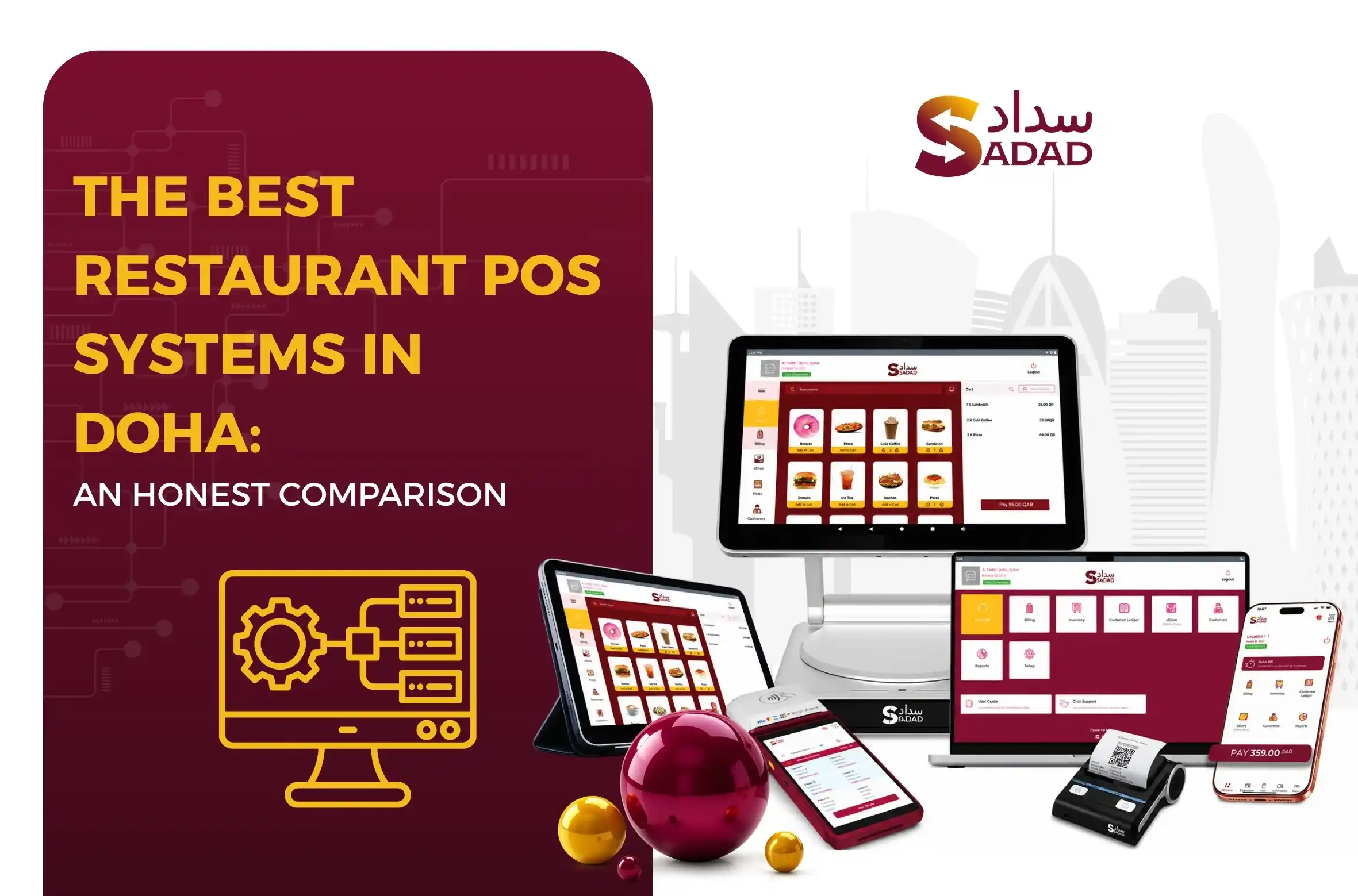
The previous section matched POS requirements to restaurant types. This section covers the actual systems operating in Doha’s market today, what each one does well, where each one falls short, and which type of operation it fits best.
One note before the comparison: this is not a paid ranking. The assessments below are based on publicly available product information, operator feedback from trade publications and review sites, and the Qatar-specific requirements established earlier in this guide. The order reflects fit for Doha’s restaurant market, starting with the strongest overall recommendation.
SADAD: The Payment Foundation Every Doha Restaurant Needs First
Before covering POS software options, there is a foundational point worth making clearly: the payment layer is not a feature inside your POS software. It is a separate infrastructure layer, and it is the one that determines whether your terminal actually says yes when a Qatari customer pays with their NAPS debit card, taps Apple Pay, or uses a Fawran transfer.
SADAD is Qatar’s first QCB-licensed independent payment gateway, with direct principal membership across Visa, Mastercard, AMEX, and NAPS. That NAPS access is the specific credential that most international payment processors bundled into global POS systems do not have, and it is the reason restaurants in Doha still experience declined local debit cards despite running otherwise functional POS setups.
In February 2025, SADAD announced a Mastercard Gateway partnership that extended its coverage to 30-plus payment methods, tokenisation, biometric recognition, and 3D-Secure authentication across a network of over 200 acquirers globally. For a restaurant in Doha, this means the full range of payment methods your customers use, whether they are Qatari residents paying with NAPS debit, tourists tapping Visa contactless, or residents using Apple Pay, is covered through one QCB-regulated gateway.
SADAD also connects to your POS software rather than replacing it. Whether you run Foodics, QSalePOS, Restroworks, or any other system, SADAD works as the payment layer underneath it. That means you get the operational software that fits your restaurant type and the payment infrastructure that actually works for Qatar’s card environment, without compromising on either.
For restaurants that want a single integrated suite rather than separate vendors, SADAD 360 combines payment processing, cloud-based management, invoicing, and reporting in one platform built specifically for Qatar’s business environment.
Best for: every restaurant in Doha that needs NAPS debit acceptance, contactless payments, and a QCB-licensed payment gateway as the foundation of their checkout infrastructure.
Foodics: The Most Complete GCC-Native POS Software
Foodics is probably the most widely used restaurant POS software in the GCC with a serious Qatar presence. It was built for the Arab market from the ground up, which means Arabic is a first-class language in the interface rather than a localisation patch. VAT compliance is built in. Talabat and Snoonu integrations are native and maintained by a team that tracks aggregator API changes.
The feature set is comprehensive: POS, KDS, loyalty programme, CRM, inventory tracking, and multi-outlet management from one dashboard. For a restaurant group running two or more sites in Doha, Foodics handles centralised menu control and consolidated reporting without the manual reconciliation work that plagues operators running separate system instances per location.
Pricing runs at approximately QAR 250 to 300 per terminal per month according to operator reports in Qatar, with an initial setup fee on top.
On the payment side, Foodics connects to gateways through third-party integrations. This means the NAPS question depends on which gateway you connect to, not on Foodics itself. Pairing Foodics with SADAD solves that gap directly.
Best for: full-service restaurants, multi-outlet chains, and operations that need a mature Arabic-first system with strong GCC support infrastructure.
Restroworks: The Enterprise Choice for Larger Operations
Restroworks is the system Gartner named best restaurant POS software in 2025. That recognition reflects what it does particularly well: deep backend functionality for complex, multi-outlet restaurant groups that need granular operational control.
The feature set goes further than most systems in this list. Anti-theft analytics flag suspicious transactions. A kitchen production system automates prep schedules to reduce food waste. Recipe management enforces portion consistency across outlets. Over 200 customisable reports. For a five-outlet casual dining chain or a hotel restaurant group in Doha, these capabilities are genuinely useful.
Before committing, confirm which local reseller will handle your account, what their response time is for a live system failure, and whether they have active Doha-based customers you can speak with directly.
Best for: hotel restaurants, multi-outlet chains, and large-format operations where reporting depth and backend control justify the investment.
QSalePOS: Built in Qatar, Proven at Scale
QSalePOS is one of the few POS systems genuinely built in Qatar rather than adapted for it. Their deployment across all FIFA 2022 stadium venues is their strongest reference point. The system covers restaurant and retail formats from one platform, which suits mixed-format venues, cafeteria-style operations, and food court environments. Their QNB integration for digital payments is confirmed, and cloud infrastructure supports real-time mobile management.
The trade-off is team size. For a single-site operator who wants local support and a system tested in Qatar’s specific environment, that is a reasonable trade-off. For a 10-outlet chain expecting enterprise-level SLAs, it requires a more careful evaluation.
Best for: single to mid-size restaurant operations in Doha, mixed retail-restaurant venues, and operators who prioritise local build over feature depth.
MealNix: The Arabic-First Option for Qatari F&B Culture
MealNix operates in Qatar through a Bizpoz franchise partnership with a Doha-based team. The product reflects how restaurants actually operate in Qatar: prayer time scheduling, full Arabic and English bilingual interface, and multi-branch management designed for family-owned restaurant groups. Talabat and Carriage integrations are confirmed. VAT reporting is built in.
The system is newer than Foodics or Restroworks, so enterprise-level feature depth is not at the same level. For a single to two-location Arabic-first operation, that gap is unlikely to matter.
Best for: Arabic-first restaurant operations, family-owned restaurant groups, and operators who need a Doha-based support team as a baseline requirement.
Slant POS: The Lean Option for Smaller Operations
Slant POS operates from regional offices in Doha and Dubai with straightforward pricing at approximately QAR 145 per month. For a single-location cafe that needs clean billing, KDS, and digital receipts without enterprise-level fees, it is a reasonable candidate.
The limitation to know upfront: Slant POS requires a separate third-party gateway for payment processing. Their own documentation confirms this. For a Doha restaurant, that gateway selection is the decision that determines whether NAPS, contactless, and Apple Pay work at your counter. Pairing Slant with SADAD closes that gap entirely.
Best for: small restaurants and cafes that want low monthly costs and have a clear plan for their payment gateway layer.
Summary Comparison Table
| System | Best For | NAPS Support | Talabat/Snoonu | Arabic UI | VAT-Ready | Local Doha Support | Indicative Cost |
| SADAD | Payment gateway layer for all restaurant types | Direct, QCB-licensed | Via POS integration | N/A | N/A | Yes, Qatar-based | Contact SADAD |
| Foodics | Full-service, multi-outlet chains | Via gateway (pair with SADAD) | Native | Full | Yes | GCC partners | ~QAR 250-300/terminal/mo |
| Restroworks | Hotel groups, large chains | Via gateway | Yes | Full | Yes | Local reseller varies | Custom/enterprise |
| QSalePOS | Single-mid size, mixed venues | QNB integration | Yes | Yes | Yes | Qatar-built team | Custom |
| MealNix | Arabic-first, family operations | Via gateway | Native | Full | Yes | Doha-based (Bizpoz) | Contact MealNix |
| Slant POS | Small restaurants, cafes | Via gateway (pair with SADAD) | Third-party | Full | Yes | Doha/Dubai office | ~QAR 145/mo |
NAPS acceptance for all software systems above depends on the payment gateway connected to the terminal. SADAD is the only QCB-licensed independent gateway in this list with direct NAPS principal membership.
With the system comparison mapped out, the next section addresses the question most restaurant owners arrive at after reading a comparison like this: how does payment processing actually work inside a restaurant POS, and why do most owners only understand it after something goes wrong?
How Payment Processing Actually Works Inside Your Restaurant POS
The comparison table in the previous section shows which systems fit which restaurant types. This section explains the mechanics that sit underneath every transaction your restaurant processes, because understanding how money actually moves through your checkout is what separates restaurant owners who make good payment infrastructure decisions from ones who keep troubleshooting the same problems repeatedly.
Most restaurant owners think about payment processing the same way they think about electricity. They flip the switch, it works, and they only think about it when something goes wrong. The difference is that a payment infrastructure problem costs you money in ways that a power cut does not: declined transactions you never see, reconciliation gaps you cannot explain, and settlement delays that affect your cash flow during your busiest weeks.
The Journey of a Single Restaurant Transaction in Doha
When a customer taps their card at your terminal, what happens in the next two to three seconds involves more moving parts than most people realise.
The terminal reads the card data and sends it to your payment gateway. The gateway authenticates the transaction request, identifies the card network (Visa, Mastercard, or NAPS), and forwards the request to the relevant card scheme. The card scheme routes it to the customer’s issuing bank, which checks the account balance or credit limit and returns an approval or decline. That response travels back through the same chain to your terminal in roughly the same time it takes to blink.
Every link in that chain needs to work. If your gateway does not have a direct connection to NAPS, the transaction either fails at the routing stage or gets sent down a slower fallback path that adds noticeable latency. A two-second tap becomes a six-second wait, which becomes an awkward moment at the counter, which becomes a customer who quietly decides to pay cash next time or not come back.
This is why the gateway is not a commodity decision. It is the component that either maintains or breaks that chain for every card type your customers use.
Settlement Timing and What It Means for Your Cash Flow
Once a transaction is approved, the money does not land in your account immediately. It moves through a settlement cycle that typically runs on T+1 or T+2 in Qatar, meaning funds from today’s transactions arrive in your merchant account one to two business days later.
For most restaurants, this timing is predictable and manageable. Where it creates problems is during high-volume periods like Ramadan, National Day weekends, or peak tourist season, when your daily transaction volume spikes significantly and your cash flow needs to keep pace with increased ingredient and staffing costs. A Ramadan payment setup that settles cleanly and on time is not a small operational detail during a month when some Doha restaurants process two to three times their normal volume.
The settlement cycle also interacts with your reconciliation process. If your POS software shows QR22,400 in sales for the day and your bank account receives QR21,890 two days later, the QR510 difference needs to be explained. That difference is usually a combination of processing fees, a refund, and possibly a failed transaction that the POS recorded as complete but the gateway declined. A clean gateway integration with your POS means that explanation is available automatically in your reporting. A poorly integrated setup means you or your accountant find it manually, every day.
The MDR You Are Actually Paying (And the One You Should Be Paying)
Every card transaction your restaurant processes carries a Merchant Discount Rate, the fee your payment processor charges for handling the transaction. In Qatar, the QCB has capped MDR on debit transactions at 1.1% for standard merchants and 0.5% for micro-merchants, which is one of the most merchant-friendly rate structures in the region.
What many restaurant owners in Doha do not realise is that the rate they are actually paying depends entirely on which gateway and acquiring bank arrangement powers their terminal. A restaurant using a bank-issued terminal with no competitive tender process may be paying rates that are technically within QCB limits but significantly above what a negotiated arrangement with an independent licensed gateway would cost.
On QR100,000 in monthly card volume, the difference between a 1.1% MDR and a 0.8% negotiated rate is QR300 per month, or QR3,600 per year. For a small restaurant, that is a meaningful number. For a high-volume operation doing QR400,000 or more in monthly card turnover, it becomes a material cost line worth reviewing.
This is one of the concrete reasons businesses in Qatar need a proper payment infrastructure review rather than defaulting to whatever their bank offered at account opening.
Why a QCB-Licensed Gateway Matters More Than Most Restaurants Realise
Qatar requires payment service providers to hold a QCB licence under the Payment Services Regulation 2021. As of January 2026, there are 15 licensed fintech payment firms in Qatar. The licensing requirement is not bureaucratic housekeeping. It has direct implications for your restaurant.
When you process payments through a QCB-licensed gateway, you have a regulated counterparty. The QCB can sanction or revoke that provider’s licence if it operates outside the rules. Your funds are subject to regulatory oversight. Dispute resolution provisions under the Payment Services Regulation apply to your transactions.
When you process through an unlicensed international processor operating in Qatar without formal licensing, none of those protections apply. If a dispute arises, your transaction data lives on a server outside Qatar and your recourse is through that company’s own terms of service, not through a local regulator.
For a restaurant owner focused on running a kitchen, this distinction is easy to overlook. It becomes very relevant the first time a significant payment batch does not settle as expected or a customer dispute escalates. Working with a why SADAD QCB-regulated payment provider is part of what you are paying for when you choose your gateway, and it is one of the reasons to treat the payment layer as a deliberate choice rather than a default.
With the mechanics of payment processing clear, the next section answers the questions that restaurant owners in Doha ask most often before buying a POS system, the ones that do not make it into vendor demos but determine whether the system actually works for their business.
What Restaurant Owners in Doha Ask Before Buying a POS System
The previous section covered how payment processing works underneath your POS. This section addresses the questions that come up consistently when restaurant owners in Doha are making their final decision, the ones that rarely come up in vendor demos but tend to matter most six months into using a system.
Do I need a separate payment gateway if my POS already has payments built in?
Almost certainly, yes, if you want to accept NAPS debit cards from Qatari customers. Most POS systems that claim to have payments built in are connecting to an international gateway through a partnership arrangement. That gateway may handle Visa and Mastercard well. It may not have a direct NAPS connection, which means Qatari bank-issued debit cards will either decline or require a workaround that creates friction at your counter every day.
The cleaner approach is to treat your POS software and your payment gateway as separate decisions. Choose the POS software that fits your restaurant type based on the comparison in this guide. Then choose a QCB-licensed gateway with direct NAPS access, Visa, Mastercard, AMEX, and contactless support as your payment layer. The two connect through an API or terminal integration, and you have full coverage for every customer who walks through your door in Doha.
My Qatari customers keep getting declined at my terminal. What is causing it?
In most cases, the cause is a missing or broken NAPS integration in your payment gateway. The card looks like any other debit card on the surface, and the terminal usually shows a generic decline rather than a NAPS-specific error, so the connection between the gateway gap and the failed transactions is not obvious.
The fastest way to diagnose it: ask your current payment provider whether they have a direct NAPS integration or whether NAPS transactions route through a Visa or Mastercard fallback. If they cannot answer that question clearly and immediately, you have found the problem. A payment gateway for small businesses in Qatar that cannot confirm direct NAPS access is not the right gateway for a restaurant serving Qatari customers.
How long does it take to set up a POS and payment gateway in Doha?
The POS software side typically takes one to three weeks from contract to go-live, depending on menu complexity, whether you need hardware shipped, and how quickly your staff training is completed. The payment gateway side, with the right provider, can be faster. Fast onboarding in Qatar for a licensed gateway runs in days rather than weeks when your commercial registration and bank account documents are in order.
The part that takes longest is usually the merchant account verification process with your acquiring bank. Having your Commercial Registration, TRN, Qatar Chamber membership certificate, and lease agreement ready before you start the application removes the most common delays.
Can I accept Apple Pay, Google Pay, and contactless at my restaurant terminal?
Yes, provided your terminal hardware supports NFC and your gateway is configured for contactless acceptance. In Qatar, contactless is the default payment behaviour for a large share of customers. The Visa data from FIFA World Cup 2022 showed 89% of in-venue transactions were contactless, and that behaviour carried through into everyday retail and dining.
For a restaurant specifically, contactless acceptance is not a premium feature. It is the baseline that customers expect. If your terminal requires chip-and-PIN for every transaction, you will see it in your checkout queue during peak service. The fix is a terminal with NFC enabled and a gateway that supports tap-to-pay across Visa, Mastercard, NAPS, and the major mobile wallets.
What happens to my payments if the internet goes down during service?
This depends entirely on which POS and gateway combination you are running. A POS with genuine offline mode stores transactions locally and processes them when the connection restores, so your checkout keeps running uninterrupted. A gateway with offline queuing holds approved transactions locally and submits them for settlement once the connection returns.
Not all systems handle this the same way. Some POS systems have offline order management but require a live internet connection for payment processing, meaning you can take orders but cannot collect payment during an outage. Ask your POS vendor and your gateway provider separately how they handle a 15-minute internet outage during dinner service. The answer tells you everything you need to know about how prepared the system is for real operating conditions.
How do I make sure my POS and payment gateway talk to each other properly?
The cleanest integration is a direct API connection between your POS software and your gateway. This means transaction data flows automatically between the two systems, your end-of-day POS report matches your gateway settlement report, and reconciliation is automatic rather than manual.
Some integrations use middleware or a semi-integrated terminal setup, where the gateway and POS communicate through a payment terminal that sits between them. This works, but it adds a layer that can desync if either system updates its API. Before going live, ask your provider to demonstrate a complete transaction flow from order entry in the POS through to payment approval and automatic reconciliation. If the demonstration requires manual steps in the middle, ask why.
For restaurants that also need invoice and billing management connected to the same system, a fully integrated platform removes the need to reconcile across separate software tools entirely.
How do I reduce the cash my restaurant is still handling?
The short answer is: make every digital option easier than cash for your customers. That means contactless terminals at every counter, a payment link for phone orders, QR code payment options for table service, and a WhatsApp checkout workflow for regulars who order ahead.
Reducing cash handling in a restaurant is not just about customer convenience. It cuts the time your manager spends counting and reconciling the till every night, reduces shrinkage risk, and produces cleaner daily reporting. Every QR or card transaction is automatically recorded. Every cash transaction requires manual entry to show up in your data. Over a month of trading, that difference in data quality affects every operational decision you make.
Is there a risk of payment fraud at my restaurant terminal?
Yes, though the nature of the risk has shifted. Physical card skimming at POS terminals has declined significantly as contactless replaced swipe transactions. The more common fraud vectors in Qatar’s restaurant environment today involve chargebacks on card-not-present transactions, such as phone orders paid by card, and social engineering attacks where staff are persuaded to process refunds to different accounts.
A QCB-licensed gateway provides a regulated dispute resolution process that unregulated processors cannot match. For card-not-present transactions specifically, 3D-Secure authentication adds a layer of verification that reduces your chargeback exposure. Understanding payment fraud in Qatar and how your gateway handles disputed transactions is a worthwhile conversation to have with any provider before you commit.
Running a restaurant in Doha is hard enough without your payment setup working against you.
SADAD is Qatar’s first QCB-licensed independent payment gateway, with direct access to NAPS, Visa, Mastercard, and AMEX. It connects to the POS software you already use or plan to use, and it is built specifically for Qatar’s card infrastructure, which means NAPS debit cards, contactless, Apple Pay, Google Pay, and Fawran all work at your counter without workarounds or fallback routing.
If you are setting up a new restaurant in Doha or replacing a payment setup that is not working, SADAD Plus gives you the full payment infrastructure layer in one QCB-regulated platform. Setup is measured in days, not months. Support is local. And the card decline problem you have been tolerating at your counter goes away on day one.
Last Articles
Articles
Connect Shopify Payment Gateway via Sadad (4 Steps)
Shopify Payment Gateway Qatar You have set up your Shopify store, added your products, configured your pricing, and customized the design. Yet, the most critical challenge remains: How do you...
Read more
Articles
Online Payment: How Does It Contribute to Improving Customer Experience?
Online Payment Solutions: How They Elevate Customer Experience and Drive Sales Growth A seamless and secure online payment experience serves as the foundation for success in modern e-commerce, smart stores...
Read more
Articles
SADAD Cloud | An Integrated Cloud Platform for Managing Online Payments and Financial Collections in Qatar
Sadad Cloud: An Integrated Cloud Platform for Managing Online Payments and Financial Collections in Qatar Amid Qatar’s rapid digital transformation and the growing shift toward automated financial operations, payment management...
Read more