
Articles
Qatar Payments Market 2026: The Data, the Trends, and What Every Business Here Needs to Know
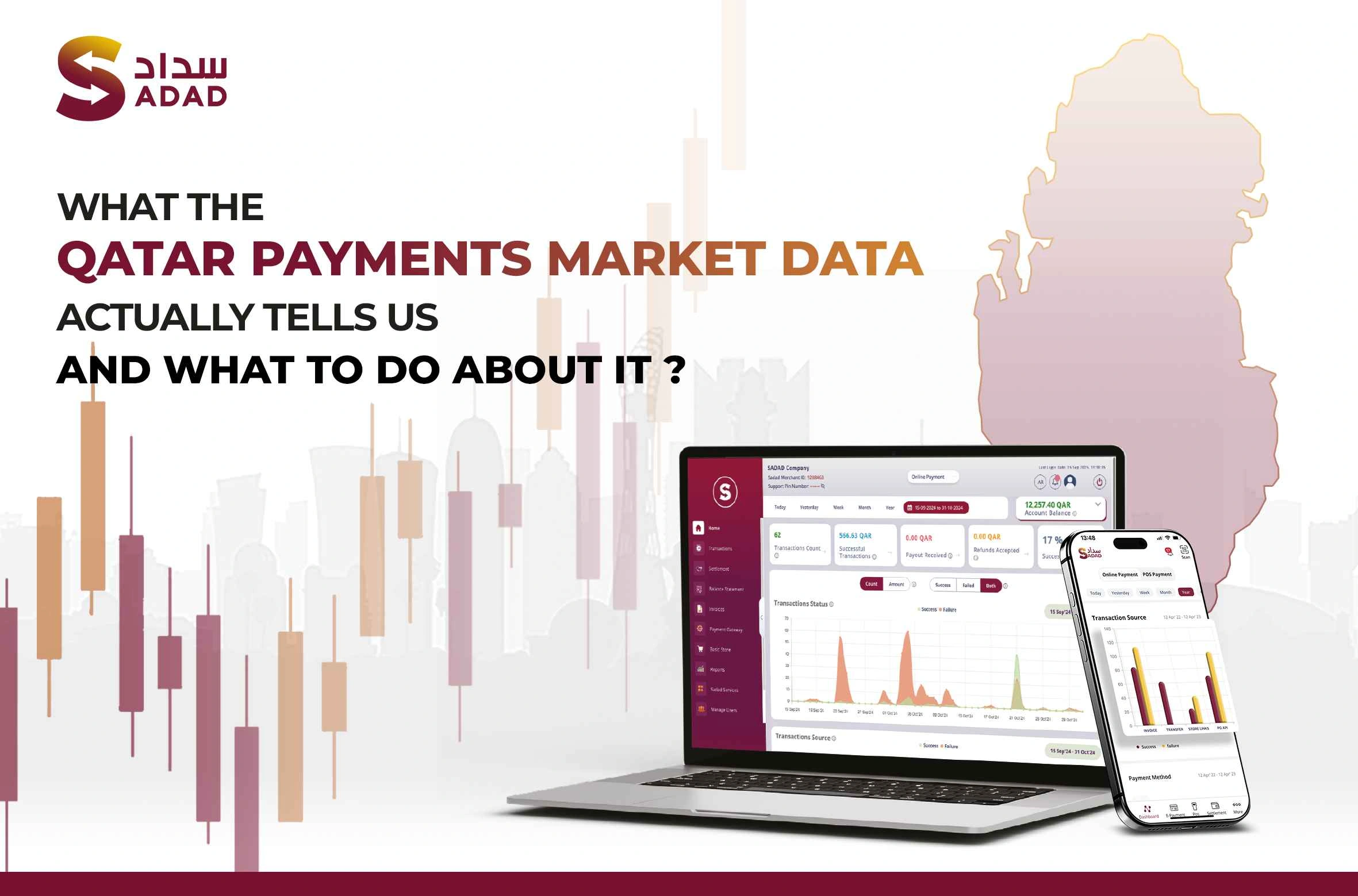
Qatar’s Payments Market Is Moving Fast. Is Your Business Keeping Up?
In December 2025, Qatar’s payment systems processed QAR 14.6 billion across nearly 62 million transactions.
That’s not a forecast. That’s what actually happened, according to data from Qatar Central Bank.
And it’s only going to accelerate from here.
The Qatar payments market is valued at $7.04 billion in 2025 and is projected to reach $14.54 billion by 2031, according to a January 2026 ResearchAndMarkets report.
That’s a market that has doubled in six years, driven by real regulatory changes, new payment rails, and a consumer base that has already moved on from cash.
The question isn’t whether this market is growing. It clearly is. The question is whether your business is set up to grow with it or whether you’re still running on infrastructure built for 2022.
Here’s a clear-eyed look at where the market stands, what’s driving it, and where most businesses in Qatar are leaving money on the table.
But, before getting into what’s driving that growth, it’s worth looking at what the market actually processed last year because the live numbers are more telling than any forecast.
The Numbers Behind Qatar’s Payments Market Right Now
December 2025 wasn’t a one-off. Look at the monthly QCB data across the year, and you see the same story repeating: QAR 15.28 billion in May, QAR 16.68 billion in September, QAR 18.6 billion in November. Month after month, the numbers climb.
Zooming out, the Mordor Intelligence Qatar Payments Market report puts the market at $7.04 billion in 2025, heading to $12.98 billion by 2030 at a 13.01% CAGR. That growth isn’t theoretical; you can see it in the QCB’s own monthly releases.
What’s actually driving the volume right now?
POS terminals account for 51% of transaction value; e-commerce sits at 27%; Fawran instant payments have climbed to 20%; and mobile wallets hold 2%. That last number is small today, but as we’ll get into, it’s moving faster than any other segment.
One data point that often surprises people: 92% of card purchases in April 2025 were contactless. Tap-to-pay didn’t just grow in Qatar; it became the default. If your payment setup in Qatar isn’t built around that reality, you’re already working against consumer habits.
That 92% figure is also a competitive signal.
Consumers in Qatar have been trained by years of tap-to-pay to expect frictionless checkout. When they encounter a terminal that slows them down, the experience registers, and so does your brand.
Those numbers don’t happen by accident. Behind them is a deliberate regulatory engine that most businesses in Qatar pay far too little attention to.
The QCB Is Reshaping the Rules, and That’s Actually Good for Your Business
Most business owners hear “central bank policy” and assume it doesn’t affect them directly. In Qatar right now, that assumption is worth revisiting.
In December 2024, the QCB launched QA-RTGS, Qatar’s real-time gross settlement system built on the ISO 20022 standard. In plain terms, this means faster, richer, more reliable settlement between banks.
The infrastructure that moves money behind the scenes got a serious upgrade, and businesses on modern payment rails are already benefiting from it.
Then there’s the MDR reform. The QCB cut debit merchant discount rates to 0.5% for micro-merchants and to 1.1% elsewhere. If you’re processing meaningful volume, that reduction shows up in your margins.
The QCB also opened direct API integration for licensed fintechs, which is part of why you’re seeing more payment options appear in Qatar faster than ever before. It’s not a coincidence.
It’s a deliberate infrastructure policy designed to accelerate the development of Qatar’s digital payments ecosystem.
And on the SME side, the government’s SMEs Go Digital program has already onboarded 173 businesses across Qatar in 2025, with digital payment systems among the top solutions adopted.
The policy changes are live, and the rails are built. What matters now is understanding exactly which parts of the market are moving fastest and whether your business is positioned on the right side of each one.
Four Segments Defining Qatar’s Payments Market in 2026
The market isn’t a single thing moving in a single direction. It’s four distinct segments, each growing at a different pace, each with different implications for your business.
#1 Card Payments: Still Dominant, But the Bar Has Moved
POS terminals account for 51% of Qatar’s total payment value, and e-commerce sits at 27%, according to QCB data from July 2025.
Combined, cards still run this market.
But the expectation around cards has shifted. With 92% of purchases now contactless, a terminal that doesn’t support tap-to-pay, e-wallet, or mPOS isn’t just outdated it’s a friction point that costs you sales at the moment they’re about to happen. Understanding what payment methods are available in Qatar is the starting point for closing that gap.
#2 Fawran: The Instant Payment Rail Your Business Should Already Be On
Fawran ended 2025 with 3.614 million registered accounts and QAR 5.092 billion in transaction value in December alone. It processed QAR 10.1 billion in its first 14 months; that’s not slow adoption, that’s pent-up demand releasing at speed.
What makes Fawran interesting for businesses isn’t just the consumer side. Transfers happen in seconds using a phone number instead of an IBAN, fees are as low as QAR 0.50 per transaction, and the system runs 24/7.
The B2B use case is growing quietly, and businesses that can receive Fawran payments have a real cash-flow advantage over those still waiting for bank transfer cycles.
There’s also a collections angle that most business owners miss. Fawran’s request-to-pay feature lets you send a payment request directly to a customer’s phone.
Instead of chasing an invoice, you send a prompt they can approve in seconds. For service businesses and B2B operators, that changes the entire receivables conversation.
#3 Mobile Wallets: 2% Today, But Watch the Trajectory
Qatar Mobile Payment registered 1.27 million wallets by December 2025, and after the QCB introduced multiple wallets per mobile number in May 2025, new registrations jumped 19% month-on-month. The segment is projected to hit $5.35 billion by 2031 at a 23.15% CAGR, the fastest growth rate of any payment segment in Qatar.
A two percent share today doesn’t mean two percent tomorrow. Businesses that support Apple Pay and other mobile wallet acceptance now won’t need to retrofit their checkout later when that share doubles.
#4 Cross-Border Payments: The Segment Most Businesses in Qatar Underestimate
Over 88% of Qatar’s population is expatriates, and in 2023 alone, US$11.2 billion flowed out in remittances. The cross-border segment is growing at a 17.04% CAGR, second only to digital wallets. QNB’s activation of UPI for Indian residents unlocked a 370,000-strong customer segment and produced a 14% lift in weekend spend at acquired merchants, according to Mordor Intelligence.
If your payment setup only handles local Qatari cards, you’re structurally invisible to a large portion of the people spending money in this country. A full-stack payment platform built for Qatar handles this without requiring you to manage separate integrations for every corridor.
It’s worth naming what that 14% weekend spend lift actually represents. It’s not marketing spend or a promotional discount; it’s revenue that was already in the market, going to merchants who happened to be set up for it. The customers were there. The infrastructure made the difference.
Four segments, all growing. But here’s what the market-level data doesn’t show: that growth isn’t landing evenly across businesses in Qatar
The SME Gap: Why Qatar’s Payment Growth Isn’t Reaching Every Business Equally
Here’s something worth sitting with. SMEs account for over 95% of Qatar’s private sectorand contribute an estimated 15–17% of non-oil GDP.
The same Mastercard SME Confidence Index found that 88% of SMEs in Qatar have the highest rate in the entire MENA region, projecting similar or increased revenue. Confidence is not the problem.
The problem is infrastructure. Many small and mid-size businesses in Qatar are still running on a patchwork of proprietary QR codes, manual invoicing, and payment tools that don’t talk to each other.
The ResearchAndMarkets January 2026 report specifically flags fragmented QR adoption among SMEs as one factor moderating Qatar’s near-term growth potential.
Think about what that means practically. A customer walks in, wants to pay with their QMP wallet, and your terminal doesn’t support it. That’s not a technology problem; that’s a revenue problem that’s invisible until you go looking for it.
And it compounds. That customer who couldn’t pay with their wallet today doesn’t necessarily come back tomorrow. In a market where 88% of SMEs are projecting growth, the businesses that close these small friction points consistently are the ones that actually capture it.
The gap is between how fast this market is moving and how slowly most businesses are updating the infrastructure underneath them.
Closing that gap doesn’t require starting over. It starts with being honest about where the friction actually is.
What “Keeping Up With Qatar’s Payments Market” Actually Looks Like in Practice
Most businesses don’t fall behind all at once. It happens gradually, you onboard one tool for online payments, another for POS, maybe you’re still sending invoices manually on WhatsApp.
Each piece works in isolation, but nothing connects, and you end up spending more time reconciling than actually running your business.
Keeping up with this market in 2026 isn’t about chasing every new payment trend. It comes down to three honest questions.
Can your customers pay you the way they actually want to? Contactless, QMP wallet, Fawran, online, if any of those aren’t covered, you’re creating friction at the exact moment someone is ready to hand you money.
Are you visible to Qatar’s expat majority? If your checkout only handles local Qatari debit cards, you’re structurally missing a significant share of the people spending in this market every day.
Do you have a clear view of your payment activity across all channels?
Reconciling across three separate dashboards isn’t a minor inconvenience; it’s time and accuracy you’re losing weekly.
A cloud-based payment solution built for Qatar consolidates all of this without requiring you to rebuild from scratch. The infrastructure exists. The question is whether your business is properly plugged into it.
If you still have questions about what any of this means specifically for your business, these are the ones that come up most often.
Frequently Asked Questions About Qatar’s Payments Market
How big is Qatar’s payments market in 2025 and 2026?
The Qatar payments market is valued at $7.04 billion in 2025 and projected to reach $14.54 billion by 2031, according to a January 2026 ResearchAndMarkets report.
In real terms, the QCB reported QAR 18.6 billion processed in November 2025 alone, so the live numbers are already ahead of many projections. For businesses evaluating payment acquiring solutions in Qatar, this context matters.
What is Fawran, and why does it matter for businesses?
Fawran is Qatar’s instant payment system, running 24/7, allowing transfers via phone number instead of IBAN.
By December 2025, it had 3.614 million registered accounts and processed QAR 5.092 billion in that month alone.
For businesses, the practical advantage is faster collections and lower transfer fees, as low as QAR 0.50 per transaction. Getting set up quickly is straightforward; fast payment gateway onboarding in Qatar means you don’t need weeks to get live.
Are mobile wallets worth supporting as a business in Qatar?
Yes, and the timing matters. Qatar Mobile Payment hit 1.27 million registered wallets by the end of 2025, growing at a projected 23.15% CAGR through 2031.
The businesses setting up invoice and payment link solutions now are building toward a checkout experience that covers wallets without needing a separate integration later.
What is the QCB’s Third Financial Sector Strategy?
It’s Qatar Central Bank’s 2024–2030 plan to modernize the country’s entire financial infrastructure.
For businesses, the most relevant outcomes are already live: reduced debit MDRs, the QA-RTGS settlement backbone, and direct API access for licensed fintechs. Understanding how security and compliance work within Qatar’s payment ecosystem is essential for operating confidently in this environment.
How is Qatar’s payments market different from the rest of the GCC?
Qatar moved faster on real-time infrastructure than most GCC peers. QA-RTGS went live in December 2024 on ISO 20022, giving Qatar a modern settlement backbone that many regional markets are still building toward.
Fawran’s adoption pace and the QCB’s decision to open direct API integration for fintechs put Qatar in a genuinely different position.
That’s part of why SADAD operates as Qatar’s first independent fintech, with a direct NAPS and QPay connection built specifically for this infrastructure, not adapted from elsewhere.
The answers point in one direction, and so does everything happening in Qatar’s payment ecosystem right now.
Qatar’s Payments Market Won’t Wait, and Neither Should Your Setup
The data in this article isn’t speculative. The QCB publishes it monthly, the market research firms are aligned on the direction, and the regulatory changes are already live.
Qatar’s payments market is doubling over a decade, instant payments are taking a larger share every month, and the businesses best positioned for that growth are those that treated their payment infrastructure as a strategic decision rather than an afterthought.
The gap we talked about between a confident SME sector and infrastructure that hasn’t kept pace is closeable.
It doesn’t require a full technology overhaul. It usually starts with consolidating what you already have onto rails that were actually built for this market.
That’s what SADAD was designed for. As Qatar’s first independent fintech with a direct NAPS and QPay connection, QCB-licensed, PCI-DSS and ISO 27001 certified, and hosted on Microsoft Azure with full Qatar data residency, it’s the only payment solution built natively for Qatar’s market, not a global platform retrofitted for local compliance.
If you want to see how that translates to your specific business, getting started takes less time than you’d expect.
Last Articles
Articles
Qatar Payments Market 2026: The Data, the Trends, and What Every Business Here Needs to Know
Qatar's Payments Market Is Moving Fast. Is Your Business Keeping Up? In December 2025, Qatar's payment systems processed QAR 14.6 billion across nearly 62 million transactions. That's not a forecast....
Read more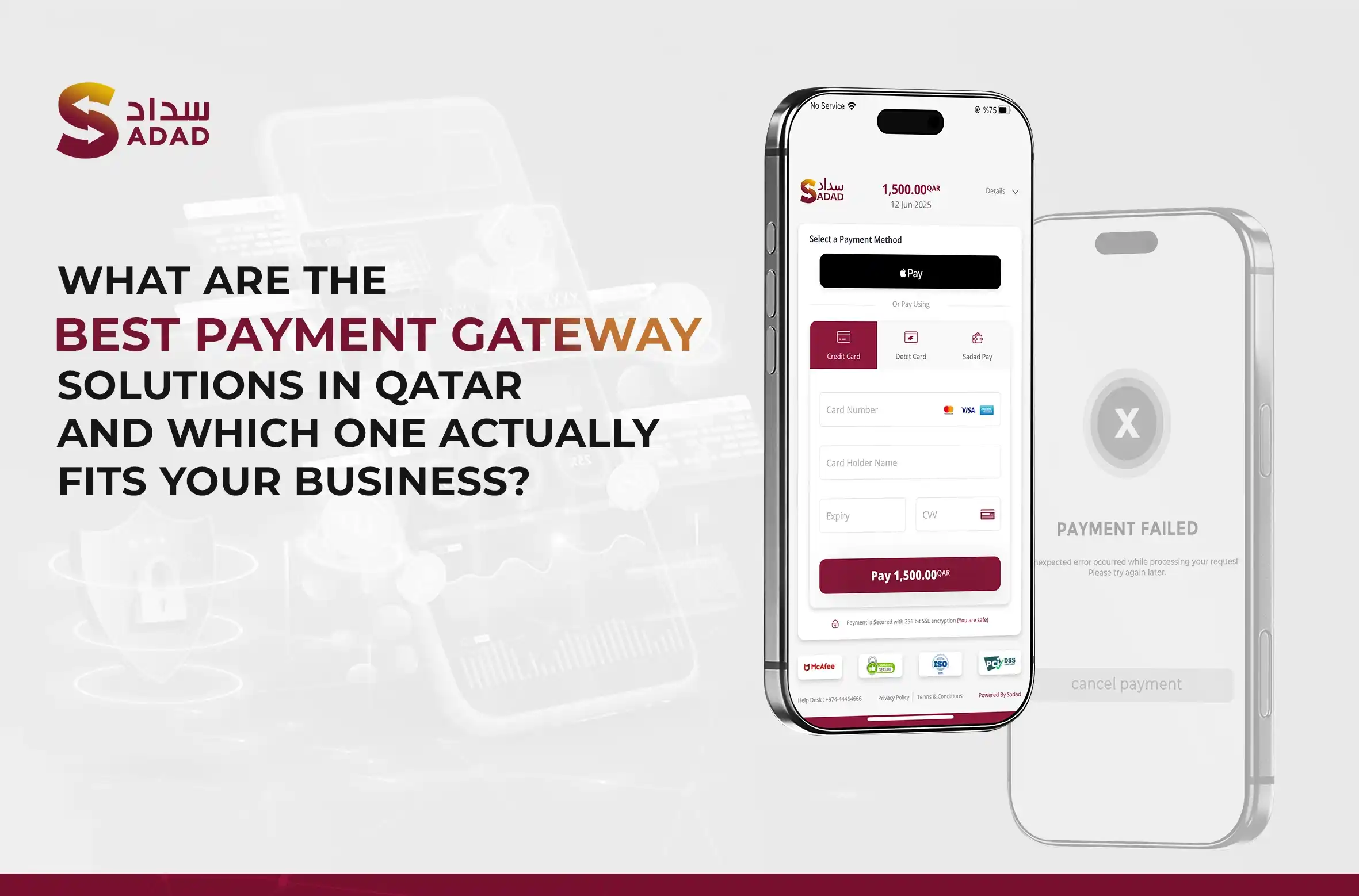
Articles
What Are the Best Payment Gateway Solutions in Qatar? A Full Comparison for Business Owners
What Are the Best Payment Gateway Solutions in Qatar, And Which One Actually Fits Your Business? Most businesses in Qatar don't have a payment problem. They have a payment frustration....
Read more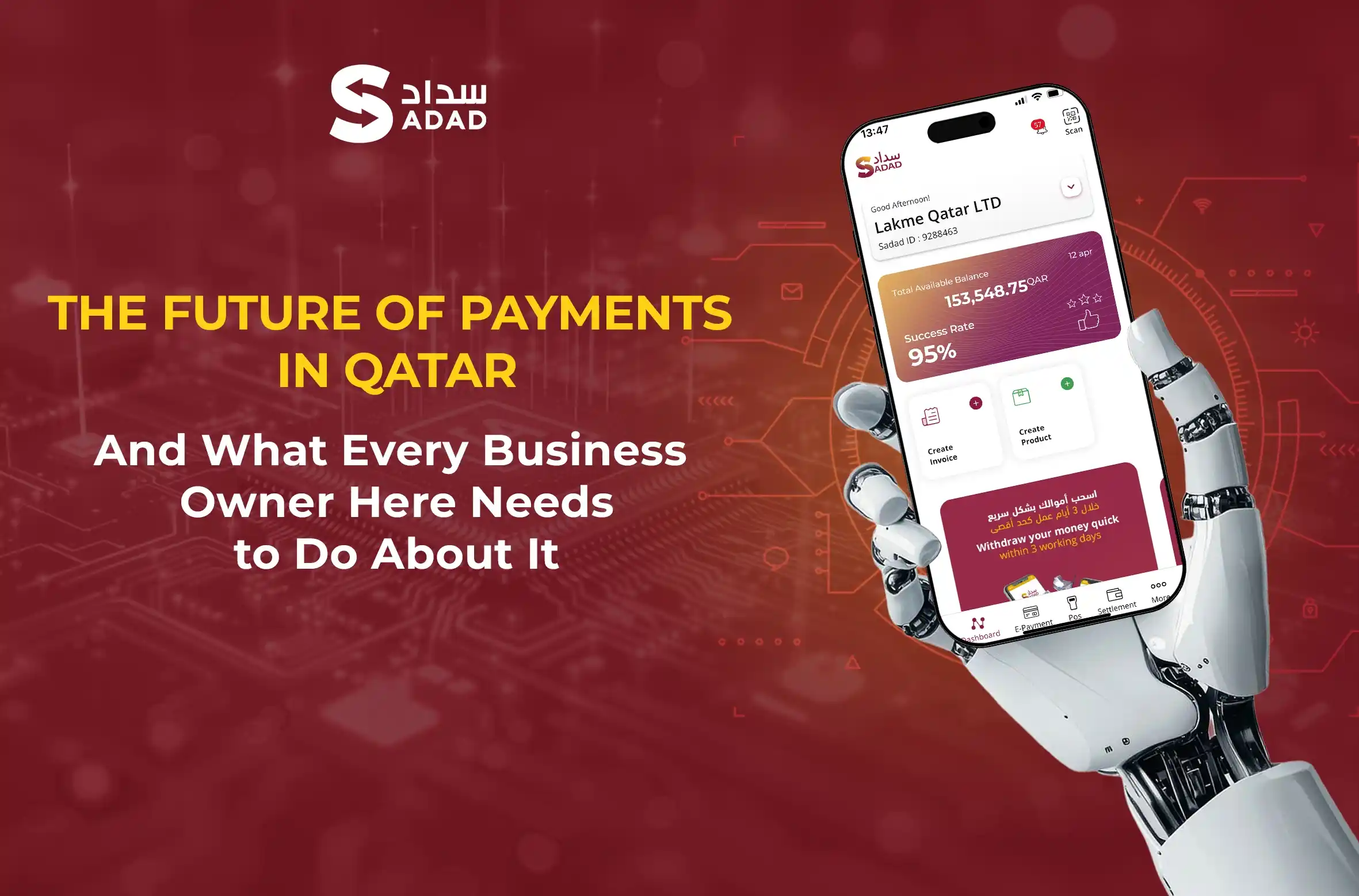
Articles
The Future of Payments in Qatar: 5 Shifts That Will Change How Your Business Gets Paid
The Future of Payments in Qatar: What Every Business Needs to Know In July 2025, Qatari businesses processed $4.4 billion in digital transactions, totaling 51.7 million individual payments. SAMENA Daily...
Read more