
Articles
Full Stack Payment Platforms in Qatar: Stop Losing Money to Settlement Delays
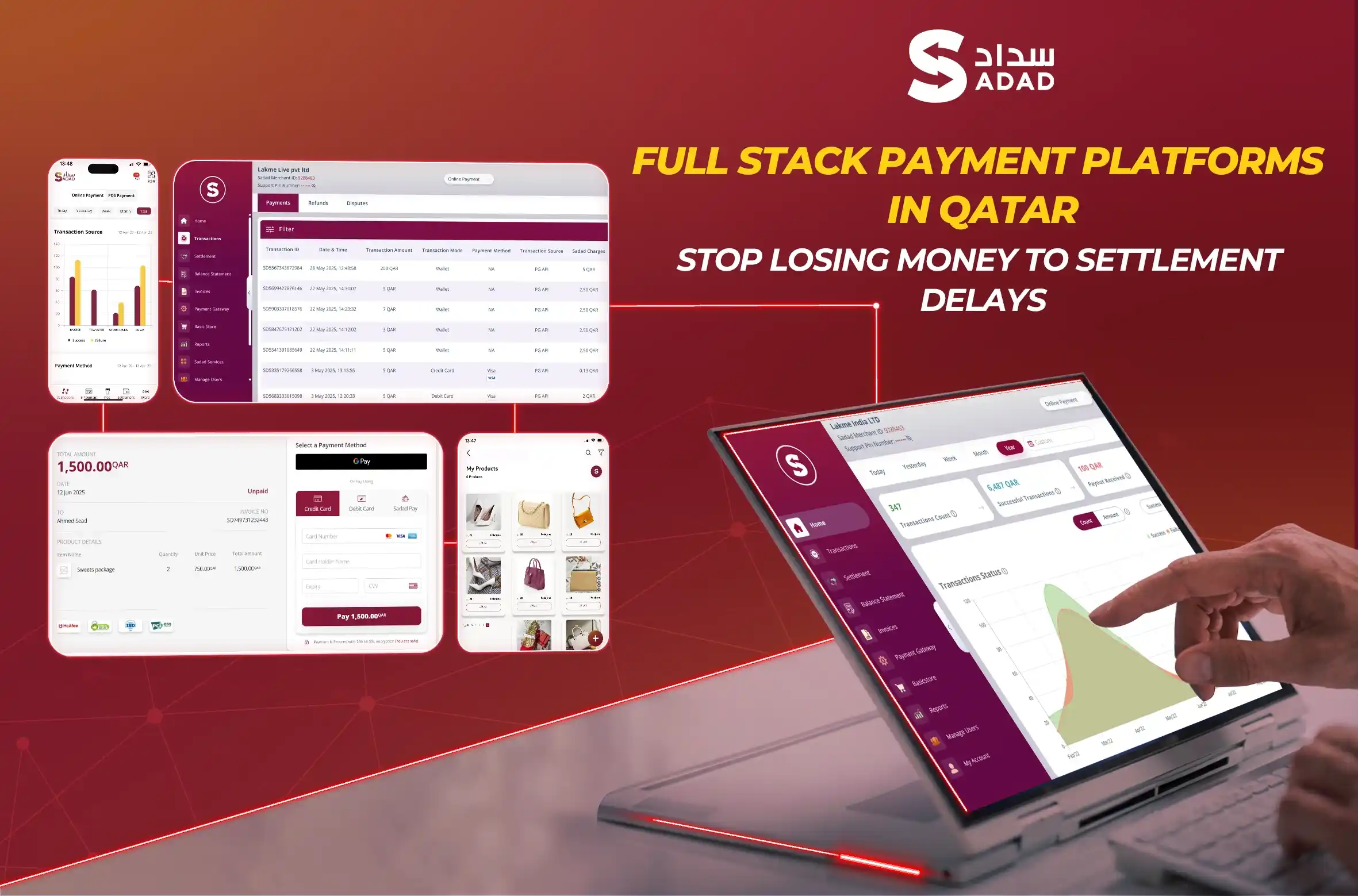
Full Stack Payment Platforms in Qatar: The Complete Guide for Businesses
If you’re running a business in Qatar, you’ve probably felt the pain of cobbling together multiple payment vendors just to accept payments from your customers.
I’ve spoken with dozens of Qatar business owners, and the story is almost always the same: one vendor for online payments, another for in-store POS, a third for invoicing, and maybe a fourth for reconciliation. Then you’re spending hours every week trying to make sense of it all while waiting 5-7 days for your money to hit your account.
According to McKinsey, businesses in the GCC region lose an average of 15-20% of revenue to payment friction—cart abandonment, failed transactions, and operational inefficiencies.
Read more from McKinsey :
The 2025 McKinsey Global Payments Report: Competing systems, contested outcomes
In Qatar, where the Central Bank of Qatar is actively pushing toward a cashless economy as part of Qatar National Vision 2030, the gap between consumer expectations and business capabilities is widening rapidly.
The solution isn’t adding another vendor to the mix. It’s finding a full stack payment platform that can handle everything under one roof—preferably one that actually understands Qatar’s regulatory environment and has direct integration with NAPS (the National ATM & Payment Network).
Since 2018, Qatar has had its first independent payment solutions company then it linked directly to NAPS integration: SADAD.
Whether you choose SADAD or another platform, understanding what “full stack” means is critical to making the right decision.
Key Highlights
Before we dive deep, here’s what you’ll learn:
- I explain what makes a payment platform “full stack” and why it matters for Qatar businesses aiming for digital transformation
- I break down the 7 core capabilities every full stack platform needs—from processing to instant settlements to real-time reporting
- I share how Qatar Central Bank licensing and NAPS integration separate true local platforms from international adapters
- I reveal the hidden costs of using multiple payment vendors vs. a unified platform (time, settlement delays, integration maintenance)
- I outline a framework for evaluating platforms based on your business type and transaction volume
- I explain why direct NAPS integration matters for Qatar businesses—faster settlements, lower costs, native local payment methods
- I address common misconceptions about payment platform migration and implementation timelines
What Makes a Payment Platform “Full Stack”?
When I first started researching payment platforms for businesses in Qatar, I noticed everyone was talking about “payment gateways” as if they were the complete solution. But here’s the thing: a payment gateway is just one piece of the puzzle.
The Fragmentation Problem
Most businesses in Qatar I’ve spoken with use 4-5 vendors. Each has its own dashboard, settlement schedule, API, and support team. Your finance team is spending 6-10 hours every week just trying to reconcile transactions across these systems. You’re waiting 5-7 business days to receive your funds.
One retail business owner in Doha told me, “We were literally logging into four different platforms every morning just to see how much money we made yesterday. And even then, the numbers didn’t match until we spent hours cross-referencing everything.”
What “Full Stack” Actually Means
A true full stack payment platform handles everything in one integrated ecosystem:
- Multi-channel payment processing – Online, in-store, mobile, and invoice payments all in one place
- Multiple merchant solutions – Payment Gateway, Invoice systems, E-commerce stores, Soft POS, Traditional POS
- Instant settlement capabilities – No waiting days for your money
- Automated reconciliation – Real-time transaction tracking across all channels
- Smart analytics dashboard – Real-time reporting and performance visibility
- Developer tools – APIs, SDKs, integration support, GitHub resources
- 24/7 local support – Customer service in your time zone
Think of it as the difference between buying individual car parts and getting a fully assembled vehicle with a warranty and a service team.
Why This Matters in Qatar Right Now
Qatar isn’t just talking about going cashless—it’s actually happening. The Qatar Central Bank has been actively promoting the adoption of digital payments. QPay, Qatar’s national mobile wallet, has seen massive growth. E-commerce in Qatar grew by 42% in 2023 alone, according to Visa’s MENA e-commerce report.
But here’s what really matters from a business perspective: instant access to your money. When you’re operating on tight margins or managing inventory that requires frequent restocking, waiting 5-7 days for settlements isn’t just inconvenient—it’s actively hurting your business.
A Boston Consulting Group study found that reducing settlement times from 7 days to instant settlement improved working capital efficiency by 35% for SMEs in the GCC. That’s real money you could be using to grow your business.
The 7 Core Capabilities Every Full Stack Platform Must Have
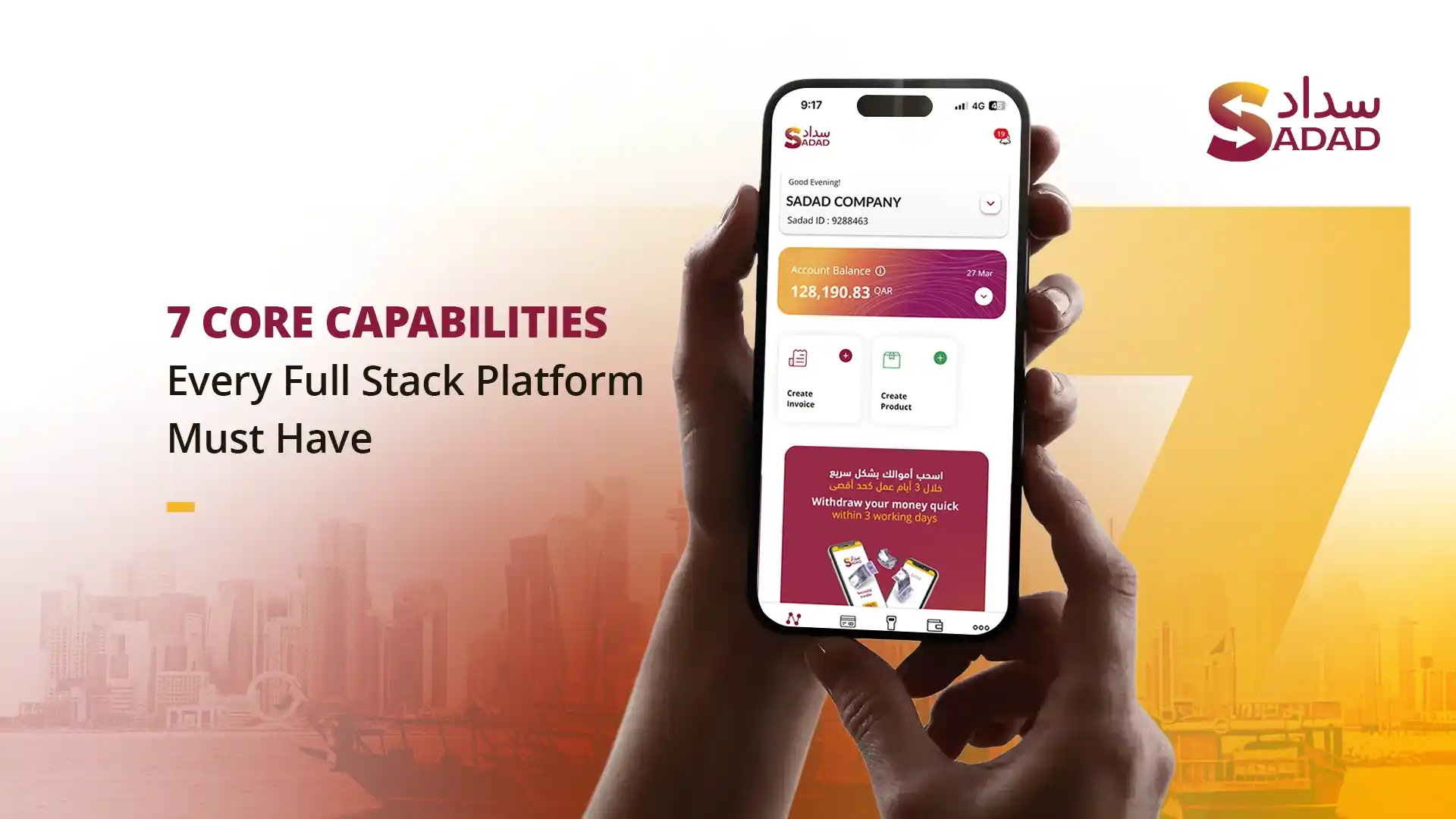
From my conversations with business owners and finance leaders in Qatar, I’ve identified seven capabilities that separate real full stack platforms from vendors just calling themselves that.
1. Multi-Channel Payment Processing & Merchant Solutions
A true full stack platform needs to support:
- Online payments – Payment Gateway with API integration for websites and apps
- Invoice payments – Send professional invoices with direct payment links (crucial for B2B)
- E-commerce storefronts – Ready-made online store solutions like the smart store
- Mobile payments – Soft POS that turns smartphones into payment terminals
- In-store payments – Traditional POS terminals
- Multiple payment methods – Cards, QPay, NAPS, bank transfers
A Qatar retailer using SADAD’s full suite can accept online payments on its website, send invoices to corporate clients, and process in-store card payments—all on the same dashboard with the same settlement schedule.
2. Smart Payment Routing
Smart payment routing is the platform’s ability to automatically select the best path for each transaction based on cost, success rate, geography, and currency. For Qatar businesses, this means local transactions going through NAPS (lower cost, higher success rate) and international transactions routed appropriately.
According to Stripe’s payment optimization research, smart routing can increase authorization rates by 2-5%. On 10,000 monthly transactions, that’s 200-500 additional successful payments.
3. Fraud Prevention & Risk Management
According to the GCC E-commerce Fraud Report 2023, online fraud attempts in MENA increased by 18% year over year. The average fraud loss for businesses without proper prevention systems was 1.2% of revenue.
A full stack platform should include real-time fraud scoring, 3D Secure 2.0 compliance, customizable risk rules, and an understanding of Qatar-specific fraud patterns.
5. Smart Performance Dashboard & Real-Time Analytics
With a proper full stack platform, business owners open one dashboard on their phone and see everything instantly: today’s revenue across all channels, transaction breakdown by payment method, settlement status, and real-time performance across all locations.
As one CFO of a multi-location retail chain told me, “The Smart Performance Dashboard gives me real-time visibility into all our locations. I can check revenue from my phone while I’m traveling. That’s powerful for decision-making.”
6. Developer-Friendly Integration & Support
From my experience working with development teams, documentation quality makes or breaks integration projects. I’ve seen integrations take 2-3 months with poorly documented APIs and 1-2 weeks with well-documented ones.
SADAD provides comprehensive API documentation, GitHub resources, and technical support during integration. Their fast, easy registration process lets you start testing within days, not weeks.
7. Qatar Central Bank Licensing & Compliance
This is non-negotiable. Operating as a payment service provider in Qatar requires proper licensing from the Qatar Central Bank. When you work with an unlicensed platform, you’re putting your business at risk.
SADAD, as Qatar’s first independent Qatari payment solutions company, holds official QCB licensing. This isn’t an add-on—it’s built into the platform’s DNA from day one.
Platforms with direct QCB licensing have faster regulatory approvals, lower risk of compliance issues, direct relationships with Qatar banks, and better support for QCB reporting requirements.
What Makes Qatar Different: Direct NAPS Integration
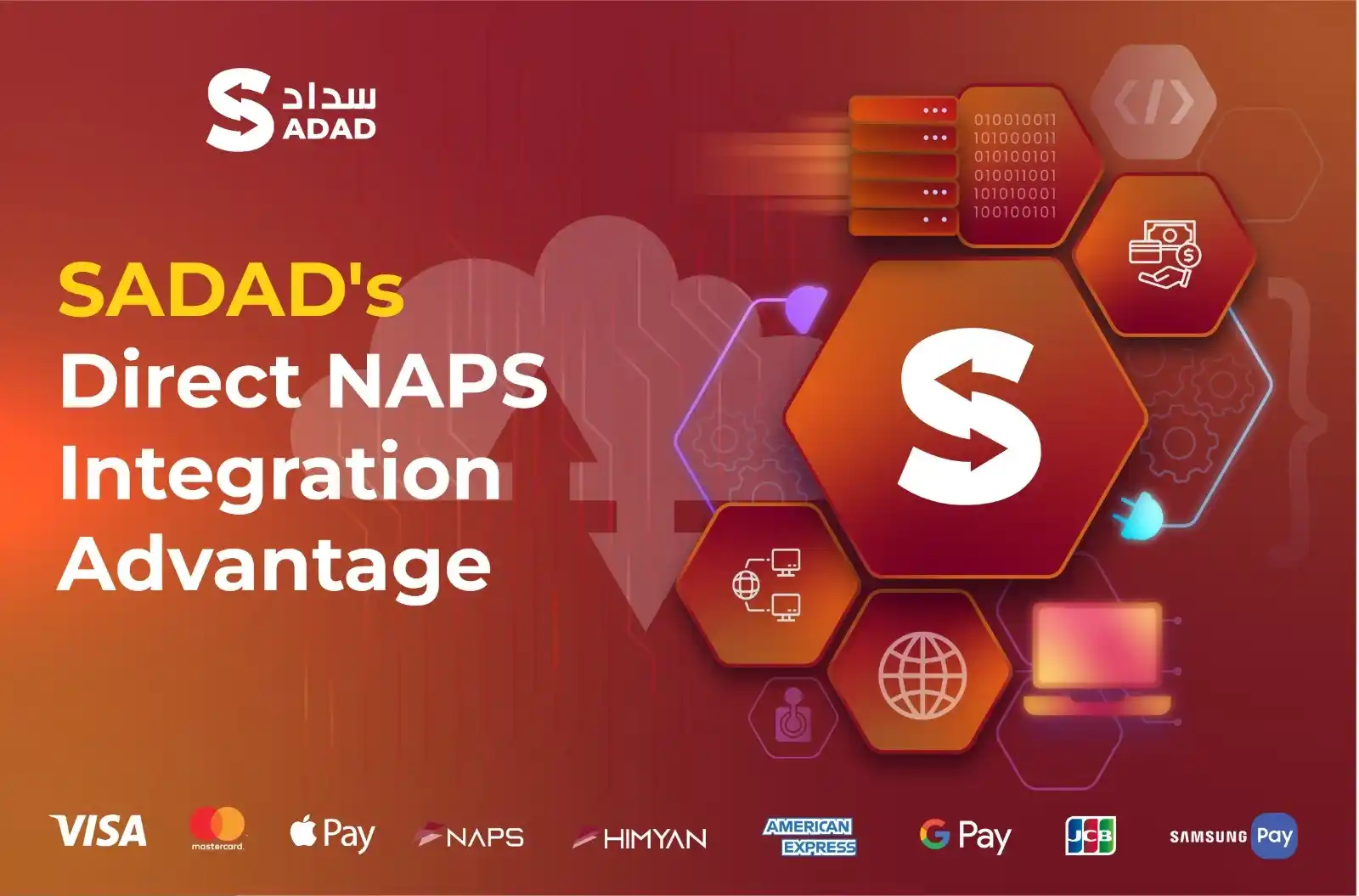
This is one of those technical details that has massive practical impact—especially on your cash flow and costs.
What is NAPS?
NAPS (National ATM & Payment Network) is Qatar’s national payment infrastructure—the backbone that connects banks, merchants, and payment processors. Think of it like a highway system. You can take the direct highway (NAPS) or you can go through multiple toll roads with various intermediaries.
SADAD’s Direct NAPS Integration Advantage
SADAD has been the first and only independent Qatari company that provides payment solutions (not bank-owned) with direct NAPS integration. This technical achievement creates real business advantages:
1. Instant settlements vs. 2-7 day delays
With direct NAPS: Transaction processes. Money in your account (same day, often within 24 hours). Through intermediaries: Transaction processes. Multiple intermediaries → 5 -7 days later
Instant access to working capital. A business generating QAR 200,000 in weekly revenue has QAR 600,000-1,000,000 tied up in settlement delays with traditional platforms. With direct NAPS integration, that’s QAR 0 locked.
2. Lower transaction costs (no intermediary fees)
Every intermediary takes a cut. Typical cost with intermediaries: 2.2% platform fee + 0.4% global processor + 0.3% local bank + 1.2% currency conversion = 4.1% total
Direct NAPS integration cost: 2.2% platform fee + 0% middlemen + 0% conversion = 2.2% total
Savings: 2.1% per transaction
On QAR 2,000,000 annual volume: Intermediaries cost QAR 82,000 in fees. Direct NAPS costs QAR 40,000. Annual savings: QAR 42,000
3. Better authorization rates (more successful payments)
When local Qatar cards are processed via direct NAPS integration, authorization rates are typically 2-5% higher than those for routing through international processors. On 10,000 monthly transactions at QAR 200 average, a 3% improvement = 300 additional successful payments = QAR 60,000 additional monthly revenue.
4. Native QPay support
QPay adoption is exploding in Qatar. To accept QPay, you need to integrate with NAPS. Platforms with direct NAPS integration offer native QPay support. One e-commerce retailer told me their cart abandonment dropped 23% after they added QPay.
How to Choose the Right Platform for Your Qatar Business
You can’t just pick the platform with the slickest marketing. Your payment infrastructure needs to match your specific business model. Here’s the framework I use when advising businesses.
Step 1: Map Your Payment Scenarios
Pull your data from the last 3-6 months and analyze:
- Monthly transaction count
- Average transaction value
- Payment method breakdown (cards vs. QPay vs. bank transfers)
- Cross-border vs. domestic ratio
This tells you what features you actually need. If 80% of your customers pay with QPay, you absolutely need native QPay support.
Step 2: Calculate Total Cost of Ownership
Most businesses underestimate total cost by 40-60%. Here’s the real breakdown:
Direct platform costs:
- Transaction fees (percentage + fixed)
- Monthly platform fees
- Currency conversion markups
- Setup/integration fees
Hidden operational costs:
- Developer time for integration (hours × rate)
- Finance team reconciliation time (hours × 52 weeks)
- Settlement delay opportunity cost (locked capital × cost of capital)
- Lost revenue from failed transactions
Example calculation (10,000 monthly transactions, QAR 200 average):
International platform:
- Transaction fees: QAR 60,000/month
- Conversion markup: QAR 3,000/month
- Settlement opportunity cost: QAR 1,945/month
- Reconciliation: QAR 3,440/month
- Total: QAR 828,260 annually
Qatar-licensed platform (SADAD):
- Transaction fees: QAR 45,000/month (lower due to direct NAPS)
- Conversion markup: QAR 0 (settles in QAR)
- Reconciliation: QAR 860/month (automated)
- Total: QAR 558,320 annually
Difference: QAR 269,940 saved annually
Step 3: Verify Qatar-Specific Requirements
This is your compliance and market-fit checklist:
- Qatar Central Bank licensing (demand to see the actual license)
- Direct NAPS integration (ask explicitly)
- Local payment methods support (QPay, local cards)
- QAR settlement without conversion fees
- In-country support team (24/7 during Qatar business hours)
- Instant settlement capability
- Data residency compliance
Real-World Impact: Qatar Business Use Cases
E-commerce Fashion Retailer
Challenge: Using an international gateway – 5-day settlement delays, high cart abandonment, 6+ hours weekly on reconciliation
Solution: Switched to SADAD Payment Gateway with QPay integration
Results:
- Instant settlements improved working capital (restock inventory 5 days faster)
- Cart abandonment dropped 23% after adding QPay
- Reconciliation time reduced from 6 hours/week to 30 minutes
- Customer payment complaints dropped to near zero
Multi-Location Electronics Chain
Challenge: Different POS systems across 5 locations, no unified reporting, 7-day settlement delays
Solution: Full SADAD ecosystem – Traditional POS + Payment Gateway + Smart Dashboard
Results:
- Single dashboard showing real-time performance across all locations
- Instant settlements freed up QAR 400,000+ in working capital
- Online channel launched, now 18% of revenue
- Finance team saves 12+ hours weekly on reconciliation
B2B IT Consulting Company
Challenge: Manual invoicing, clients slow to pay (45 days average), no payment tracking
Solution: SADAD Invoice system
Results:
- Professional branded invoices with direct payment links
- Average payment time reduced from 45 days to 22 days
- Automated payment reminders
- Real-time tracking of invoice status
Frequently Asked Questions
How much does implementation cost?
Total cost of ownership varies but typically includes: transaction fees (1.8-2.5% + fixed), monthly platform fees, integration costs, and opportunity costs. Qatar-licensed platforms with direct NAPS integration typically cost 30-40% less than international platforms when you calculate total cost, including settlement delays and reconciliation time.
How long does integration take?
Simple integrations (Invoice, Soft POS): immediately. E-commerce (Payment Gateway API), Complete omnichannel, max 1 week. SADAD’s comprehensive documentation and 24/7 support typically enable faster implementations than platforms with poor documentation.
Can I migrate without downtime?
Yes, with proper planning. Three approaches: Parallel Running (zero downtime, 2-3 months), Phased by Channel (minimal downtime, 2-4 months), or Big Bang Migration (planned downtime, 4-8 weeks). SADAD’s 24/7 support team is available during migration to minimize risk.
Why does direct NAPS integration matter?
Direct NAPS integration means: instant settlements (vs. 2-7 days), lower costs (no intermediary fees), better authorization rates (2-5% higher), native QPay support, and more reliable processing. For a business doing QAR 2M annually, this can mean QAR 40,000+ in savings plus significant working capital improvements.
Choosing the Right Payment Partner for Qatar’s Digital Future
The question isn’t whether to adopt a full stack payment platform—Qatar’s digital transformation makes that inevitable. The question is: Will you choose a platform that truly understands Qatar’s market, operates with Qatar Central Bank’s official licensing, settles your payments instantly, and integrates directly with NAPS?
For Qatar businesses committed to operational excellence, the comparison is clear:
- Instant settlements vs. waiting 5-7 days
- Direct NAPS integration vs. routing through intermediaries
- QCB licensed operations vs. regulatory gray areas
- 24/7 local support vs. international call centers
- Complete ecosystem vs. fragmented vendors
Since 2018, SADAD has been empowering Qatar-based businesses with payment infrastructure that not only processes transactions but also drives growth, improves cash flow, saves time, and enables better decision-making through real-time data.
Ready to Modernize Your Payment Infrastructure?
Whether you’re launching your first e-commerce store, managing multiple retail locations, or sending invoices to corporate clients, SADAD has a solution built for your Qatar business needs.
Explore SADAD solutions:
- For Online Businesses: SADAD Payment Gateway – Accept online payments with full QPay and local payment method support
- For B2B and Service Businesses: SADAD Invoice – Professional invoicing with direct payment links and automated reminders
- For Mobile and Field Sales: SADAD Soft POS – Turn your smartphone into a payment terminal
- For Complete Infrastructure: Full SADAD Ecosystem – All merchant solutions, one Smart Performance Dashboard, instant settlements across all channels
Learn more about building payment infrastructure that grows with your business at SADAD.qa
The Choice Is Clear
The future of payments in Qatar is instant, integrated, and intelligent. For Qatar businesses serious about operational excellence:
- Choose instant access to your money over waiting days for settlements
- Choose direct NAPS integration over expensive intermediaries
- Choose QCB-licensed operations over compliance uncertainty
- Choose local expertise over adapted international solutions
Since 2018, SADAD has been Qatar’s payment innovation partner – empowering businesses with Qatar Central Bank-licensed payment infrastructure, direct NAPS integration, and instant settlements.
The future is here. Are you ready?
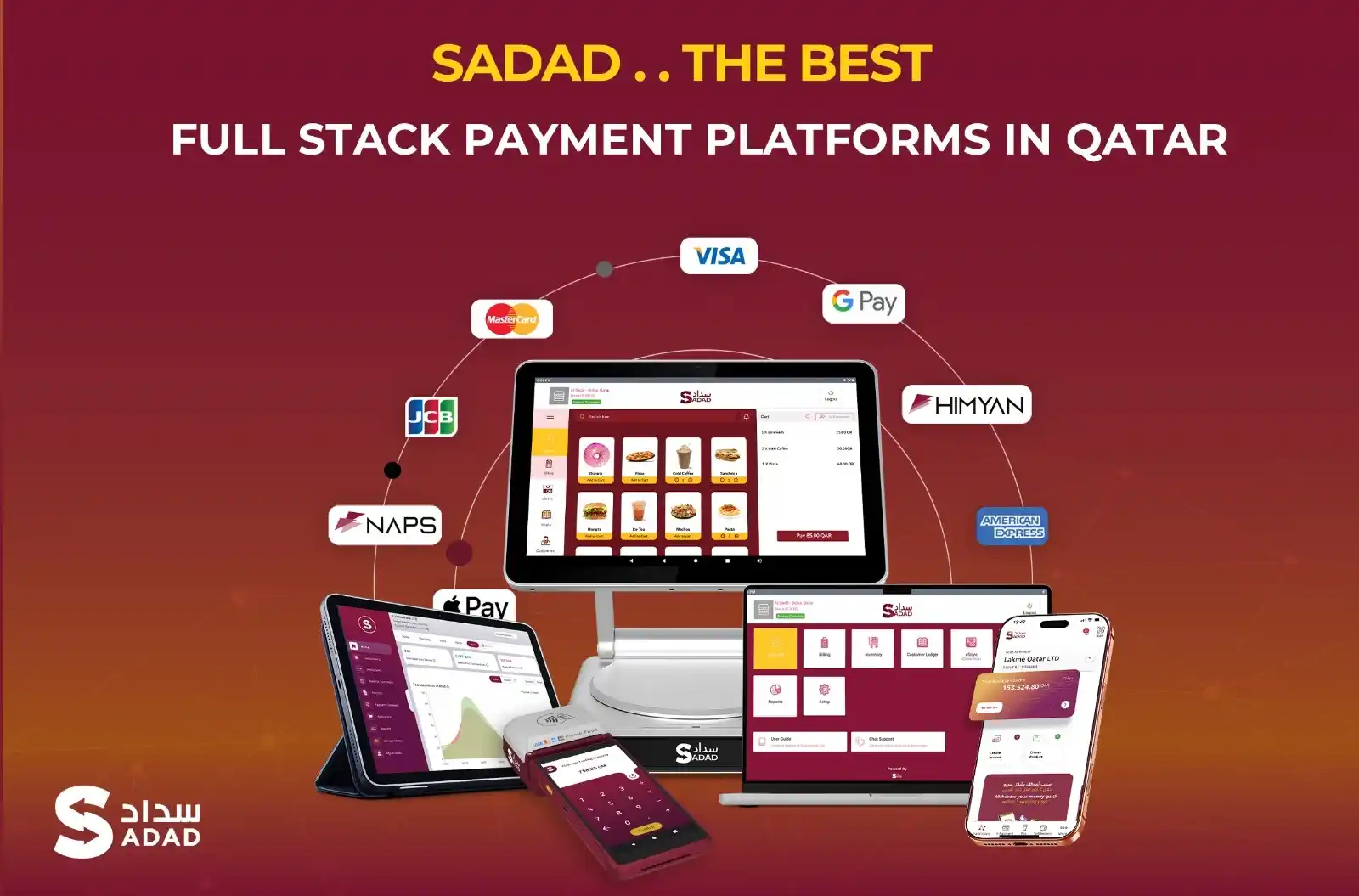
Last Articles
Articles
The SADAD Shopify Integration Guide Most Merchants Wish They Had Earlier
How to Set Up SADAD Payments on Your Shopify Store : How to Set Up SADAD Shopify Integration (Step-by-Step Guide) If you're running a Shopify store in Qatar, you've probably...
Read more
Articles
Qatar Payments Market 2026: The Data, the Trends, and What Every Business Here Needs to Know
Qatar's Payments Market Is Moving Fast. Is Your Business Keeping Up? In December 2025, Qatar's payment systems processed QAR 14.6 billion across nearly 62 million transactions. That's not a forecast....
Read more
Articles
What Are the Best Payment Gateway Solutions in Qatar? A Full Comparison for Business Owners
What Are the Best Payment Gateway Solutions in Qatar, And Which One Actually Fits Your Business? Most businesses in Qatar don't have a payment problem. They have a payment frustration....
Read more