
Articles
From POS to Pay Links: What Payment Solutions Actually Mean in Qatar
What Payment Solutions Mean in Qatar: A Clear Guide for Every Business
If you’re running a business in Qatar, chances are you’ve heard terms like payment solutions, payment gateway, or digital payments thrown around a lot.
But let’s be honest — what do they actually mean?
And more importantly, what do they mean for you?
Payment solutions aren’t just for big companies anymore. They’re now the foundation of how money moves — whether you run a coffee shop in Doha, an online boutique from your home in Lusail, or a logistics firm serving all of Qatar.
In October 2025 alone, digital payments in Qatar reached QR 18.47 billion, and saw nearly 60 million transactions. That’s not a forecast — that’s one month of real transactions. And the numbers are only going up.
So if you’re still relying on manual payments or unsure which tools to choose, this guide will walk you through everything clearly — what payment solutions are, why they matter in Qatar’s economy, and how to pick the right one for your business.
Let’s break it down. Simply. Practically. No fluff.
What Are Payment Solutions?

At the simplest level, payment solutions are the tools that help you get paid.
They make it possible for a customer to hand you money — whether it’s cash, card, mobile, or a bank transfer — and for that money to land in your business account safely and quickly.
But in practice, it’s more than just a credit card reader. Payment solutions include:
- POS Systems – the physical machines in stores that accept card or mobile payments
- Payment Gateways – the online version of a POS, built into your website or app
- Mobile Wallets – like Apple Pay, Google Pay, or local apps in Qatar
- QR Code Payments – scan and pay instantly from a smartphone
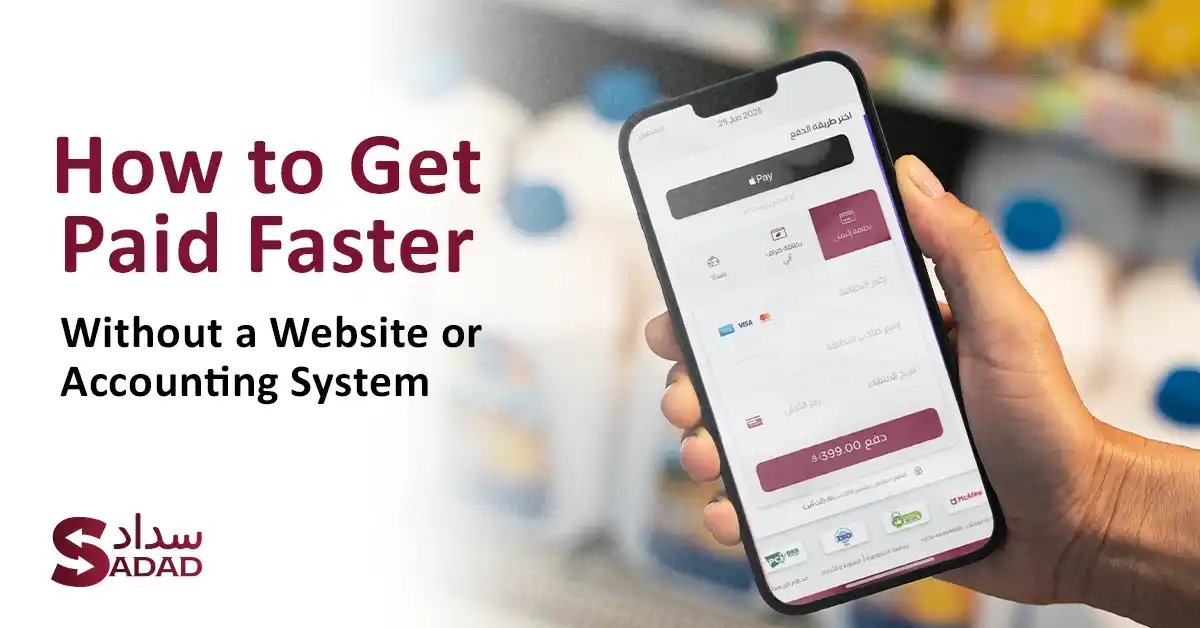
- Payment Links – send a link by SMS, email, or WhatsApp to collect payment with no website needed
- Subscription & Recurring Billing Tools – auto-charge customers for monthly services
- Smart store – to list your products online even if you don’t have an app or a website.
All of these tools are called payment solutions because they solve real problems:
- They make buying easier for customers
- They help businesses track income and manage accounting
- They increase your management efficiency
- They reduce cash handling, errors, and fraud.
- And they allow you to sell online, in-store, or remotely.
In Qatar, solutions like SADAD and QPay, and global providers like Stripe or PayTabs, are examples of companies offering these services — tailored for businesses operating in the local market.
And with Qatar’s payment industry growing fast — expected to hit $12.98 billion by 2030 (Mordor Intelligence) — understanding these tools isn’t optional anymore.
It’s essential.
Why Payment Solutions Matter in Qatar’s Economy
Let’s get to the point — if you run a business in Qatar and you’re not offering digital payment options, you’re falling behind.
This isn’t just about customer convenience. It’s about keeping up with how Qatar’s economy is actually moving.
Here’s why it matters:
1. Cash is no longer king.
More and more people in Qatar are ditching cash. Whether it’s paying by card, mobile wallet, or QR code, consumers expect fast, secure ways to pay — without needing exact change or waiting in line.
Qatar records 59.95mn payment system transactions valued at QR18.47bn in October: QCB
And that’s just one month!
View source → here
2. The government is pushing for a digital economy.
Qatar National Vision 2030 isn’t just talk. It includes a complete transition to a cashless, tech-driven economy. The Central Bank and fintech regulators are making it easier — and in some cases, necessary — for businesses to adopt digital payment tools.
If you’re still relying only on cash or manual bank transfers, you’re not just missing out on tech — you’re missing out on alignment with where the market is headed.
3. E-commerce is booming.
Online shopping in Qatar has exploded post-2020, and businesses that offer smooth checkout and secure online payments are seeing the results. A reliable payment gateway isn’t a luxury anymore — it’s basic infrastructure.
4. Customers trust digital payments.
According to Visa’s recent Middle East study, 82% of consumers in the region consider digital payments safer than cash. Read the full Visa report. In short, payment solutions don’t just help you get paid — they help you stay relevant, trustworthy, and ready for the future of business in Qatar.
And that’s why they matter.
The Different Types of Payment Solutions
Not all payment solutions work the same way — and not every business needs the same tools.
Let’s break down the most common types you’ll find in Qatar today, what they actually do, and when to use them.
1. POS Terminals (In-Store Payments)
These are the card machines you see at checkout counters. Modern POS systems accept chip cards, contactless cards, mobile wallets, and even QR codes.
If you have a physical location — shop, café, salon, clinic — you need a POS system.
A clothing store in Doha’s City Center mall uses a POS terminal connected to SADAD. Customers tap and pay with a card or phone in seconds.
2. Online Payment Gateways (For Websites & Apps)
This is what powers the “checkout” on your e-commerce site or mobile app. A payment gateway handles card details, verifies transactions, and transfers the money securely to your account.
If you sell anything online — from physical products to event tickets — you need a payment gateway.
An online bookstore in Lusail uses SADAD’s gateway to let customers pay with debit cards, credit cards, or mobile wallets.
3. QR Code Payments (Contactless & Fast)
Customers scan a QR code using their phone and pay instantly — no hardware, no cards, no app installs needed.
Ideal for market stalls, cafés, food trucks, or any quick-service setup.
A smoothie vendor at Katara beach uses QR codes generated via SADAD to collect payments. No terminal, no fuss.
Learn more about QR code payments.
4. Payment Links & Invoicing (No Website Needed)
You send a customer a link by SMS, email, or WhatsApp. They click, enter their details, and pay on the spot. Works great for service providers, freelancers, and home businesses.
If you don’t have a website but still need to collect payments digitally.
A home-based dessert business sends out SADAD payment links via WhatsApp after confirming orders. Customers pay instantly — and the system tracks every transaction.
5. Recurring Payments / Subscriptions
These tools let you charge customers on a monthly or scheduled basis. Perfect for services like gyms, coaching, SaaS products, or delivery subscriptions.
If you offer anything on a plan, retainer, or ongoing contract.
6. Buy Now, Pay Later (BNPL)
BNPL tools let customers split payments into installments, while you get paid upfront. It’s growing fast in the GCC and can boost sales — especially for higher-ticket items.
If you sell big-ticket items and want to offer flexible payments.
Each solution has a clear use case — and many businesses in Qatar now use more than one to stay flexible and customer-friendly.
The key is knowing what fits your setup and building from there.
How Payment Solutions Impact Customer Experience
You can have the best product in Qatar, but if your payment process is clunky, slow, or confusing, people will walk away.
Payment solutions aren’t just about getting your money faster. They directly affect how customers feel when they buy from you. And that feeling sticks.
Here’s how innovative payment solutions improve customer experience:
1. They Make Checkout Fast
No one likes waiting. Whether it’s in a shop or online, customers want to pay and go.
A quick tap on a POS terminal, a one-click payment link, or a QR scan — that’s what people expect now. Less friction. More sales.
2. They Offer More Ways to Pay
Every customer has a preference — a card, a wallet, mobile, Apple Pay, or even a pay-later plan. If you offer just one method, you’re making it harder for them to say yes.
According to a recent Visa report, over 70% of consumers in the Gulf prefer having multiple payment options. View the Visa source.
3. They Build Trust
Secure, branded, professional-looking payment pages make your business look credible. If the checkout screen looks shady or redirects to unknown sites, customers leave — even if they love your product.
4. They Reduce Errors and Disputes
Manual payments are prone to mistakes. Automated payment solutions track every detail — time, amount, method, and status. No more “I sent it, check again” back-and-forth.
5. They Save Time for Everyone
Customers don’t have to count change or log into their bank apps. And you don’t have to chase payments or verify receipts manually. It just works.
Bottom line: Payment experience is now part of the brand experience. If it’s smooth, fast, and flexible, you leave a great impression. If it’s slow or outdated, they may not come back.
Choosing the Right Payment Solution for Your Business in Qatar
Not all payment solutions are built the same — and not every business in Qatar needs the same setup.
The goal isn’t to have all the tools. It’s to have the right ones.
Here’s how to figure that out.
1. Start With Where and How You Sell
Ask yourself:
- Do I sell in person, online, or both?
- Do I take single payments or subscriptions?
- Do I send invoices or take payments on the spot?
If you sell in-store: Start with a solid POS system — ideally one that also supports mobile and QR payments.
If you sell online: Choose a payment gateway that integrates with your website or app, accepts local cards, and is mobile-friendly.
If you sell through Instagram, WhatsApp, or by phone: Use payment links or QR codes to get paid instantly without needing a full website.
2. Make Sure It’s Compliant in Qatar
This is big.
Qatar’s financial sector is tightly regulated by the Qatar Central Bank (QCB). Your payment provider should be licensed and compliant with QCB rules — especially when it comes to:
- NAPS (QPay) connection
- VAT compliance
- AML (Anti-Money Laundering) standards
- Data privacy
Local players like SADAD are already built for this. Foreign platforms often require extra layers or workarounds to meet the same standards.
Learn more about SADAD & QCB compliance.
3. Check for Arabic Language Support
Your customers and team should be able to use the system in both Arabic and English. This improves clarity, reduces support issues, and builds trust — especially in customer-facing invoices or portals.
4. Think About Integration & Automation
The right solution should connect smoothly with:
- Your e-commerce platform (Shopify, WooCommerce, etc.)
- Your accounting tools
- Your CRM or delivery system
The more things work together, the less manual work you have to do.
5. Consider Costs — But Don’t Go Cheap
Every solution has fees — setup, transaction, monthly, etc. But cheaper isn’t always better.
You’re not just paying for tech. You’re paying for support, security, reliability, and local understanding. If your payment system goes down on National Day weekend, will your provider pick up the phone?
6. Look at Reputation & Support
Ask around. Check reviews. See who’s using it in Qatar. And make sure your provider offers local support — not just a chatbot or an overseas call center.
Wrap-up tip: The best payment solution is the one your customers want to use, and your team knows how to manage.
Pick one that fits your size, your goals, and your market — and businesses like yours already trust that.
Final Words: What Payment Solutions Really Mean for Your Business
At the end of the day, payment solutions aren’t just tools — they’re part of how your business runs, grows, and earns trust.
They shape how your customers feel. They control how fast you get paid. And they decide whether you’re ready for a digital-first Qatar — or stuck in the past.
In a market where QR18.47 billion is moving through digital payments every single month, you can’t afford to guess anymore.
You don’t need a dozen payment tools. You need the proper setup — built for your customers, aligned with Qatari regulations, and supported by people who understand your market.
If you’re still sending bank details manually, chasing receipts, or relying on outdated systems, it’s time to level up.
Because what payment solutions really mean — is the difference between “we’ll try” and “we’re ready.”
Last Articles
Articles
POS Machine Prices and Types in Qatar 2026 | Comprehensive Guide for Businesses and Restaurants
Comprehensive Guide to POS Machine Prices and Types in Qatar for Businesses and Restaurants In Doha's fast-moving business environment, where new cafés, fine-dining restaurants, retail stores, and service businesses continue...
Read more
Articles
How to Start Online Business in Qatar: Your Complete 3-Step Guide (License, Store, and Profits)
How to Start Online Business in Qatar? In the heart of Doha, with every screen tap and smartphone glow, a new economic landscape is taking shape. Success is no longer...
Read more
Articles
Connect Shopify Payment Gateway via Sadad (4 Steps)
Shopify Payment Gateway Qatar You have set up your Shopify store, added your products, configured your pricing, and customized the design. Yet, the most critical challenge remains: How do you...
Read more