
Articles
The Qatar Business Owner’s Guide to WhatsApp Commerce and Getting Paid Faster
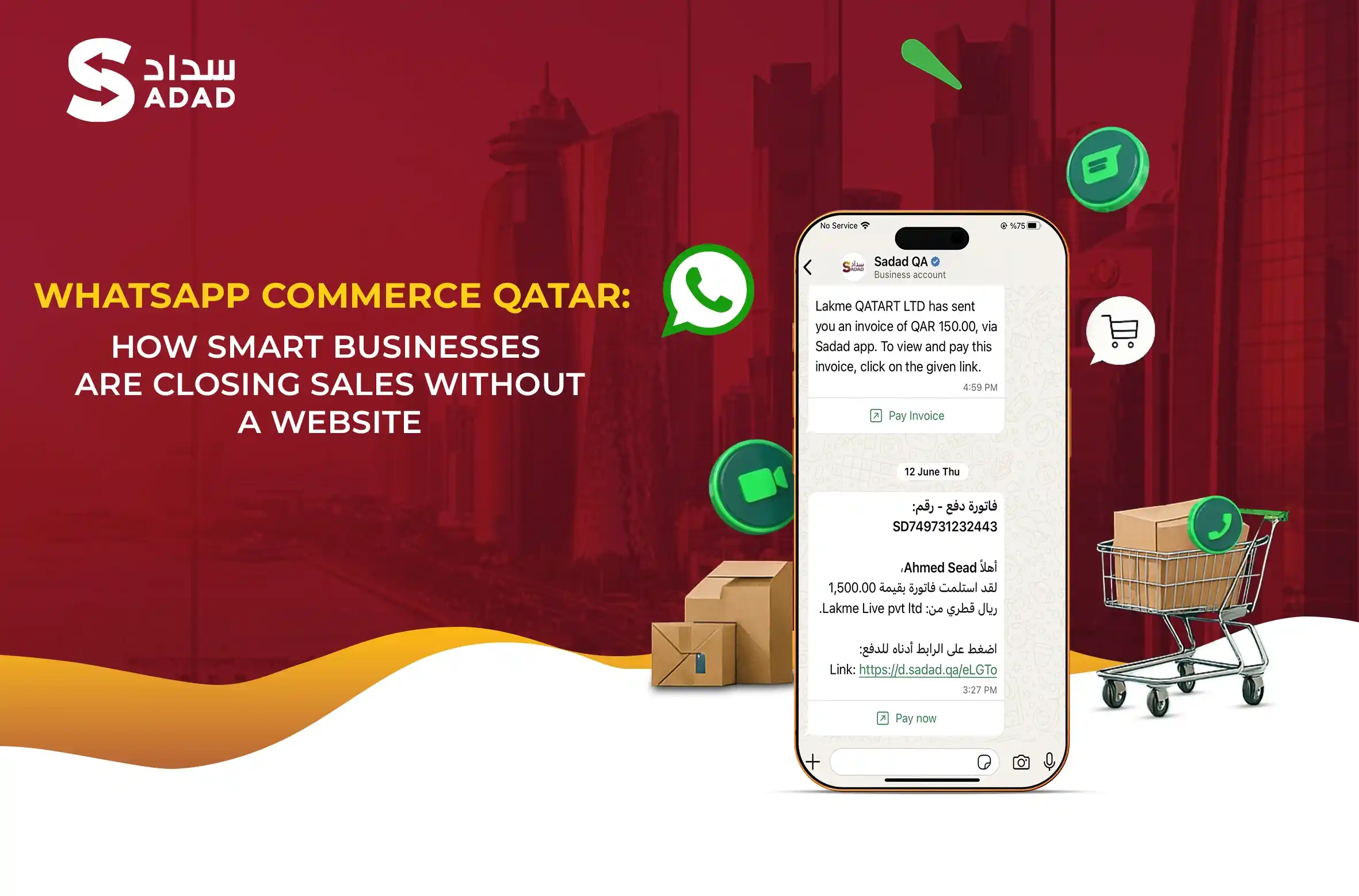
WhatsApp Commerce in Qatar: How to Turn Conversations into Sales with Payment Links
You have already made sales on WhatsApp without calling them sales.
A customer messages you asking about a product. You reply. They ask the price. You tell them. They say, “Sounds good.” And then the whole thing stalls. You send your bank account number. They say they will transfer later. Later becomes tomorrow. Tomorrow becomes silent.
That is not a customer who changed their mind. That sale died at the checkout step.
According to research by Northwestern University in Qatar, 93% of Qatar’s internet users are active on WhatsApp, and they are not just using it to catch up with family.
They are using it to ask about products, compare prices, and make buying decisions every single day.
66% of consumers have made a purchase after chatting with a brand on WhatsApp, and 69% say they are more likely to buy from a business that is reachable on the platform.
The buying intent is already in your WhatsApp inbox. The conversations are happening. The interest is real.
What is missing is a frictionless way to collect payment the moment the customer says yes, before that momentum dies.
That is exactly what WhatsApp commerce with payment links fixes. And in Qatar’s mobile-first, relationship-driven market, the businesses that figured this out are pulling further ahead every month.
Before we get into how to fix it, let’s make sure we are clear on what WhatsApp commerce actually is, because most businesses are only doing half of it.
What WhatsApp Commerce Actually Means (And Why Most Businesses Are Only Halfway There)
Most Qatar business owners are already doing WhatsApp commerce. They just are not doing the whole thing.
They are using WhatsApp to answer questions, share product photos, provide price quotes, and confirm orders.
That is the first half. But in the second half, when collecting payment in the same conversation, most of them drop off and instead hand the customer a bank account number.
That gap matters more than it looks.
The term “conversational commerce” was coined by Chris Messina in 2015, and the concept is simple: the customer discovers, asks, decides, and pays without ever leaving the chat.
One thread. One journey. No redirects, no bank transfers, no waiting.
Think about what that looks like in practice for a Qatar business. A customer messages asking about a catering order for the weekend.
You reply with the menu and price.
They say yes. Instead of sending your IBAN and hoping they remember to transfer later, you send a payment link directly in the thread.
They tap it, pay in under a minute, and the booking is confirmed. No follow-up needed. No money left on the table.
That is WhatsApp commerce done properly, and it is already how forward-thinking businesses across Qatar are handling payments.
The global market for conversational commerce is growing fast, with spending via conversational channels projected to reach $290 billion in the coming years.
Qatar is not watching that from the sidelines. The infrastructure is here, the customers are here, and the only thing most businesses are still missing is the payment link that closes the loop.
And here is why Qatar specifically is one of the best places on earth to build this kind of commerce model right now.
Why Qatar Is One of the Best Markets on Earth for WhatsApp Commerce

Most markets have to be convinced to move their commerce to WhatsApp. Qatar is already there.
According to Northwestern University in Qatar’s annual Media Use survey, 93% of Qataris use WhatsApp, making it the most-used digital platform in the country, well ahead of Instagram, Snapchat, and email.
This is not a channel that competes for attention here. It is the default.
And WhatsApp’s engagement numbers make every other channel look broken by comparison. Messages sent through WhatsApp achieve a 98% open rate, compared to roughly 20% for email. That gap is not closed.
If you send a payment link or a product update via email, one in five people might see it. Send it through WhatsApp, and nearly everyone does, typically within minutes.
But engagement alone does not explain why Qatar is structurally suited for WhatsApp commerce. The deeper reason is cultural. Business here runs on personal relationships and direct communication.
Customers want to talk to someone, not fill out a form. They want to ask a question and get an answer, not wait 48 hours for an email response.
WhatsApp fits that expectation precisely because it already mirrors how people communicate in their personal lives.
76% of consumers in the Middle East say they prefer buying from brands they can contact on WhatsApp. For Qatar’s multicultural, mobile-first population, where trust is built through conversation rather than advertising, that preference is not a trend. It is the baseline expectation.
The businesses that treat WhatsApp as a full payment and commerce channel are the ones keeping up with how Qatar actually buys.
The engagement numbers make the case. But knowing Qatar uses WhatsApp is not the same as knowing why so many sales still die inside those conversations. That gap has a name.
The “Yes Gap”: Why Qatar WhatsApp Sales Die Right Before the Finish Line
Understanding why WhatsApp generates so much buying intent in Qatar is actually the easy part. The harder question is why so many of those conversations never turn into completed sales.
The answer almost always comes down to one thing: friction at the payment step.
Think about the typical WhatsApp sales exchange. A customer shows interest, asks questions, gets comfortable, and says yes.
At that exact moment, buying momentum is at its highest. Then the business owner sends a bank account number, asks them to transfer the funds manually, and asks them to send a screenshot as confirmation.
That sequence has multiple points where the sale can die. The customer has to open their banking app, locate the account details, initiate a transfer, take a screenshot, and send it back. Each extra step is a door that can close. And once momentum drops, it rarely comes back.
56% of customers say they have abandoned a purchase because a business was too slow to respond on WhatsApp, and that is before you even factor in the payment friction that comes after the yes. 66% of customers want the entire checkout process to take four minutes or less. A manual bank transfer with screenshot confirmation does not come close to that.
There is a concept worth naming here: the “yes gap.” It is the time between a customer agreeing to buy and actually completing payment.
The wider the gap, the lower your conversion. Payment links collapse the yes gap to almost nothing. The customer taps a link, pays in under a minute using their card, QPay, or Apple Pay, and the sale is done inside the same conversation.
Qatar’s digital payments ecosystem is built for exactly this kind of instant transaction. The infrastructure is there. The only question is whether your business is using it.
Now that the problem is clear, here is exactly how the fix works in practice, step by step.
How WhatsApp Payment Links Actually Work in a Real Sale
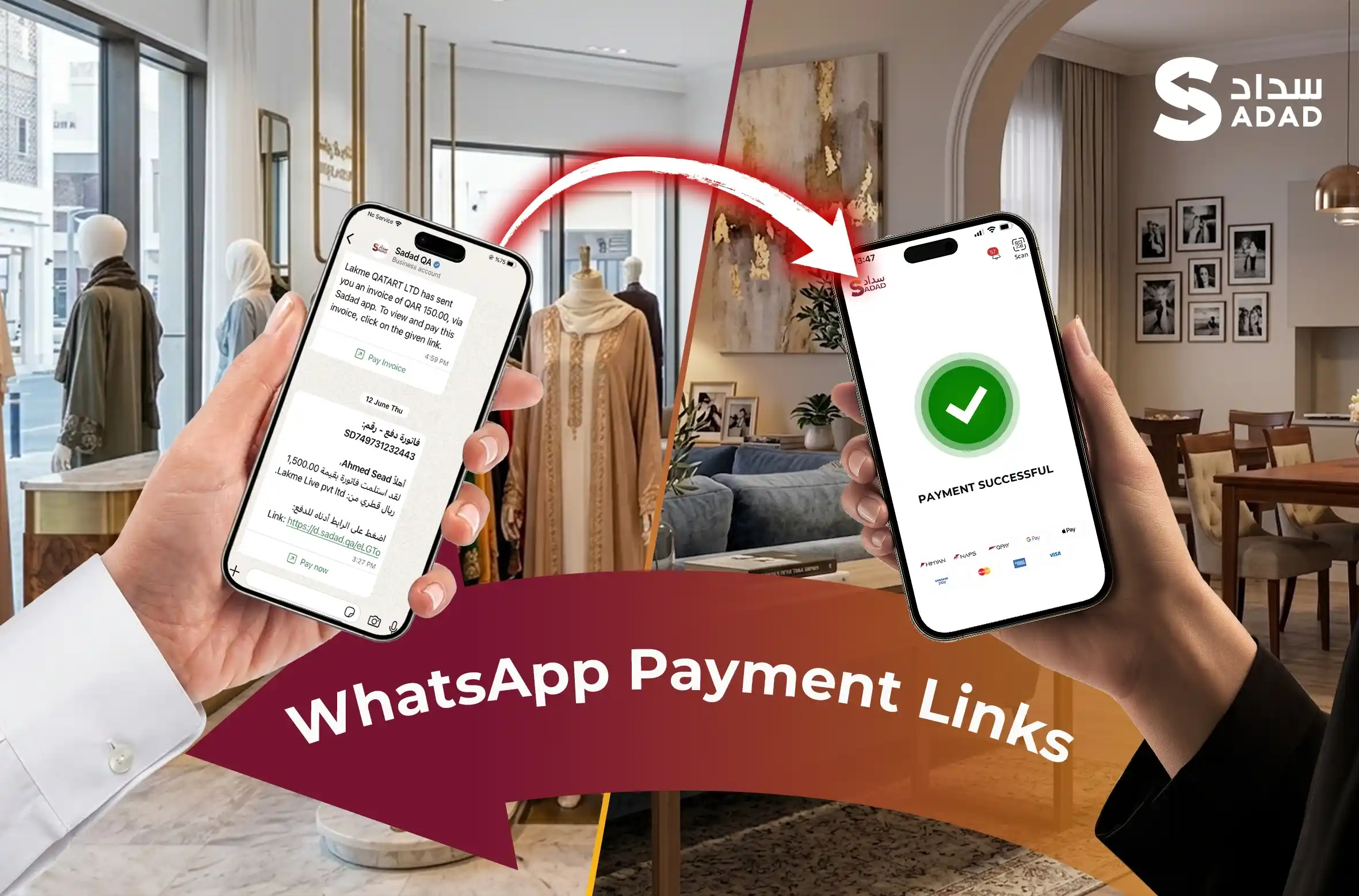
Knowing there’s a gap is one thing. Knowing exactly how to close it is another. So let’s make this concrete.
The mechanics are simpler than most business owners expect.
When a customer says yes on WhatsApp, you open your payment dashboard, create an invoice in under a minute by entering the customer’s details, the amount, and a short description of the order, then copy the payment link and send it directly in the same WhatsApp conversation.
The customer taps it, chooses their preferred payment method, pays, and you get an instant notification confirming the transaction.
That is the entire flow. No bank transfer. No screenshot confirmation. No following up the next day to ask if they sent it.
With SADAD Invoice, the process looks like this:
Log in to your SADAD dashboard or mobile app, select Quick Invoice, enter the customer’s phone number, the amount, and a short description, then send the link directly via WhatsApp or SMS.
The customer pays using Visa, Mastercard, QPay, NAPS, Apple Pay, or Google Pay. You get notified the moment payment clears, and the transaction is automatically recorded in your dashboard.
No website needed. No developer needed. No technical setup of any kind.
For businesses that take recurring payments, like monthly service retainers, subscription boxes, or regular catering orders, SADAD Invoice also supports automated recurring billing so the link goes out and payment gets collected without you having to manually repeat the process each time.
The whole point is to make payment feel like the natural next step in the conversation, not a separate task the customer has to go do somewhere else. When it feels that easy, more people actually follow through.
That is the mechanics. Here is what it actually looks like when real Qatar businesses run this flow every day.
WhatsApp Commerce in Action: How Qatar Businesses Are Using It Right Now
The businesses winning on WhatsApp in Qatar right now are not doing anything complicated. They have just connected two things that were already there: the conversation their customers were having with them and a frictionless way to get paid inside that same conversation.
Here is what that looks like across a few of the most common business types in Qatar.
Home-based food businesses
They are probably the clearest example. Orders come in via WhatsApp. The business owner quotes the price and confirms availability.
Instead of sending a bank account number, they send a SADAD payment link in the same thread. Customer pays. Order is confirmed.
The whole thing takes less than two minutes from “how much?” to paid. No chasing. No manual bank transfer. No screenshot forwarded from a different app.
Freelancers and service providers
Think photographers, designers, tutors, and consultants are using it to close projects faster.
A client says yes on WhatsApp. The freelancer generates an invoice link and sends it before the conversation ends.
The momentum of the yes carries straight through to payment, rather than dying overnight while an unread email invoice sits.
Retail businesses without a website
They are using WhatsApp as their primary storefront, sharing products through photos and voice notes, quoting prices in chat, and sending payment links to close the sale.
For businesses that want to sell online in Qatar without the overhead of a full e-commerce setup, this is already a functioning model.
F&B catering operations
We are using payment links to lock in bookings. The deposit that used to require a back-and-forth bank transfer is now collected on the same day the order is discussed.
None of these are early adopters running experiments. They are practical business owners who figured out that keeping the customer in one conversation from start to payment is simply how you stop losing sales to friction.
But not every payment link performs the same way. Here is what separates the ones that get clicked from the ones that get ignored.
Four Things That Separate a Payment Link That Converts from One That Gets Ignored
Sending a payment link is not the same as sending one that works.
Most business owners figure this out after a few links go untapped and assume the idea just does not work for them. Usually, the issue is not the tool. It is how it was used.
Here are four things that actually determine whether your customer clicks and pays.
#1 Timing is everything.
The moment of highest buying intent is when the customer says yes. That is when the link needs to arrive. Not five minutes later.
Not after you have switched apps, generated the invoice, and come back. According to a 2024 Harvard Business Review study, companies that respond within the first five minutes are 21 times more likely to qualify a lead than those that take longer. The same principle applies to closing.
Every minute between yes and the payment link is a minute the customer can change their mind, get distracted, or start wondering if this is really what they want.
#2 The link needs to look professional.
A branded invoice with your business name, the correct amount, and a clear description of what was purchased converts better than a raw URL dropped into a chat.
It signals legitimacy. Customers in Qatar are paying attention to trust signals, especially when handing over card details on a mobile device.
#3 Payment method coverage matters.
If your customer wants to pay with QPay or Apple Pay but your link only accepts Visa, the checkout fails.
SADAD Invoice supports all major cards, QPay, NAPS, Apple Pay, and Google Pay, so you are covered no matter how your customer prefers to pay.
#4 Follow-up should be automatic, not manual.
Chasing unpaid invoices via WhatsApp is one of the most time-consuming tasks a small business owner faces.
With automated payment reminders and real-time tracking, you know exactly which invoices are outstanding, and reminders go out without you having to think about it.
None of these is complicated. But getting all four right turns WhatsApp from a sales conversation starter into a sales-closing machine.
Getting those four things right is the difference between WhatsApp as a chat tool and WhatsApp as a revenue channel. Which brings us to the only thing left to do.
Stop Leaving Money in Your WhatsApp Inbox
Every day you run WhatsApp conversations without a proper way to collect payment at the end of them is a day you are converting fewer of the people who already said yes.
The interest is there. The conversations are happening. Qatar’s customers are already buying through WhatsApp.
The only question is whether your business has the infrastructure to close those sales the moment they happen, or whether you are still sending bank account numbers and hoping for the best.
SADAD Invoice is free to start. You can create your first payment link in under a minute, send it directly in WhatsApp, and have payment confirmed before the conversation ends. No website, no developer, no technical setup required.
If you are running any kind of business in Qatar and WhatsApp is already part of how you communicate with customers, adding payment links is the single highest-leverage thing you can do this week.
Set up your free SADAD Invoice account here and start closing WhatsApp sales today.
Last Articles
Articles
The Qatar Business Owner’s Guide to WhatsApp Commerce and Getting Paid Faster
WhatsApp Commerce in Qatar: How to Turn Conversations into Sales with Payment Links You have already made sales on WhatsApp without calling them sales. A customer messages you asking about...
Read more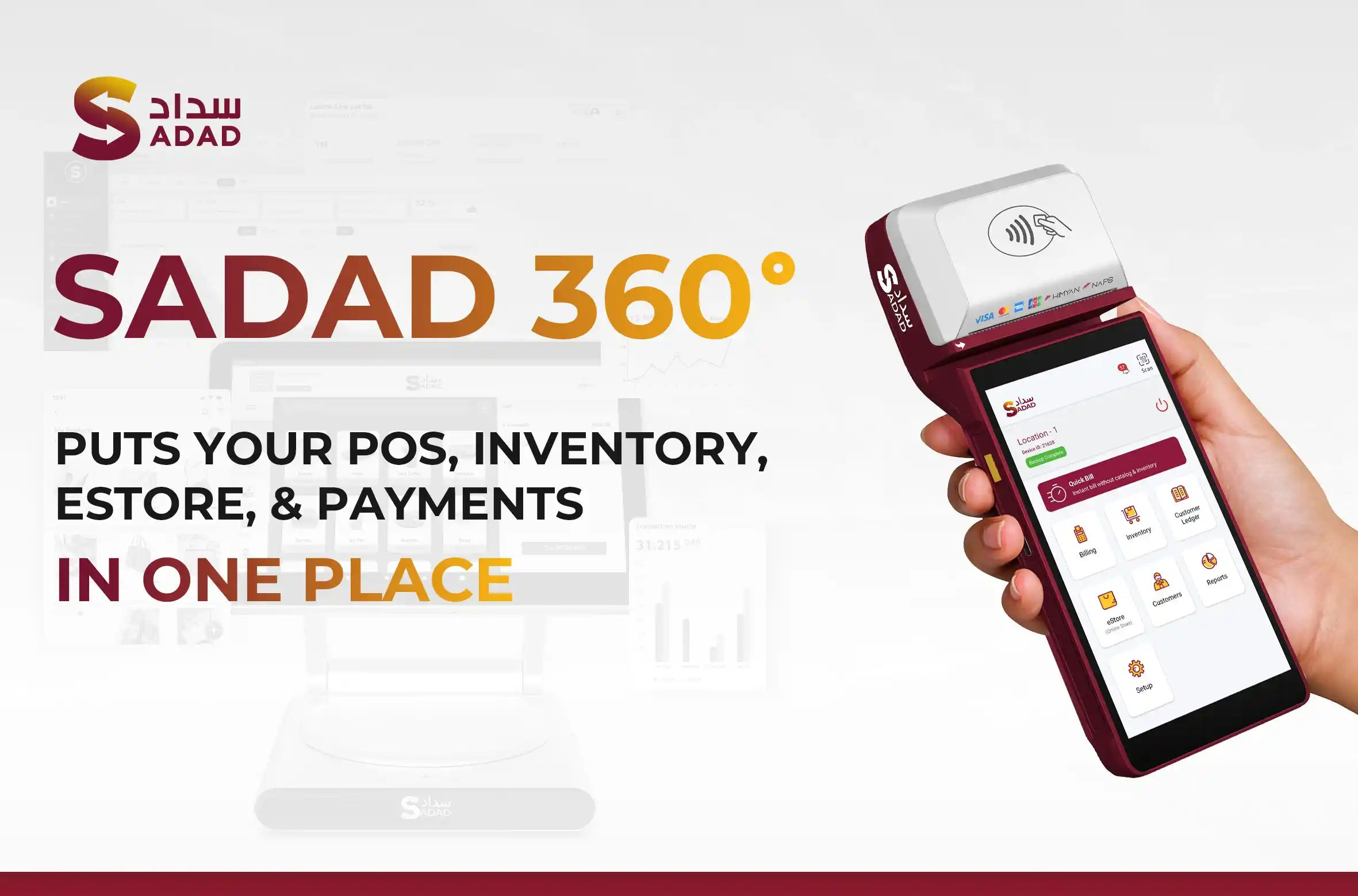
Articles
SADAD 360: The All-in-One Business Suite Built for Qatar’s SMEs
SADAD 360: The All-in-One Business Suite Built for Qatar's SMEs Most businesses in Qatar aren't struggling because of bad products or poor service. They're struggling because they're running their operations...
Read more
Articles
The SADAD Shopify Integration Guide Most Merchants Wish They Had Earlier
How to Set Up SADAD Payments on Your Shopify Store : How to Set Up SADAD Shopify Integration (Step-by-Step Guide) If you're running a Shopify store in Qatar, you've probably...
Read more