
Articles
POS Machine Prices and Types in Qatar 2026 | Comprehensive Guide for Businesses and Restaurants
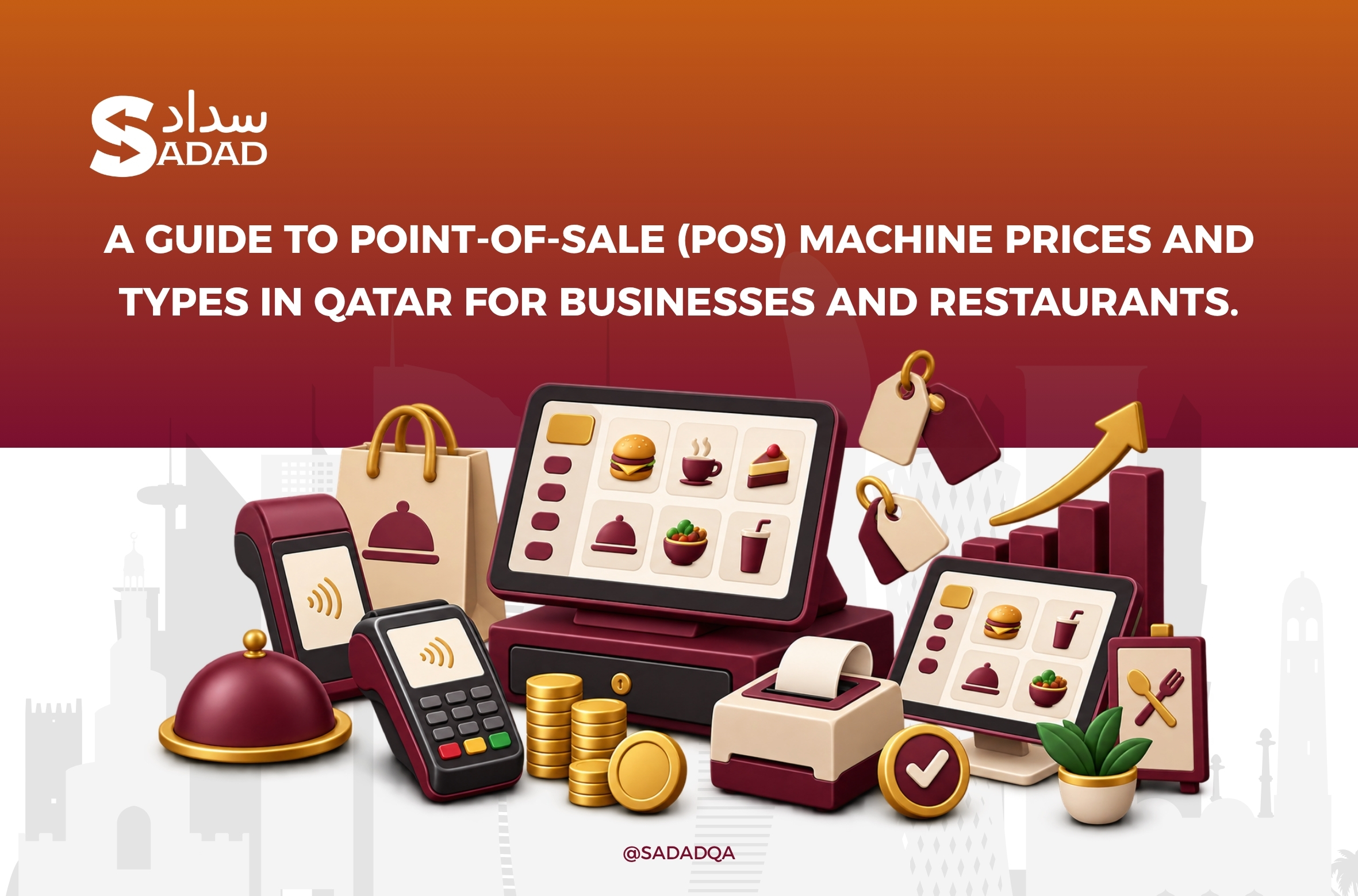
Comprehensive Guide to POS Machine Prices and Types in Qatar for Businesses and Restaurants
In Doha’s fast-moving business environment, where new cafés, fine-dining restaurants, retail stores, and service businesses continue to grow, relying on traditional cash registers or manual processes is no longer practical.
Today, businesses and restaurants in Qatar are increasingly turning to POS systems to improve customer service, manage daily operations, organize inventory, and accept payments efficiently.
According to Qatar Central Bank data, POS transactions in Qatar reached QAR 9.923 billion in December 2025, representing a significant share of card payment activity in the country.
As businesses continue to adopt digital and online payment methods and regulatory requirements evolve, POS systems have become an important part of day-to-day commercial operations.
According to an analysis conducted by Sadad covering 50 restaurants in Doha, 6 out of 10 restaurants in the sample were estimated to face potential losses equivalent to 18%–23% of net profits due to issues associated with outdated POS systems. This finding is based on Sadad’s own analysis and applies to the restaurants included in the sample.
If you own a business, restaurant, café, retail store, or delivery operation in Qatar, choosing the right POS solution can have a direct impact on operational efficiency and payment processing costs.
So, what exactly is a POS machine in Qatar? How much does a POS machine cost? And which type is right for your business?
This guide answers these questions and explains the main POS types, pricing factors, transaction fees, features, and selection criteria you should consider before choosing a POS solution.
Quick Answer: How Much Does a POS Machine Cost in Qatar?
POS machine prices in Qatar vary depending on the device, software, subscription, payment provider, and transaction fees.
For example, SADAD Plus is currently listed at QAR 150 per month, with a QAR 399 one-time setup fee and a QAR 1,000 refundable deposit after six months, in addition to applicable transaction fees. SADAD also offers SoftPOS, which allows compatible smartphones to accept contactless payments without requiring an additional POS device.
The total cost of a POS solution should therefore be evaluated based on both the initial costs and the ongoing transaction and subscription fees.
First: What Is a POS Hardware and Software System?
A Point-of-Sale (POS) system combines hardware and software to process sales, calculate invoices, record payments, and manage business operations efficiently.
A typical POS system consists of two main components:
POS Hardware
The hardware may include:
- Touchscreen display used by the cashier to process sales
- Desktop POS terminal or mobile device
- Barcode scanner
- Thermal receipt printer
- Keyboard
- Cash drawer
- Card and contactless payment reader
POS Software
The software connects sales and operational data in one system and may provide:
- Real-time inventory management
- Sales tracking
- Tax calculations
- Product and menu management
- Employee management
- Financial reports
- Customer management
- Payment and settlement tracking
- Integration with accounting and ERP systems
The exact features vary depending on the provider and POS solution.
Second: What Is a Restaurant POS System and How Does It Differ From a Traditional Cash Register?
Many restaurant owners think of a POS system simply as a digital cash register that records sales instead of using paper and manual calculations.
A modern restaurant POS system goes much further.
A traditional cash register is mainly designed to record sales and collect payments. It may not be connected to inventory, kitchen operations, staff management, accounting, or business analytics.
A modern restaurant POS system, on the other hand, can connect several parts of the restaurant’s operation through a single platform.
Depending on the solution, it can:
- Record customer orders accurately.
- Connect the front-of-house with the kitchen and send orders instantly.
- Deduct ingredients or products from inventory as items are sold.
- Calculate recipe and food costs.
- Track waiter and staff activity.
- Generate real-time sales and operational reports.
- Integrate with delivery platforms.
- Manage tables and split bills.
- Identify peak hours and best-selling products.
- Accept multiple card, contactless, and digital wallet payment methods.
This makes the POS system an operational tool rather than simply a device for collecting money.
Third: Why Is a POS System Important for Restaurants in Doha?
An integrated POS system can help restaurants manage several daily activities from one platform, including:
- Order taking
- Payment collection
- Table management
- Inventory management
- Sales reporting
- Staff management
- Kitchen order management
- Delivery operations
- Accounting integration
The exact capabilities depend on the provider and the software used.
As businesses in Qatar increasingly adopt card, contactless, and online payment methods, having a reliable payment and POS infrastructure can also help businesses provide customers with more convenient payment options.
Fourth: Types of POS Machines
POS machines and systems in Qatar can be classified according to the type of business and how payments are collected.
The five common categories include:
| Type | Best Suited For | Key Feature | Usage Method |
|---|---|---|---|
| Mobile POS | Delivery and mobile sales | Portable and easy to carry | Standalone mbile device |
| Countertop POS | Retail stores and restaurants | Large screen and accessory integration | Counter-based |
| SoftPOS | Small businesses and mobile services | Turns a compatible smartphone into a payment acceptance device | Smartphone |
| Restaurant POS | Restaurants and cafés | Order, table, and restaurant management | Device + software |
| Self-Service POS | Kiosks and unattended environments | Customer self-payment | Dedicated kiosk or machine |
The right type depends on your business model, sales volume, operating environment, and whether you need additional functions such as inventory, accounting, restaurant management, or online payment integration.
Fifth: What Affects POS Machine Prices in Qatar?
When searching for POS machine prices in Qatar, you may find significant differences between providers and packages.
Several factors influence the total cost.
1. Device Type and Technical Specifications
Basic mobile POS devices are generally different in price from smart countertop terminals or complete POS systems designed for multiple branches.
2. Software and Support Subscriptions
Some providers charge a monthly subscription for the device or software.
Other packages may include technical support, software updates, reporting tools, and other services within the subscription.
3. Transaction Fees
Transaction fees can have a significant impact on your overall cost, especially as your monthly sales volume increases.
According to SADAD’s currently published POS pricing, the standard POS transaction rates include:
- Qatari Local Debit Cards: 1.5%*
- Local Visa & Mastercard: 2.2% + QAR 0.50
- Wallets: 2.2% + QAR 0.50
- Co-Branded Business Payment Cards: 2.5%
- American Express & Other International Cards: 3%
SADAD states that these rates apply to successful transactions and that the published POS package includes the listed services.
4. Bundled Packages
Some businesses choose a package that combines the POS device, payment processing, technical support, and other business tools.
A bundled solution can make cost management easier because several services are managed through one provider.
Sixth: How to Choose the Right POS Machine for Your Business
Choosing a POS system should not be based on the device price alone.
The actual long-term cost depends on transaction fees, subscriptions, integrations, support, settlement terms, and how well the system fits your business.
Before purchasing a POS device or subscribing to a POS service in Qatar, compare the following:
1. Device Cost
Check the device price and determine whether it is a one-time purchase, rental, or part of a monthly subscription.
2. Activation or Setup Fees
Check whether the provider charges a one-time activation or setup fee.
3. Monthly Subscription
Find out whether there is a monthly device or software subscription and exactly what is included.
4. Transaction Fees
Compare the transaction fees for different payment methods, including:
- Local debit cards
- Visa and Mastercard
- Digital wallets
- Business cards
- International cards
Do not compare hardware prices alone. Transaction fees can have a much greater effect on total costs as your sales volume increases.
5. Wallet and Contactless Support
Make sure the POS supports payment methods your customers commonly use, such as:
- Apple Pay
- Google Pay
- Samsung Pay
- Contactless cards
- NFC payments
6. Local Card Support
For businesses operating in Qatar, verify support for local payment networks and market standards.
7. Internet Connectivity
Ask whether the device supports:
- Wi-Fi
- Cellular data/SIM
- Multiple connectivity options
Also check what happens if the primary connection becomes unavailable.
8. Battery and Portability
If you provide table service, delivery, or field services, consider battery life, device size, and portability.
9. Printer and Receipts
If you require printed receipts, check whether the device has a built-in thermal printer or supports an external printer.
If printed receipts are not essential, digital receipts may be a more convenient option.
10. ERP and Accounting Integration
If your business already uses accounting or ERP software, make sure the POS can integrate with it.
This can reduce manual data entry and prevent duplicated records.
11. API and Technical Integration
Businesses with their own websites, applications, or internal systems should check whether the POS provider offers APIs and integration tools.
12. Reports and Analytics
Look for reports covering:
- Sales
- Payments
- Refunds
- Settlements
- Staff performance
- Branch performance
- Transaction history
13. Financial Settlement
Check:
- How funds are transferred to your bank account
- Settlement frequency
- Settlement timelines
- Available settlement reports
- Reconciliation tools
14. Technical Support
Ask about:
- Support channels
- Support hours
- Response times
- Maintenance procedures
- Service-level agreements (SLAs)
A POS system is part of your daily operations, so support availability can be important when technical problems occur.
15. Scalability
If you plan to open additional branches, choose a system that can manage multiple devices and locations through a centralized dashboard.
Seventh: SADAD POS Solutions for Businesses in Qatar
When comparing POS solutions in Qatar, SADAD offers a range of POS and online payment solutions designed for different types of businesses, including restaurants, cafés, retail stores, delivery services, and other commercial activities.
Its current pricing page lists POS devices and online payment solutions separately, allowing businesses to choose the service that matches how they collect payments.
Choose the Solution That Fits Your Business
SADAD Plus — Smart POS for Everyday Business
Best for: Retail stores, restaurants, cafés, pharmacies, and other businesses that need a smart POS device for counter or customer-service payments.
SADAD Plus is a smart POS terminal designed to accept multiple payment methods, including cards and contactless payments. It also supports features such as digital receipts and third-party integrations.
SADAD SoftPOS — Turn a Smartphone Into a POS
Best for: Small businesses, sales representatives, delivery services, field-service providers, and mobile businesses.
SoftPOS allows a compatible smartphone to function as a POS payment acceptance device without requiring an additional POS terminal.
SADAD Go — Mobile Payment Collection
Best for: Delivery companies, sales representatives, and businesses that collect payments away from a fixed location.
A mobile POS solution can be particularly useful when employees need to collect payments directly from customers outside the main business premises.
SADAD Edge — Self-Service and Unattended Payments
Best for: Vending machines, self-ordering kiosks, EV charging stations, and other unattended payment environments.
These solutions are designed for businesses that need customers to complete transactions without direct cashier involvement.
SADAD Tab — POS and Business Management
Best for: Restaurants, cafés, and businesses that need a larger-screen solution for product management, sales, staff access, and payment operations.
The exact features and availability of individual solutions may vary, so businesses should confirm the latest specifications and commercial terms with SADAD.
How Much Does a POS Machine Cost in Qatar?
The cost depends on the POS device, package, transaction volume, and services included.
For example, SADAD currently lists SADAD Plus at:
- QAR 150 per month subscription
- QAR 399 one-time setup fee
- QAR 1,000 refundable deposit after six months
- Applicable transaction fees depending on the payment method
SADAD also offers SoftPOS, allowing businesses to accept contactless payments using a compatible smartphone without purchasing an additional POS device.
Because pricing and packages can change, businesses should verify the latest fees before signing a contract.
Eighth: Operational Advantages and Technical Integration With SADAD Solutions
SADAD’s POS and payment solutions provide businesses with tools designed to support payment processing, reporting, reconciliation, and operational management.
Direct Dashboard and Payment Alerts
Businesses can monitor transactions and access payment information through merchant tools and dashboards.
Reporting, Reconciliation, and Settlement
Payment records can help businesses track sales, reconcile transactions, and monitor settlements.
Technical Integration Solutions
Depending on the solution and business requirements, integration options may include:
- App-to-App Integration
Businesses can send payment amounts from their own application or system to the POS for processing.
Businesses can run compatible Android applications directly on supported SADAD smart POS terminals, reducing the need for additional hardware connections.
Businesses can connect existing cash-register or ERP systems with SADAD POS infrastructure, helping them retain existing systems while integrating payment processing.
The availability and technical requirements of each integration should be confirmed with SADAD before implementation.
Frequently Asked Questions About POS Machines and Online Payment Solutions in Qatar
What is the difference between a POS machine and an online payment gateway?
A POS machine is primarily used to accept payments at a physical location, while an online payment gateway processes payments through digital channels such as websites, mobile applications, payment pages, and payment links.
Some providers offer both POS and online payment solutions through the same platform.
Does SADAD provide POS solutions for companies and restaurants?
Yes. SADAD offers POS solutions for different business types, including retail businesses, restaurants, cafés, delivery operations, and other merchants. Its current portfolio includes solutions such as SADAD Plus, SADAD Self, and SADAD SoftPOS.
How do POS machines reduce errors in restaurants and shops?
POS systems can reduce manual data entry by connecting sales with inventory, kitchen operations, and other business processes.
The exact capabilities depend on the software used.
Can POS systems manage multiple branches?
Many modern POS systems support multiple devices and branches through centralized dashboards.
The exact number of branches and management features depends on the provider and package.
Can POS systems integrate with ERP or accounting software?
Yes. POS systems can integrate with accounting and ERP platforms through APIs or other integration solutions.
SADAD also provides integration options for businesses that need to connect payment processing with existing systems.
Can POS be used for deliveries and remote services?
Yes. Mobile POS devices and SoftPOS solutions can allow businesses to collect payments outside their main premises.
What happens if a POS device breaks down?
This depends on the provider’s maintenance policy, support process, and SLA.
Before subscribing, ask how quickly replacement or technical support is provided in case of a device failure.
How long do POS fund settlements take?
Settlement times vary depending on the payment provider, package, banking arrangement, and type of transaction.
Always confirm the settlement schedule before signing the agreement.
Can POS receipts be sent electronically?
Yes. Some POS solutions support digital receipts through channels such as SMS, email, or messaging services.
SADAD Plus, for example, supports digital receipt options in addition to printed receipts.
Can new POS devices be added as a business grows?
Yes. Many POS solutions allow businesses to add additional devices and expand to new branches, depending on the selected package and provider.
What should I do if a payment fails even though the card is working?
A failed transaction can result from several factors, including the card, connection, terminal, or payment-processing system.
Check the transaction details first. If the issue continues, contact your payment provider for assistance.
Can POS systems integrate with customer loyalty programs?
Yes, depending on the POS software, APIs, and compatibility with the loyalty platform.
Conclusion: Choosing the Right POS Solution in Qatar
Choosing a POS system is not simply about finding the cheapest device.
Businesses should consider the complete cost structure, including:
- Device or subscription fees
- Setup fees
- Transaction fees
- Online payment requirements
- Payment methods supported
- Accounting and ERP integration
- Reporting
- Settlement
- Technical support
- Scalability
For restaurants, cafés, retail stores, delivery businesses, and service providers, the right POS solution can simplify daily operations while giving customers more convenient ways to pay.
Whether you operate a busy restaurant, a retail store, a delivery business, or a growing startup, choosing an appropriate POS and online payment solution can help you manage transactions efficiently and provide customers with a smooth payment experience.
Join thousands of merchants and register your SADAD account for free today.
Last Articles
Articles
Appointment Booking Platform in Qatar 2026| Mawidy by Sadad
Appointment Booking Platform in Qatar | Mawidy by Sadad: A Complete Guide to Appointment Management and Online Payments for Businesses Sadad Keeps Bringing You New Solutions! As digital services continue...
Read more
Articles
Shipping in Qatar via Sadad in Partnership with Qatar Post 2026 | Door-to-Door Shipping
Shipping in Qatar via Sadad in Partnership with Qatar Post | Door-to-Door Shipping Shipping in Qatar has traditionally been associated with Qatar Post and a specific range of delivery services....
Read more
Articles
POS Machine Prices and Types in Qatar 2026 | Comprehensive Guide for Businesses and Restaurants
Comprehensive Guide to POS Machine Prices and Types in Qatar for Businesses and Restaurants In Doha's fast-moving business environment, where new cafés, fine-dining restaurants, retail stores, and service businesses continue...
Read more