
Articles
Web Summit Qatar: From Global Fintech Ideas to Local Merchant Impact
What Attending Web Summit Qatar Reminded Us About Fintech in Qatar
There’s a difference between showing up to an event and showing up with a point of view.
At SADAD, we returned to Web Summit Qatar this year not to pitch. Not to be seen. But to listen. To challenge assumptions. To pressure test our progress against what’s really happening in global fintech.
And here’s what stood out:
Fintech in Qatar has matured faster than most people think. The hype cycle has settled. The conversations have shifted from flashy apps to foundational infrastructure. From “what’s trending” to “what actually works at scale.”
That shift is not theoretical. It’s real. And you can see it in the conversations that matter: QCB compliance, ERP payment integration, local merchant tools that actually get used.
This isn’t a startup showcase anymore. It’s a national infrastructure checkpoint.
And for SADAD, that’s precisely the point. Because while others talk in code, we’re busy writing the APIs that connect real businesses to real money — securely, compliantly, and fast.
Now here’s why that matters more than ever.
What Web Summit Qatar Represents for the Regional Fintech Ecosystem
Web Summit Qatar is no longer about proving that the region can host global tech events. That debate is over. What it represents now is something more critical: national-level execution.
Qatar has spent the last few years doing the unglamorous work that fintech actually depends on. Policy frameworks. Regulatory clarity. Payment infrastructure. Capital alignment. You don’t feel that from a stage keynote. You feel it when regulated fintechs can ship products without workarounds.
That’s why fintech conversations in Doha feel different.
Qatar ranked first globally for financial stability and is among the top countries for digital government readiness, according to the World Economic Forum and UN E-Government Index (WEF, UN). That stability shows up in how fintech companies operate, not just how they fundraise.
At Web Summit, the strongest signals weren’t flashy consumer apps. They were infrastructure conversations. API reliability. Compliance-by-design. ERP connectivity. Settlement speed. Topics that only matter when a market has moved past experimentation.
This is where most people get it wrong.
They assume that fintech hubs are built solely by startups. In reality, they’re built by alignment between regulators, infrastructure providers, and operators who can scale safely. Qatar is one of the few markets in the region where that triangle is already in place.
And that context matters, because it explains why companies like SADAD aren’t attending Web Summit Qatar to “enter the ecosystem.” We’re already part of it.
Next comes the uncomfortable truth many founders avoid. In Qatar, regulation isn’t slowing fintech down. It’s what made real progress possible.
Why Regulation Is Not the Enemy of Innovation in Qatar
Most fintech founders treat regulation like a friction point. Something to work around. Something that slows shipping.
That mindset doesn’t survive long in Qatar.
QCB Regulation Is What Unlocks Merchant Trust
Here’s what we see on the ground: merchants don’t adopt payment tools because they’re clever. They adopt them because they’re safe.
In Qatar, that safety comes from regulation. QCB licensing is not a badge. It’s a filter. It tells merchants which platforms can be trusted with real money, real settlements, and real accountability.
This is not theoretical. According to the World Bank’s Global Findex, markets with strong regulatory oversight see higher adoption of formal digital payments among SMEs because trust reduces perceived risk (World Bank). In practice, that means regulated fintechs scale faster, not slower.
Compliance by Design Beats Speed Without Direction
We’ve seen startups ship fast by skipping compliance. It looks impressive for six months. Then, merchants ask for integrations. Banks ask questions. Growth stalls.
QCB-regulated fintechs take a different path. Compliance is baked into the architecture. Reporting is standardized. Settlement flows are predictable. That discipline creates room to build APIs, ERP integrations, and enterprise-grade reliability without constant rewrites.
At Web Summit Qatar, the most serious conversations weren’t about disruption. They were about uptime, auditability, and integration depth. Those are not the priorities of early-stage hype. They’re the priorities of a market that’s ready to scale.
Regulation Turns Fintech Into Infrastructure
Here’s the contrarian truth. Innovation without regulation creates products. Innovation with regulation creates infrastructure.
Qatar understands this. The country ranks among the top globally for regulatory quality and government effectiveness, according to the World Bank Governance Indicators (World Bank). That stability is why fintech in Qatar can move from pilots to platforms.
For SADAD, this matters because our role is not to experiment on merchants. It’s to support them. Regulation gives us the framework to do that at scale, with confidence, and without surprises.
Cool. That’s the ecosystem view. Now let’s get specific about why SADAD shows up at Web Summit Qatar again, and why continuity matters more than visibility.
Why SADAD Shows Up Again — And Why That Matters
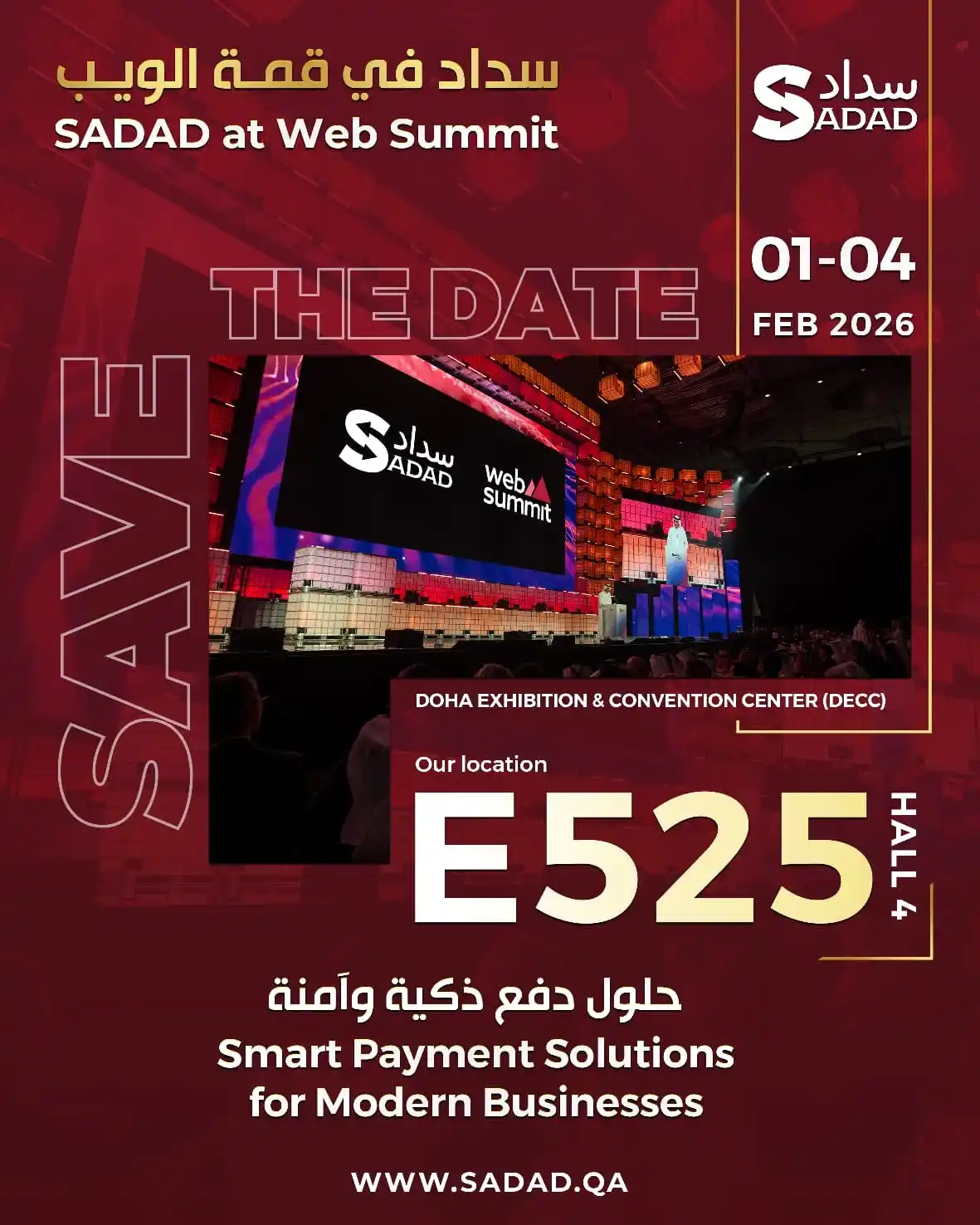
SADAD isn’t here for the stage lights. We don’t need a spotlight to prove we’re building something real. We’re back at Web Summit Qatar again because the work isn’t finished — and continuity beats visibility.
Here’s the playbook we follow: Show up. Listen hard. Build what merchants actually need. Then come back and see if it’s working.
That loop matters more than a launch.
Plenty of startups treat these events like one-time bets. Announce, impress, disappear. But for fintech to become infrastructure, consistency is everything. In the same way merchants rely on us for predictable payments, we rely on forums like Web Summit to pressure test our direction.
Are our APIs solving the right problems? Are ERP integrations syncing cleanly? Are we still merchant-first?
At last year’s event, we walked away with a short list of product updates that turned into actual features. Our SMS-based invoice delivery, improved dashboard reporting, and faster settlement routing weren’t dreamed up in a boardroom.
They came from field conversations with retailers and service providers trying to manage cash flow in real time.
That’s the loop. Learn, build, test, return. And that’s why we’re here again. Because the trust we’ve built with merchants didn’t come from marketing. It came from showing up, solving problems, and staying in the room.
Next, let’s talk about what those merchants are actually asking for — and why the global conversations buzzing at Web Summit often miss the point for local businesses.
What Global Fintech Buzz Misses About Local Merchant Needs

Here’s what you won’t hear on the main stage at Web Summit: A mechanic in Al Wakrah doesn’t care about blockchain.
A bakery in ALGHARAFAH isn’t thinking about cross-border liquidity protocols. What they care about is: Can I send an invoice that gets paid by tonight? Can I avoid weekly cash pickups? Can I track my payments from one place without calling support?
That’s the gap between global conversation and local reality.
At SADAD, we don’t dismiss the hype. Innovation matters. But too often, regional merchants get left behind while the tech narrative races ahead.
We’ve sat with Qatari SMEs who’ve never touched ERP software because every option they tried was either too bloated or didn’t support Arabic. Others stopped using bank transfers because payment confirmations were delayed, and cash felt faster.
So we built for those constraints.
Our ERP integrations started with manual Excel imports because that’s what one retail group could handle.
Our payment APIs were designed with small dev teams in mind — clear docs, low lift, no surprises. And we pushed SMS-based invoicing not because it sounded cool, but because it worked better than email for delivery in certain areas.
Now here’s where most payment providers miss the mark: bridging innovation with policy. Let’s break that down next.
How SADAD Bridges Innovation and Regulation in Qatar’s Fintech Landscape
Everyone likes to talk about innovation. Fewer talk about compliance. But in Qatar’s fintech sector, if you’re not solving for both, you’re not solving at all.
SADAD didn’t grow by chasing buzzwords. We grew by building solutions that work within — and because of — Qatar’s regulatory frameworks. We’re QCB-regulated, and that’s not just a badge for credibility. It’s how we ensure that every API we roll out, every payment link we issue, and every ERP integration we ship stays rock-solid under real scrutiny.
That’s not theory. Its execution.
When the e-invoicing mandate dropped, we didn’t scramble. We had already invested in certified e-invoice infrastructure, anticipating both merchant demand and compliance pressure. When new security standards were introduced for online payments, our tech team had already sandboxed the fixes.
Most startups treat regulation like a wall to dodge. We treat it like a blueprint. Because here’s the real win: once you align with policy, you unlock stability at scale.
It’s why Qatari retailers trust us to handle their weekend peaks. It’s why logistics operators integrate us directly into their ERP workflows. And it’s why Web Summit isn’t just an event for us. It’s a checkpoint. A place to reaffirm that innovation only matters if it meets regulation head-on — and still ships.
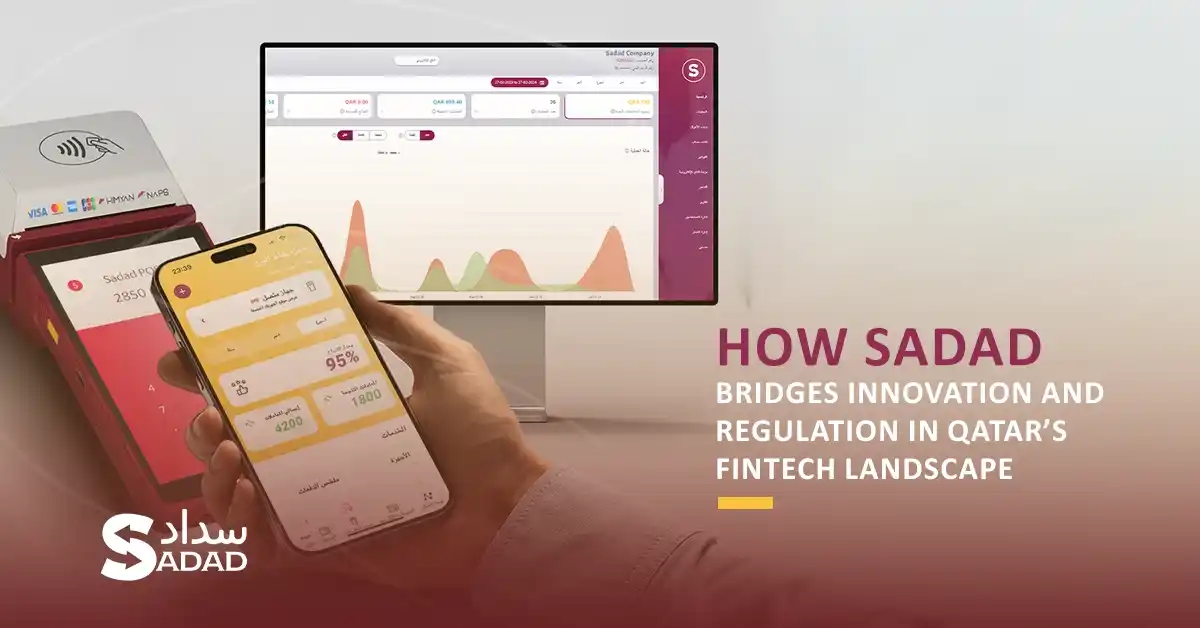
From Global Hype to Local Utility: How SADAD Turns Innovation into Merchant Value
At every summit, there’s a buzzword parade. Embedded finance, real-time payments, AI-led underwriting, and tokenization. The ideas are big. The ambition is global. But none of it matters if a merchant in Al Wakrah still needs to chase down unpaid invoices manually.
That’s why SADAD doesn’t show up to chase buzz. We show up to convert it.
As global conversations move toward open APIs, we ship real integrations that plug directly into the ERP tools used by Qatari SMEs. When panelists pitch embedded finance as the next revolution, we work with merchants to embed payment flows into their customer experience — no jargon, just results. And when the future of e-invoicing gets debated on stage, we’ve already rolled out compliant, easy-to-use invoicing tools trusted by thousands of local businesses.
This is the delta that matters. Not hype, but translation. Not future-speak, but present impact.
And the next time a Qatari merchant accepts a secure, trackable, automated payment link with zero technical effort, they won’t care which global buzzword made it possible. But we’ll know.
SADAD was there, in the room, bridging the gap — again.
YOU MAY READ : From POS to Pay Links: What Payment Solutions Actually Mean in Qatar

Last Articles
Articles
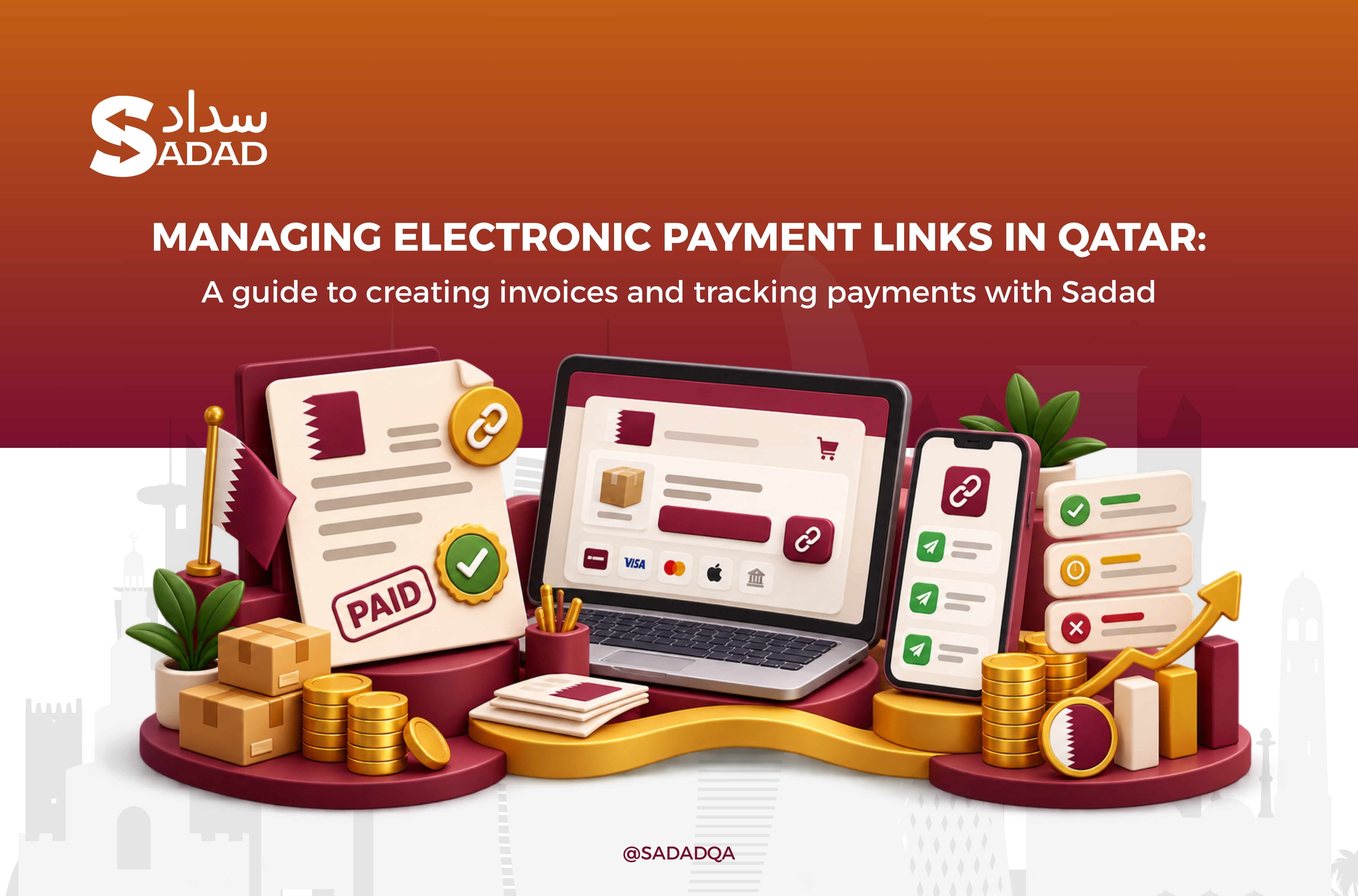
Payment Link Management in Qatar: Creating Invoices and Tracking Payments with Sadad 2026
Payment Links in Qatar: A Guide to Creating Invoices and Tracking Payments with Sadad If you sell products or provide services in Qatar, you may have experienced a familiar situation:...
Read more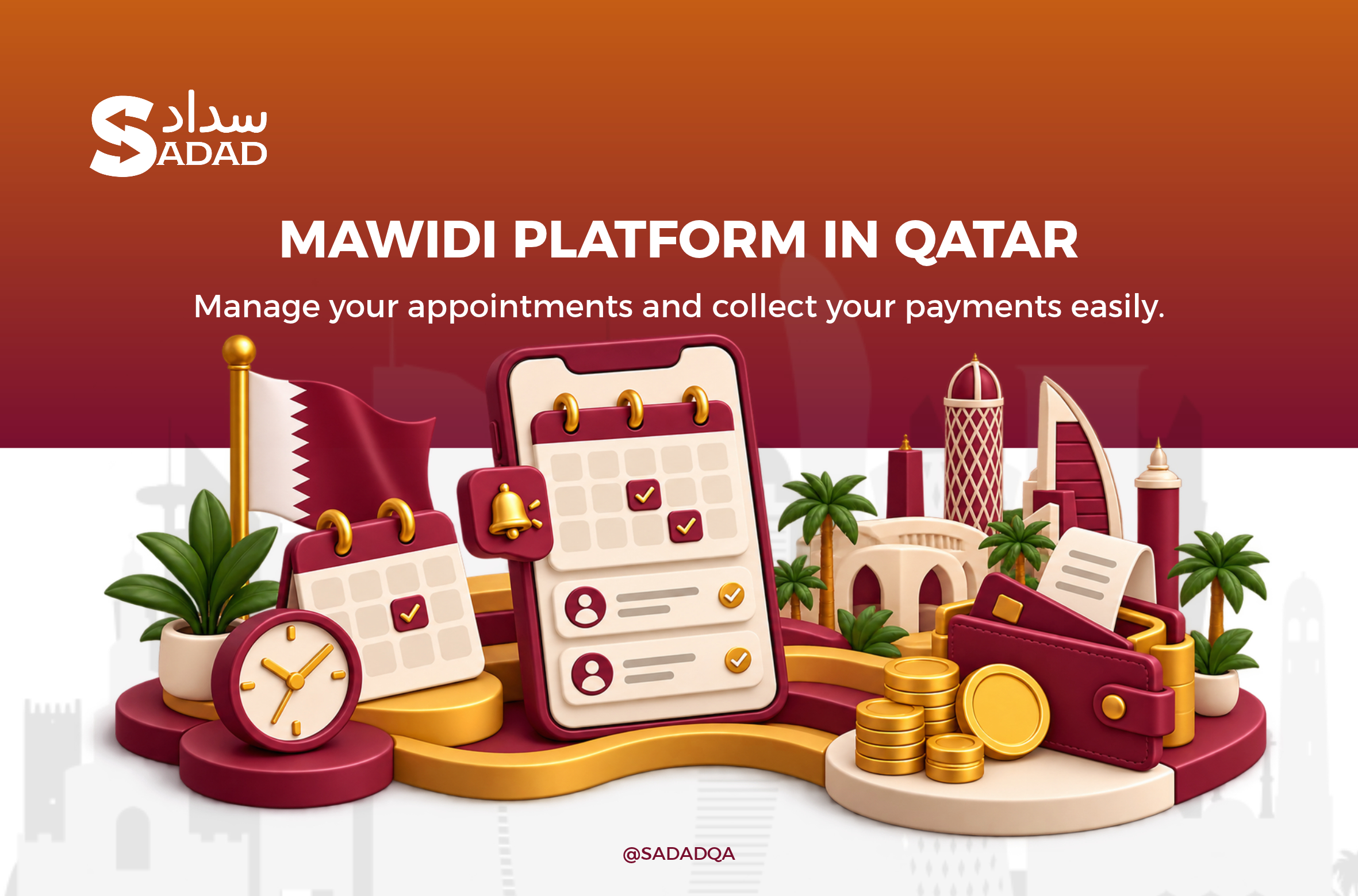
Articles
Appointment Booking Platform in Qatar 2026| Mawidy by Sadad
Appointment Booking Platform in Qatar | Mawidy by Sadad: A Complete Guide to Appointment Management and Online Payments for Businesses Sadad Keeps Bringing You New Solutions! As digital services continue...
Read more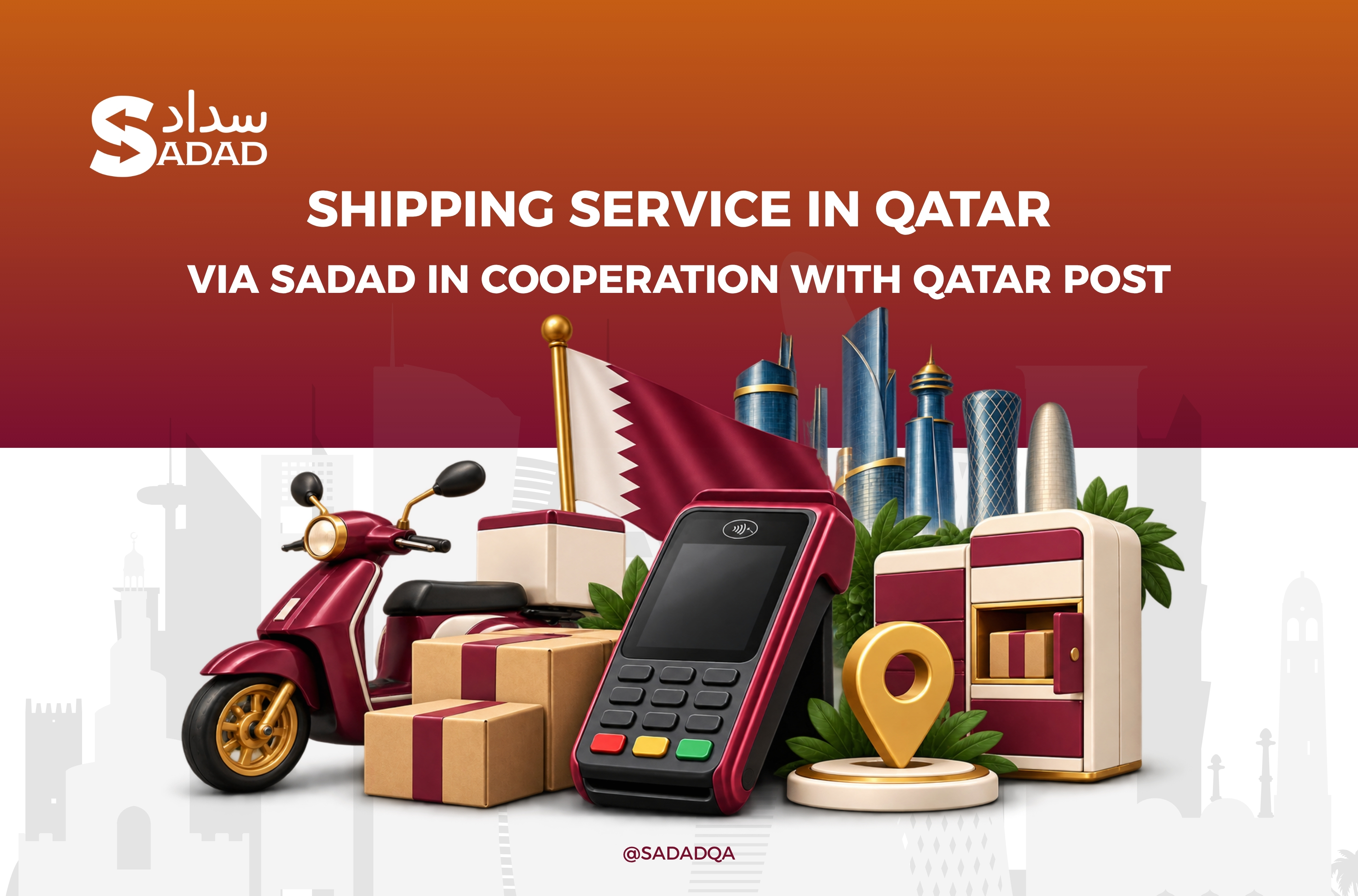
Articles
Shipping in Qatar via Sadad in Partnership with Qatar Post 2026 | Door-to-Door Shipping
Shipping in Qatar via Sadad in Partnership with Qatar Post | Door-to-Door Shipping Shipping in Qatar has traditionally been associated with Qatar Post and a specific range of delivery services....
Read more