
Articles
How to Sell Products Online in Qatar| Sadad A Complete Guide 2026
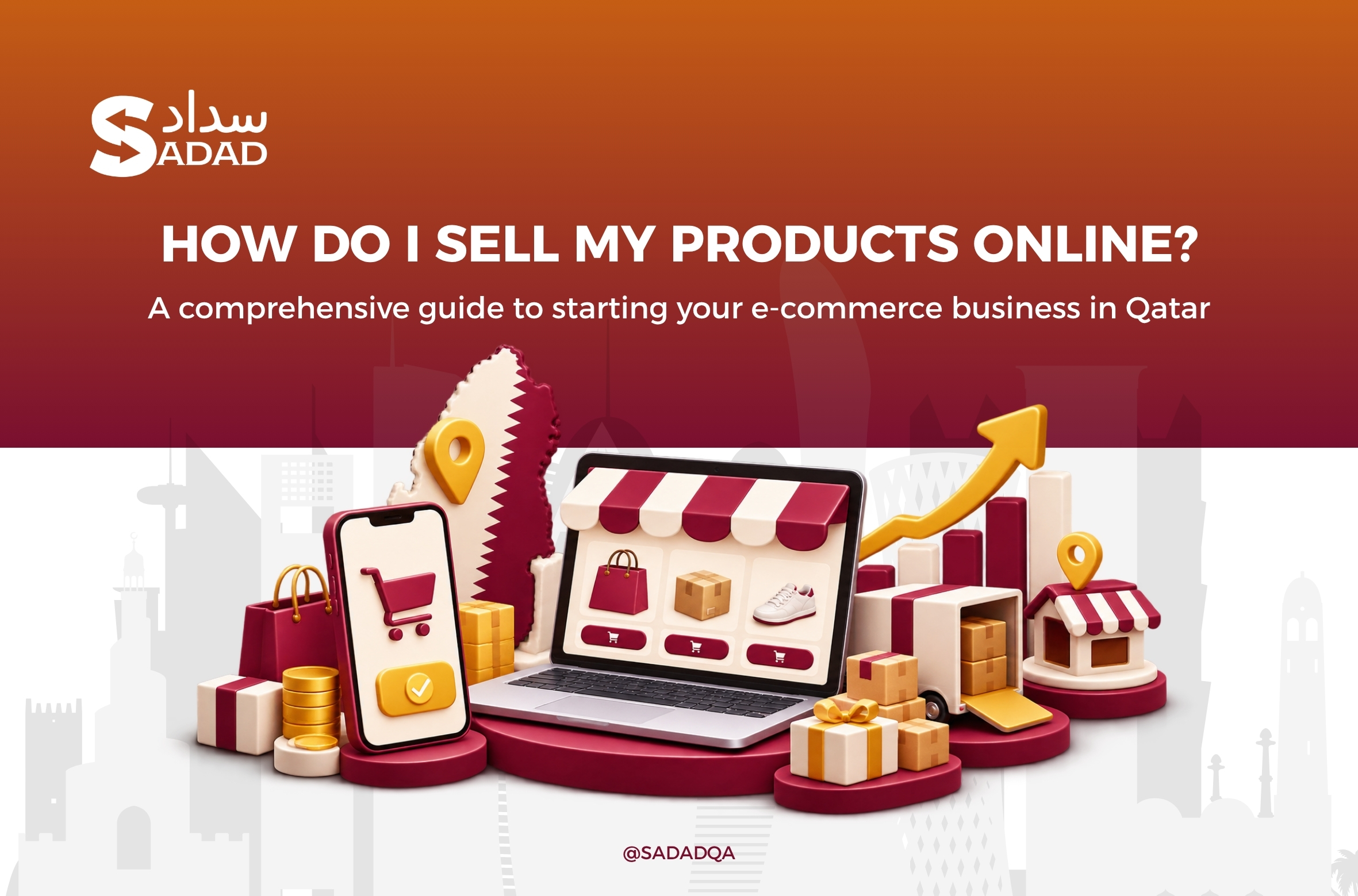
How to Sell Products Online in Qatar: A Complete Guide to Starting Your Online Business
Selling online is no longer limited to large companies or retailers with sophisticated websites. It has become an accessible option for home-based businesses, entrepreneurs, and traditional shop owners looking to reach new customers and expand their operations. From handmade products and food to clothing, perfumes, accessories, and services, digital channels offer a range of opportunities to showcase products, receive orders, and complete sales.
In Qatar, this trend coincides with developments in the business environment and the country’s ongoing digital transformation. In August 2024, Qatar’s Ministry of Commerce and Industry announced the addition of 48 activities to the list of activities permitted under home-based business licences, bringing the total to 63. These activities covered various sectors, including clothing, perfumes, cosmetics, jewellery design, and photography, expanding the opportunities available to home-based entrepreneurs. Source: Qatar Ministry of Commerce and Industry.
In 2026, Qatar took another step towards regulating digital commerce. Ministerial Decision No. 25 of 2026 was issued concerning the practice of commercial activities through websites. The Ministry of Commerce and Industry subsequently announced the launch of an e-commerce licence covering 194 approved activities, with a stated issuance fee of QAR 500. Businesses undertaking these activities remain subject to the conditions and requirements specified in the decision and other applicable regulations. Source: Qatar Ministry of Commerce and Industry.
These developments form part of Qatar’s broader digital transformation, supported by the Digital Agenda 2030 and Qatar National Vision 2030, which include advancing the digital economy and expanding the use of technology across businesses and services. This creates opportunities for business owners to explore new ways of presenting products, organising sales operations, and reaching customers.
But how can you take advantage of these opportunities in practice?
Imagine Salma, who runs a home-based business selling traditional food. She initially began selling through her Instagram page. Over time, she built a loyal customer base, with people regularly placing orders. However, she found it increasingly difficult to reach new customers, particularly because most of her sales came from existing followers.
Selling was not her only challenge. Collecting payments after delivering orders sometimes became complicated. Some customers were unavailable when their orders arrived, while others cancelled after she had already prepared and dispatched their food. In other cases, customers were disappointed because product descriptions had not been sufficiently clear. As these situations became more frequent, Salma began asking herself: How could she organise her business, reach more customers, and make purchasing and payment easier?
Meanwhile, Mohammed has a range of products he wants to sell online but is unsure where to start. He considered building his own website, only to discover that designing, setting up, and maintaining one could require time, money, and technical expertise he did not have at the early stages of his business. Does he really need to build a website from scratch before he can start selling? Or are there simpler options that could help him launch an online store and reach customers?
Salma’s and Mohammed’s experiences reflect challenges many home-based businesses, entrepreneurs, and retailers encounter when moving into e-commerce. Success in online selling depends on more than having a good product. It also requires choosing the right sales channel, presenting products attractively, providing a clear purchasing experience, organising orders, and collecting payments efficiently.
So, how do you choose the right way to sell products online in Qatar? And how can you start an online store without unnecessary complications? This guide explores the available online selling channels, the essential steps to building a successful online store, and how solutions such as SADAD Smart Store can help you organise sales operations and improve the customer experience.
Choose the Right Way to Sell Products Online

Before starting an online business, it is important to choose a sales channel that suits your products, budget, and target audience. You do not necessarily need to launch a fully developed online store from day one. Instead, you can choose an option that fits your business at its current stage and expand your approach as sales grow.
1. Sell Through Social Media Platforms
Social media platforms such as Instagram, WhatsApp, and Facebook are a practical starting point for many businesses, particularly home-based businesses and small enterprises. They allow you to showcase products through photos and videos, communicate directly with customers, answer enquiries, and receive orders.
Benefits of selling through social media include:
- Easy product promotion: Publish product photos, videos, and updates to introduce your offerings.
- Direct customer communication: Answer questions and communicate with potential buyers.
- A lower-barrier starting point: Begin selling without needing to build a separate website.
- Opportunities to attract new customers: Use content, promotions, and customer recommendations to expand your reach.
However, as order volumes increase, relying entirely on messages can become difficult to manage. Order details may get mixed up, payment status can be harder to track, and customers may need to ask about prices, delivery, and payment methods before they can make a purchase.
To address these challenges, make sure your prices, product information, and delivery policy are clearly communicated. Use an organised method to record and track orders. You can also use online payment links to simplify payment collection without having to build a complete online store at the outset.
2. Build Your Own Online Store
If you want to display your products in one place and provide a more organised shopping experience, creating an online store may be the right option. Customers can browse products and review prices, descriptions, and images without having to message you for basic information.
Key benefits of having an online store include:
- Organised product listings: Group products into clear categories so customers can find what they need more easily.
- Stronger brand identity: Deliver a consistent shopping experience that reflects your business identity.
- A simpler purchasing journey: Bring product information, ordering, and available payment methods together in one place.
- Support for business growth: Add products and improve the customer experience as your business expands.
- Better opportunities to appear in search results: Optimise product pages and website content for search engines.
However, building a custom website from scratch may require a budget, time, and technical expertise, depending on the level of customisation and functionality you need. Ready-made e-commerce platforms can therefore be a practical alternative for businesses that want to start selling without taking on the full burden of technical development.
3. Sell Through Online Marketplaces
Online marketplaces such as Amazon and Etsy bring products from multiple sellers together on a single platform. They may help you reach customers who are already searching for products similar to yours, without requiring you to attract every visitor independently.
This option can be useful if you want to test demand for your products or benefit from the audience of an established marketplace. Before registering, however, review the platform’s fees, commissions, selling and delivery requirements, and policies to determine whether the model suits your business.
Which Sales Channel Is Best for Your Business?
The right choice depends on your business’s stage of development and its specific needs.
| Sales channel | Best suited for | What to consider |
|---|---|---|
| Social media platforms | Home-based businesses and sellers just starting out | Organising messages, orders, and payments |
| Your own online store | Businesses that need organised product listings and a complete shopping experience | Choosing a suitable platform and integrating payment methods |
| Online market places | Sellers looking to reach an established platform audience | Platform fees, commissions, and selling requirements |
You do not have to rely on just one channel. You can use social media for marketing, direct customers to your online store, and offer suitable payment solutions to complete purchases.
How to Build a Successful Online Store in Qatar

Building a successful online store involves more than publishing product photos on the internet. You need to create a clear and convenient shopping experience that helps customers understand your offering, make informed purchasing decisions, and place orders with ease.
If, like Mohammed, you want to start selling online without unnecessary technical complications or building a website from scratch, several solutions are available. These range from e-commerce website builders to ready-made solutions such as SADAD Smart Store.
1. Choose a Platform That Meets Your Needs
Before choosing an e-commerce platform, define your business requirements and budget. Do you want to display a limited number of products or manage a comprehensive catalogue? Do you need tools to manage orders and customer information? Would you like to offer online payment options and track purchases?
Several options are available for building an online store, including:
- Shopify: A platform that helps you create your own online store and manage products and orders using its available tools.
- WooCommerce: An e-commerce plugin for WordPress that allows you to build and customise an online store according to your business requirements.
- SADAD Smart Store: A solution that allows you to create an online storefront to display products and receive orders, with tools to manage your store according to the service’s available features. It also offers automatic integration with the payment gateway.
These options differ in their setup processes, customisation capabilities, costs, and features. Compare them based on your current requirements and future plans. If you prefer a ready-made solution rather than setting up and managing your store through several separate tools, explore what SADAD Smart Store offers.
2. Explore SADAD Smart Store
SADAD Smart Store provides a solution for creating an online storefront where you can display products and receive orders without having to build an e-commerce website from scratch.
Customers can browse and search for products, place orders, and track them. Meanwhile, business owners can manage their product catalogue, orders, payments, and customer information through the web or the SADAD app, subject to the features available through the service.
Key features of SADAD Smart Store include:
- Easy setup: Establish an online presence for your products without developing a store from scratch.
- Customisable storefront: Organise product displays and the store’s appearance to suit your business identity.
- Product management: Add products, organise listings, and update product information according to your business needs.
- Order and payment tracking: Manage transactions using the tools available on the platform.
- Notifications: Receive updates about orders, payments, and certain store activities.
- Web and mobile access: Access the storefront and available features through supported devices.
SADAD Smart Store may be a suitable option for home-based businesses and small retailers looking to organise their product listings and receive orders online. It can also serve businesses seeking to strengthen their digital presence.
Visit the SADAD Smart Store page to explore the service in more detail, and review the current plans, features, and pricing before deciding which option suits your business.
3. Create Clear and Informative Product Pages
Imagine a customer visiting Salma’s online store for the first time. If they find clear photos of her dishes, accurate prices, useful descriptions of ingredients and portion sizes, and delivery information, they have the information needed to make a purchasing decision. If they must send a message to obtain every detail, they may hesitate or leave before placing an order.
Make sure each product page includes:
- A clear product name that accurately describes the item.
- High-quality, genuine photos wherever possible, showing the product clearly.
- An accurate description covering relevant features, ingredients, or sizes, depending on the product.
- A clear price, including details of any applicable additional charges.
- Availability, preparation, and delivery information where relevant.
Accurate product information helps set clear customer expectations and reduces the likelihood of misunderstandings about what they will receive.
4. Provide a Smooth Purchasing Experience
Once customers choose a product, the next steps should be straightforward. Explain how to place an order, what information is required, which payment methods are available, and the expected delivery timeframe.
The simpler and clearer the purchasing process, the easier it becomes for customers to move from browsing products to completing an order. Test your store on a mobile phone to ensure that images and text are easy to view and that product information and payment options are easy to find.
5. Offer Suitable Online Payment Options
The shopping experience does not end when a customer selects a product and places an order. It also includes how they pay for it. Make sure you provide clear payment options that suit your customers in Qatar, and explain the available methods before customers complete their purchases.
Online payment options may include credit cards, debit cards, and digital wallets, depending on the payment service provider and the solutions available to your business. Offering a choice of payment methods can accommodate different customer preferences, while a clear payment process can make purchasing more convenient.
If you sell through social media or receive orders directly from customers, online payment links may be a practical option. You can share a link with the customer, allowing them to access a payment page and complete the transaction online, depending on the service used.
Through SADAD’s payment solutions, businesses can explore suitable options for collecting payments and managing transactions. Visit the SADAD website to learn more about the available services.
6. Market Your Online Store to Reach Customers
Creating an online store is an important step, but its success also depends on whether customers can discover your products and learn about your business. Develop a marketing plan that suits your business and the audience you want to reach in Qatar.
Here are several approaches you can start with:
- Social media marketing: Publish product photos and videos demonstrating how products are used or prepared. Share your store link to make it easier for customers to move from discovering a product to placing an order.
- Search engine optimisation (SEO): Use the terms your customers search for in product names, page titles, and descriptions. Create clear content that helps search engines understand what your store offers.
- Useful content creation: Answer common questions about your products, pricing, usage, and delivery. Share information that helps customers make purchasing decisions.
- Encouraging repeat purchases: Maintain communication with existing customers and inform them about relevant new products and offers, obtaining consent for marketing messages where required.
- Tracking marketing performance: Monitor website traffic, orders, best-selling products, and customer acquisition sources. Use these insights to identify which channels deserve more investment.
You do not need to use every marketing channel from the beginning. Start with the methods that fit your budget and target audience, test their performance regularly, and refine your strategy based on store performance and customer behaviour.
How Can Online Payment Solutions Help You Manage Sales?
Let’s return to Salma. She receives orders through Instagram, arranges delivery, and then waits to collect payment when the order arrives. If a customer is unavailable or decides to cancel, she may face additional time and costs.
Online payment solutions can help organise payment collection and provide customers with ways to pay remotely. However, online payments alone cannot prevent every cancellation or failed delivery. They should therefore form part of a clear policy for order confirmation and delivery.
Online Payment Links: A Practical Option for Social Media Selling
An online payment link directs customers to a payment page where they can complete a transaction associated with an order or invoice. Depending on the service, the link can be shared through WhatsApp, SMS, email, or social media platforms.
Payment links may be suitable if you:
- Receive orders through Instagram or WhatsApp and do not yet have an online store.
- Sell products or services that require remote payment collection.
- Want to send customers a clear payment request instead of exchanging payment details manually.
- Need to monitor payment statuses through a dedicated dashboard.
SADAD enables businesses to create and share payment links and electronic invoices across multiple channels. It also provides payment status tracking through its dashboard, subject to the service’s available features.
Learn more in our article about SADAD’s Payment Links and Electronic Invoices.
What Is the Difference Between a Payment Link and an Online Store?
Payment links and online stores serve different purposes and can complement each other.
| Comparison | Online payment link | Online store |
|---|---|---|
| Primary purpose | Send a payment request to a customer | Display products and organise the shopping experience |
| How customers access it | Through a shared link | By browsing the storefront |
| Best suited for | Orders received through messages or direct communication | Businesses that want to display products in an organised space |
| Product management | Not the link’s primary function | Displays and organises products according to the store’s features |
| Can they be used together? | Can be incorporated into the sales process | Can offer payment through available, compatible solutions |
If Salma is still in the early stages of her business and relies on direct orders, she could start with payment links while keeping her order information organised. As her product range expands and order volumes increase, an online store could help customers browse products and place orders more systematically.
Mohammed, on the other hand, wants to display multiple products in one place. SADAD Smart Store may be worth exploring as an alternative to developing a custom website from scratch.
What Licences Do You Need to Sell Products Online in Qatar?
Before launching a business, it is important to verify the official requirements that apply to your activity and the way you intend to operate. Not all online businesses are subject to the same conditions, and having a social media account does not necessarily exempt you from obtaining the licences required to conduct commercial activities.
In Qatar, the Ministry of Commerce and Industry announced in August 2024 that 48 activities had been added to those permitted under home-based business licences, bringing the announced total to 63. Refer to the Ministry of Commerce and Industry’s announcement on home-based business activities for further details.
In September 2026, the Ministry announced the launch of an e-commerce licence under Ministerial Decision No. 25 of 2026. The licence covers 194 approved activities, with an announced issuance fee of QAR 500, and applications can be submitted electronically. Consult the Ministry’s official announcement for further details.
These announcements do not mean that every home-based business requires the same licence or that all activities automatically qualify. Requirements may vary according to the nature of the activity, the legal structure of the business, and any additional licences or approvals that may be necessary.
Before you start selling, check the current requirements with the relevant official authorities, including the licensing conditions applicable to your business and website, where relevant.
Common Mistakes to Avoid When Starting to Sell Online
Even if your products are good, you may encounter difficulties if the customer experience is unclear or your operations are poorly organised. Here are some common mistakes to watch out for:
1. Publishing product photos without enough information
Customers need to know what they are buying, how much it costs, and which features distinguish it from other products.
2. Relying entirely on messages as order volumes grow
As your customer base expands, you will need a more organised way to manage orders, customer information, and payment statuses.
3. Failing to explain delivery and cancellation policies
Unclear terms can lead to misunderstandings between customers and business owners.
4. Relying exclusively on cash on delivery
Cash on delivery may suit certain products and customers, but it is not appropriate for every business model. Evaluate the payment and order confirmation options that best suit your operations.
5. Building a store that is more complex than necessary
You do not necessarily need every available feature from day one. Start with a solution that meets your essential requirements, then expand as your business grows.
6. Neglecting marketing after launching your store
Your store needs relevant content and visibility across the channels your target audience uses, alongside a positive purchasing experience.
Frequently Asked Questions About Selling Online in Qatar
How do I start selling products online in Qatar?
Start by identifying the products you want to sell and the customers you want to reach. Then choose a suitable sales channel, such as social media platforms, an online store, or an online marketplace. Prepare product photos, descriptions, and prices, establish your ordering, delivery, and payment processes, and verify the official licensing requirements that apply to your business.
Do I need a website to sell products online?
Not necessarily. You can receive orders through social media platforms and use payment links to collect payments online. However, if you want to display products in an organised storefront and manage your catalogue and orders, an online store may be a better fit.
How can I create an online store without coding?
You can use a ready-made e-commerce platform instead of developing a website from scratch. SADAD Smart Store is one available option, offering tools to create an online storefront and manage products, orders, and customer information. Visit the SADAD Smart Store page to review the available features and plans.
How can I collect payments from customers who order through Instagram or WhatsApp?
You can use online payment solutions that allow you to share a payment link through messaging and social media channels. Customers can then access the payment page and complete the transaction online. SADAD offers payment links and electronic invoice solutions that businesses can use according to the service terms and their operational requirements.
Does online payment prevent order cancellations or failed deliveries?
No. Online payment alone cannot prevent every cancellation or failed delivery. However, it can help organise payment collection and reduce reliance on cash payments upon delivery. It is best supported by clear policies for order confirmation, delivery, and cancellations, taking into account the nature of your products and consumer rights.
What is the difference between SADAD Smart Store and payment links?
SADAD Smart Store helps you create a storefront to display products and organise the shopping experience. Payment links allow you to send customers a shareable link through which they can complete a payment. Payment links may be suitable for businesses that receive orders through messages, while an online store is useful for businesses that want to display products and manage sales in one place.
Take the Next Step in Your E-commerce Journey
Salma’s experience shows that successful online selling is not just about attracting customers. It also requires organised order management, clear product information, and convenient payment options. Mohammed, meanwhile, can explore a ready-made solution rather than assuming he must build an entire website from scratch.
Whether you run a home-based business or are preparing to launch a new commercial venture, choosing the right sales channel, providing a clear purchasing experience, and using solutions that help organise your operations can provide a strong foundation for growth.
Explore SADAD Smart Store and SADAD’s payment links and electronic invoice solutions to find the options that best fit your business needs and growth plans!
Last Articles
Articles
How to Sell Products Online in Qatar| Sadad A Complete Guide 2026
How to Sell Products Online in Qatar: A Complete Guide to Starting Your Online Business Selling online is no longer limited to large companies or retailers with sophisticated websites. It...
Read more
Articles
Payment Link Management in Qatar: Creating Invoices and Tracking Payments with Sadad 2026
Payment Links in Qatar: A Guide to Creating Invoices and Tracking Payments with Sadad If you sell products or provide services in Qatar, you may have experienced a familiar situation:...
Read more
Articles
Appointment Booking Platform in Qatar 2026| Mawidy by Sadad
Appointment Booking Platform in Qatar | Mawidy by Sadad: A Complete Guide to Appointment Management and Online Payments for Businesses Sadad Keeps Bringing You New Solutions! As digital services continue...
Read more